

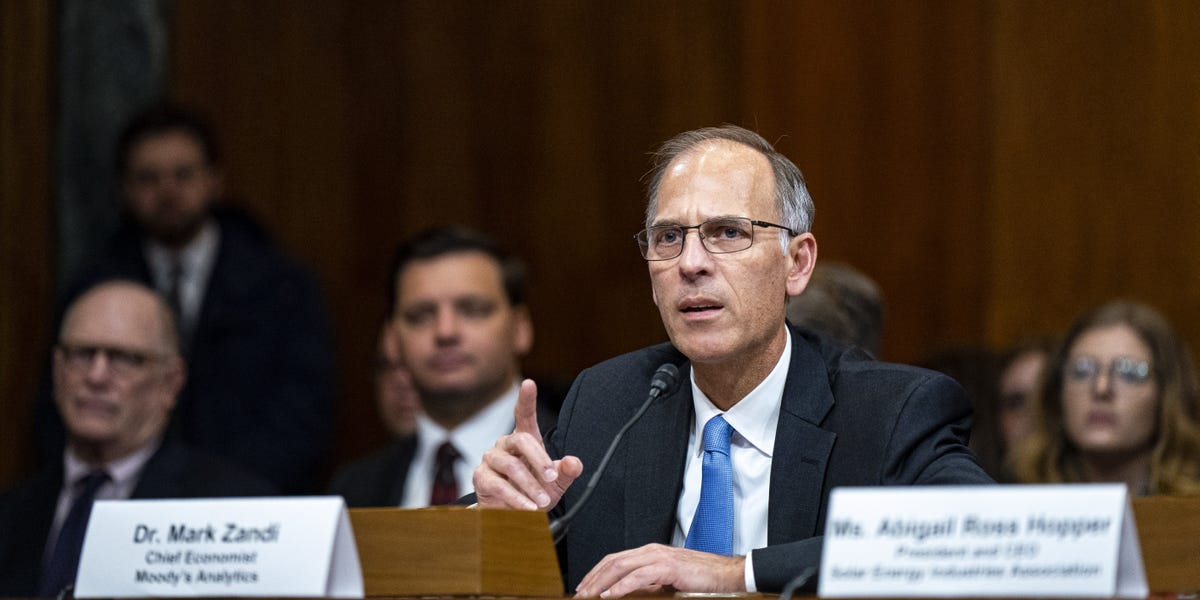
The US consumer is feeling the sting of inflation, and higher rates from the Fed could be a policy mistake that makes things harder for the economy, Mark Zandi says.
The chief economist at Moody’s Analytics, Zandi has spent the past year sounding the alarm on worsening economic conditions faced by US households and businesses. Now, as the Federal Reserve prepares to deliver its latest policy decision, Zandi sees more trouble ahead.
“The odds of a serious Fed policy mistake are uncomfortably high and rising,” he wrote in a post on X.
He said that raising rates too quickly or aggressively would be the wrong move, exacerbating issues facing companies, and potentially weighing on the labor market.
While, the Fed is focused on lowering inflation, Zandi maintains that tighter monetary policy might not be the solution. In fact, it might make more sense to leave rates unchanged.
“Inflation is too high, to be sure, running above 3%,” he added. “But much of that is the fallout from higher energy prices and tariffs, supply shocks that rate hikes can’t fix and that should fade on their own so long as inflation expectations stay anchored, as they have.”
If the Fed does make the “serious” mistake Zandi alludes to, it would come at a critical time for US consumers. Geopolitical tensions are still high and by his own estimate, the US war with Iran has cost households more than $1,000 each as shipping disruptions have pushed up transportation and energy costs. Inflation was 3.4% in August, well-above the Fed’s 2% target.
Pressure on consumers is already high, but Zandi recently highlighted another factor that could make things worse in the coming months; last year’s tax cuts helped delay certain negative economic consequences but that benefit has faded.
“The impact of the higher oil prices on the consumer has been cushioned, at least up through this summer, by the tax cuts,” he told CNBC. “The refund checks this year were a lot larger than last year but they’re in the rearview mirror. They’re gone and we’re still left with these higher energy prices.”
If they continue rising, Zandi said that things could easily get worse for many US households. Oil prices have surged recently, pushing up the already elevated costs of gasoline and diesel, which could lead to higher prices for everyday goods.
“If prices go much higher, if they go $110, $120, $130, gasoline gets to closer to $5 a gallon nationwide,” he added. “That’s going to be pretty hard to digest, particularly in the context of everything else going on, including the higher interest rates.”