
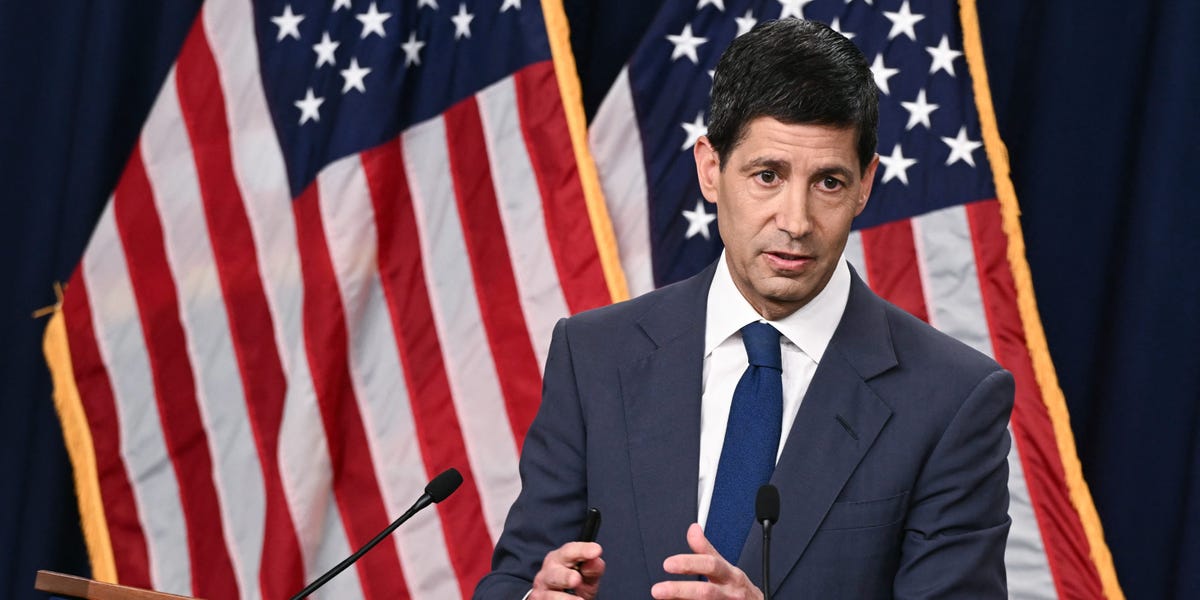
Kevin Warsh is clocking in for his third Federal Reserve meeting as chair — and America is on hike watch.
The central bank’s September decision comes alongside escalating tariff policies from the White House, an ongoing war in Iran, and renewed fears that AI will upend the job market.
Business Insider is following the news, including economists’ insights, market moves, and what the interest rate call means for consumers. Follow along for updates.
A blockbuster jobs report
One side of the Fed’s dual mandate had some good news this month. The US added 162,000 jobs in August, about triple the forecast, and unemployment remained at 4.1% amid labor force participation ticking back up.
The report was better for blue-collar workers than white-collar workers. Leisure and hospitality bounced back from its losses, adding 62,000 jobs. Construction, healthcare, and wholesale trade also added jobs over the month.
Meanwhile, the white-collar sectors of information and financial activities were the only major industries to experience job loss in August.
Don’t call it forward guidance
To open his Jackson Hole address, Warsh gave the audience an overview of his economic outlook, quipping, “Don’t call it forward guidance.”
The new chair has been clear that he doesn’t believe in providing investors and consumers with a preview of monetary policy. He recused himself from the June dot plot and economic projections and will likely do the same on Wednesday. Under Warsh, the FOMC’s two latest rate call announcements have been briefer than those of his predecessors, without much insight into how and why the committee came to its conclusion.
To open his Jackson Hole address, Warsh gave the audience an overview of his economic outlook, quipping, “Don’t call it forward guidance.”
The new chair has been clear that he doesn’t believe in providing investors and consumers with a preview of monetary policy. He recused himself from the June dot plot and economic projections and will likely do the same on Wednesday. Under Warsh, the FOMC’s two latest rate call announcements have been briefer than those of his predecessors, without much insight into how and why the committee came to its conclusion.
“Transparency in communications about future policy decisions is not a virtue unto itself,” he said in Wyoming.
Task force shake-up
As part of his Fed modernization efforts, Warsh launched a series of task forces. The groups will focus on the central bank’s approach to communications, data, jobs and productivity, inflation, and its balance sheet. Over the summer, he named academics, economists, corporate executives, and former Fed leaders to each task force.
The groups have not yet announced any major policy or structural changes at the central bank.
Market update: Things are calm ahead of the Fed’s decision
Stock futures are modestly higher around six hours ahead of the Fed’s rate decision, recovering some ground after Tuesday’s minor sell-off.
As of 8 a.m. ET S&P 500 and Dow futures are both up by about 0.4%, and Nasdaq futures are gaining around 0.6%.
Stock futures are modestly higher around six hours ahead of the Fed’s rate decision, recovering some ground after Tuesday’s minor sell-off.
As of 8 a.m. ET S&P 500 and Dow futures are both up by about 0.4%, and Nasdaq futures are gaining around 0.6%.
With a more than 90% chance of a hike, many investors will be more focused on the Fed’s outlook for further tightening, with the 10-year Treasury yield still near 5%.
Oil has eased slightly after its recent surge. Brent is trading around $107 per barrel, and US WTI crude is at around $103 per barrel. Still, prices remain high amid persistent concerns over Middle East supply disruptions.
Gold is higher, with futures up about 1.2% on Wednesday to around $4,381 an ounce.
Central bank vs. the C-suite
In a departure from past Fed chairs like Jerome Powell and Janet Yellen, Warsh said he wants the FOMC to react to real-time information. It means less reliance on monthly job and inflation reports, and quieter communication from committee leaders. He’s pushing investors to do the same, and has said he wants markets “to play ball, not the referee.”
Warsh doubled down in his Jackson Hole speech: “Oversharing policy deliberations and overcommitting to future decisions can lead markets, businesses, and households astray.”
What market watchers expect
The consensus is for the Fed to deliver its first rate hike since July 2023. Not only that, but some forecasters see another coming before the year is out.
“We expect the Fed to deliver a 25bp rate hike at the September FOMC meeting,” Deutsche Bank chief US economist Matthew Luzzetti wrote. “While forward guidance is unlikely, the median dot should show another rate increase this year, with several officials projecting more than that.”
The consensus is for the Fed to deliver its first rate hike since July 2023. Not only that, but some forecasters see another coming before the year is out.
“We expect the Fed to deliver a 25bp rate hike at the September FOMC meeting,” Deutsche Bank chief US economist Matthew Luzzetti wrote. “While forward guidance is unlikely, the median dot should show another rate increase this year, with several officials projecting more than that.”
Michael Feroli, chief US economist at JPMorgan, expects to see the same. While he maintains that an October rate hike is unlikely, as it takes time to assess the broader economic impact, his team predicts a December rate increase.
“We expect that the Committee will increase the target range for the fed funds rate by 25bp to 3.75-4.0%,” Feroli said. “At the end of the day the Chair’s repeated stern warnings on inflation intolerance risk institutional credibility absent some action to back it up.”
For some Wall Street strategists, the meeting is a key opportunity for Warsh to build credibility before market conditions potentially worsen.
“With markets already pricing close to a 90% probability of a move, hiking now would give Warsh’s tenure at the Fed an opportunity to build credibility and a clearer reaction function before the bond market forces his hand in a more disorderly manner,” stated Morgan Stanley strategist Michael J. Wilson.
Jay Woods, chief market strategist at Freedom Capital Markets, noted that while economic data supports the case for a rate hike, he isn’t certain that Warsh will actually do it.
“So far he has practiced patience, letting the market dictate the path of rates and hesitant to make any move,” Woods stated. “The Fed appears to have the votes. The market has made its call. The data has made a compelling case. Now we find out whether Kevin Warsh agrees.”
Warsh’s Jackson Hole speech
In August, Warsh gave his first keynote address at the Jackson Hole Economic Symposium, a tradition for Fed chairs. While he was clear that monetary policy isn’t on a preset course, Warsh emphasized his commitment to tempering inflation.
“Price stability is not self-executing, nor is inflation necessarily mean-reverting,” he said. “It is the Fed’s job to deliver stable prices.”
He also spoke about his plan to revamp the central bank’s communications and data sources and why the Fed should operate more like private-sector companies.
On hike watch
So far this summer, Warsh and the committee have opted to hold rates steady. Powell’s FOMC made the same calls earlier this year. The last time the Fed hiked rates was July 2023.
CME FedWatch, a tool that predicts rate decisions based on market moves, is showing a 92.5% chance of a quarter-point hike as of Wednesday morning.
Warsh’s first big test
Good morning, and welcome to Fed Day! With stubborn inflation and volatile global oil prices, Fed chair Warsh must decide which side of the central bank’s dual mandate feels most urgent: stable prices or maximum employment.
A rate hike could help temper inflation, making basic goods more affordable for consumers and helping to steady the economy. However, higher rates risk slowing the job market and making it more difficult for Americans to buy homes and start businesses. Wednesday’s rate call will be a test of priorities for Warsh and the Federal Open Market Committee.