

Few measurements excite Silicon Valley investors more than rapidly climbing annual recurring revenue (ARR). In the AI surge, however, venture capitalists are increasingly questioning what that figure truly represents.
“The quantity of VC-backed AI firms misrepresenting their ARR publicly is absolutely alarming,” Greg Isenberg, CEO of Late Checkout, wrote in a viral post that articulated something long suspected but seldom voiced openly in tech circles.
ARR emerged as a favored metric during the software age, designed to estimate the yearly sales a company can anticipate from paying customers, offering investors a quick gauge for startup valuations.
Today, venture capitalists and founders who spoke with Themoneytimes said ARR has become so loosely applied that it blurs the distinction between contracted subscriptions, future agreements, token consumption, hardware sales, and a single robust month of revenue.
In essence, recurring revenue is frequently not recurring at all.
“It’s ARR inflation,” said Shruti Gandhi, a general partner at Array Ventures. “There’s no oversight right now.”
Gandhi notes she has confronted founders for overstating revenue. Their counterargument: “Everyone else is doing it.”
According to Alexander Niehenke, a partner at Scale Venture Partners, the current practice of padding ARR reflects a bubble mentality where founders hold all the power.
“It feels like we’re at the late stages of 2021 again, based on some of the behavior I’m observing in the venture ecosystem,” he said. “Whenever you sink deeper into a bull market, everyone has greater tolerance for risk.”
Founders are aware of how enthusiastic VCs become about ARR, Niehenke explained. “The savvy and brilliant entrepreneurs use it like catnip on us,” he said.
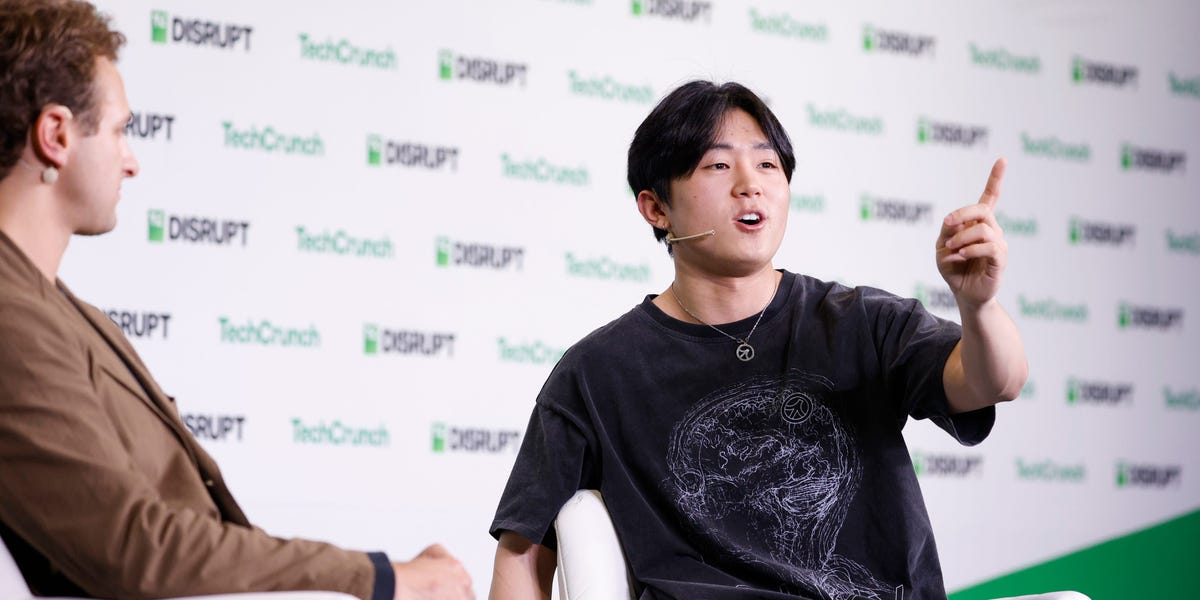
Cluely CEO Roy Lee raised eyebrows earlier this year when he admitted to misstating his startup’s ARR to a TechCrunch reporter. However, that was a notable exception. With startups facing far less regulatory oversight than public companies, revenue claims are rarely validated.
More startups are turning to run rate, but is it any better?
Long before AI, Silicon Valley was enamored with software-as-a-service firms, where ARR was far more reliable. SaaS companies like Salesforce or Workday typically negotiate annual or multiyear contracts, making it relatively simple to tally the value of subscriptions likely to recur.
“When you have ARR, you have a signed contract, and you know what you’ve committed to for the year,” said Matt Murphy, a partner at Menlo Ventures.
AI has proven less predictable. Many AI companies no longer offer a basic per-seat license at a fixed monthly cost. They charge customers based on usage, often measured in tokens. A client might consume a product intensively, then reduce usage, or switch to a lower-cost model. The startup’s own expenses also vary widely, as it may need to pay a model provider or cloud company each time a customer engages its product.
AI startups have increasingly shifted to describing run rate, which extrapolates a month of revenue over a full year and does not claim to be recurring, according to Murphy.
“Venture capital occasionally does this where there’s a new metric that appears,” he said.
Pocket, which develops an AI recording device, is one of those companies, having recently announced it surpassed the $100 million run rate milestone. Founder Akshay Narisetti said he avoids ARR because token-based revenue is too unpredictable to expect it to be recurring.
Run rate can pose its own challenge in that a blockbuster month doesn’t necessarily portend a full year, but Narisetti said he steers clear of that approach.
“We never annualize one large month with a spike,” Narisetti said.
The largest AI labs have employed both metrics. OpenAI has framed subscription sales as ARR while labeling its newer advertising business as an annualized revenue run rate. Anthropic has generally described its total sales as run-rate revenue.
Linear, an increasingly rare breed of SaaS startups, recently stated it crossed $100 million in ARR.
Cofounder and CEO Karri Saarinen said he stands by the metric because Linear sells multiyear contracts and has been in business since 2019.
“Since we’ve been operating longer, we can better forecast the actual ARR,” he said, adding that for newer AI startups, it’s a different story.
“It’s become really murky,” he said.