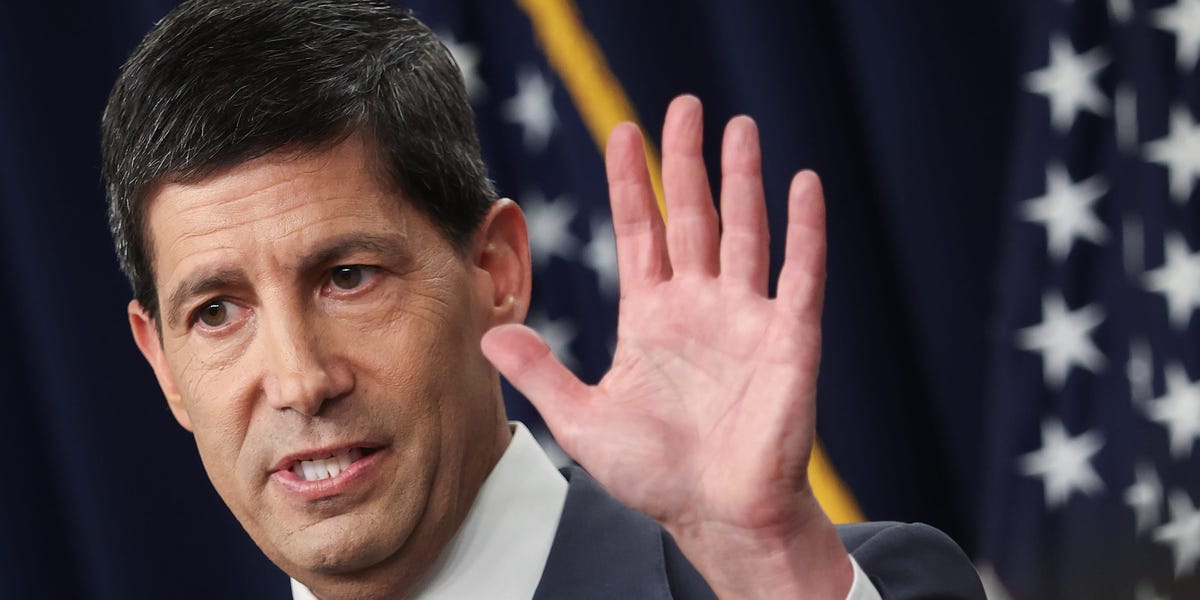
Markets view this week’s Federal Reserve meeting outcome as virtually certain, though its impact on markets remains uncertain. Markets are assigning approximately 93% probability to a rate increase at the end of the Fed’s policy meeting on Wednesday. With inflation standing at 3.4%, long-term Treasury yields are elevated, and a hawkish commentary from Fed Chair Kevin Warsh delivered at Jackson Hole has convinced investors that rates are likely to rise. However, uncertainties remain regarding how Warsh and other Fed officials might indicate subsequent moves, especially considering Warsh’s skepticism toward forward guidance. Warsh has consistently emphasized combating inflation, yet with midterm elections approaching and President Donald Trump already pressuring Warsh to cut rates, it is unclear how aggressively he will become. Regarding markets, investors generally prefer rate decreases, but they may embrace a rate hike this time as it could reinforce Warsh’s credibility and dedication to curbing inflation. Should rates stay flat, stocks could experience a selloff as investors fear inflationary pressures intensifying. Alternatively, they might support the current trajectory since rate hikes can constrain corporate earnings growth, which fuels stock performance. Given the high likelihood of a rate hike already embedded in market expectations, Goldman Sachs analyzed historical stock behavior following the onset of a Fed tightening cycle in a client note published on Friday. Averaged since 1988, the S&P 500 tends to fall after the initial rate hike. The index’s median return roughly three months post-hike averages around -4%, while the mean return hits a low of approximately -4% about two months after the initial increase. This pattern implies that the two-to-three month window after the first hike represents a favorable entry point for purchasing market dips. By the six-month mark, both median and average returns revert to positive territory. At the twelve-month horizon, the median return for the S&P 500 sits at 9%. Goldman observes that equities often falter when the Fed initiates rate hikes, yet anticipate the bull market will persist. “Equity valuations typically struggle as the Fed raises rates, but we forecast continued momentum in the bull market,” noted Ben Snider, the firm’s chief U.S. equity strategist, in the analysis. Continuing, he stated: “Currently, the rates market anticipates over three 25 basis-point hikes by mid-2027, raising the threshold for policy to take a hawkish turn.” Historical sector performance following the first hike has been mixed, but on average, energy and technology sectors have performed best, with each rising approximately 4% during the first three months after an initial hike dating back to 1988.
Trending
- The pay television industry may be finding its footing
- Startup Pulley, which aimed to rival Carta, announces shutdown after seven years
- What history says about how stocks will react to the Fed’s long-awaited rate hike by Themoneytimes
- I Couldn’t Afford a Dior Bag, So I Spent $325 on the Brand’s Spa Treatment Instead
- Wall Street Alerts Mount as Surging Yields Shake Equities: ‘Pullback Is Overdue’
- Elizabeth Warren asks Scott Bessent and Todd Blance about an investigation into Trump-linked WLF crypto
- ’60 Minutes’ Viewership Drops Over 20% in Season Premiere Under Bari Weiss Leadership
- Target introduces new employee uniform line inspired by its ‘Tar-zhay’ style.
Wednesday, September 16