

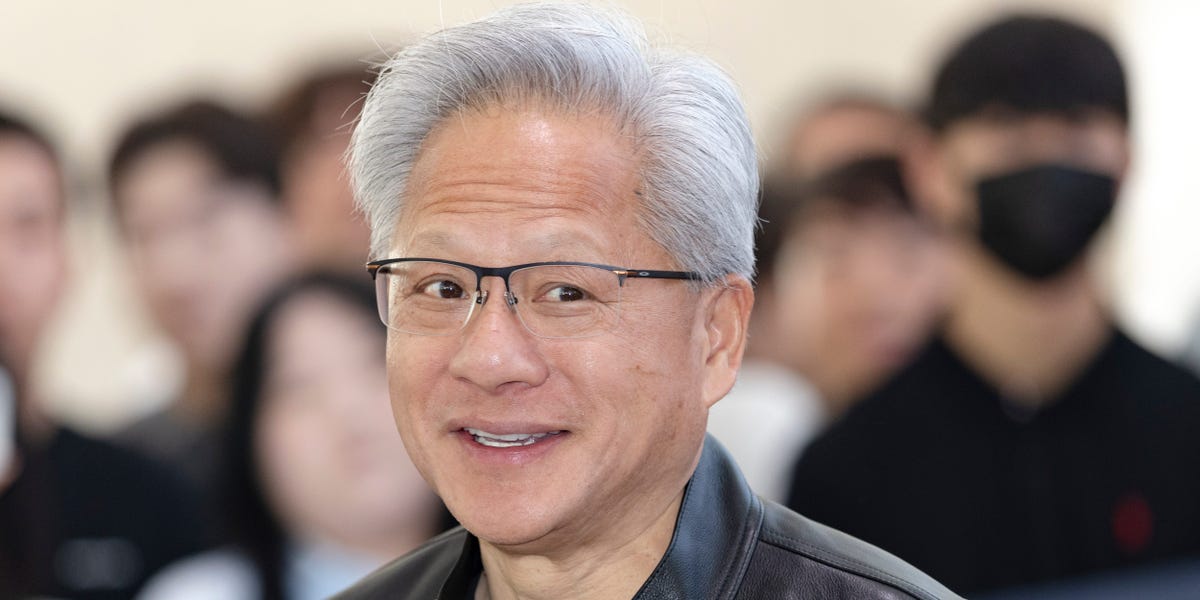
While getting ready to depart from Nvidia, David Hoeller and Nikita Rudin nervously joined a late‑night call with their chief executive.
The pair had spent years developing robotics at the semiconductor giant, advancing simulation capabilities and assisting in a demonstration where CEO Jensen Huang stepped onto the stage alongside a group of humanoid robots.
Seeking greater freedom to transition that technology into practical applications, they left in 2024 to establish Flexion Robotics, a venture focused on building intelligent robots.
During a call from a Munich conference, Huang didn’t attempt to dissuade them from departing, but he raised an issue with their startup’s planned name, Checkpoint.
Rudin recalled, “He told us the name was poor and we needed to change it,” adding that they had heard the name suggested a different industry. “I don’t want to give him all the credit, but we likely altered it after his remark.”
Huang also cautioned them about the challenging journey that lay ahead.
Rudin quoted him as saying, “We don’t realize how tough this journey will be.”
Flexion’s story illustrates how Huang advises departing founders — offering encouragement without sugarcoating. This straightforward style pervades Nvidia’s culture, where Huang is known for bypassing management layers and personally addressing everything from employee performance to customer complaints.
Flexion’s ties with Nvidia continued; the chip giant later invested in the Zurich‑based firm, which is now expanding into the United States after opening a San Francisco office and recruiting researchers from firms such as Meta. Overall, it has secured over $57 million in funding.
Nvidia declined to comment on the request.
Founders say Jensen Huang provides candid feedback.
For Bing Xu, Huang’s parting counsel was especially personal.
Xu joined Nvidia after it purchased his first startup in 2024. Earlier this year, he walked away from a potentially life‑changing amount of Nvidia equity to launch another venture, INT21, which leverages AI to enhance chip software.
After Xu disclosed his plans, Huang spent two hours with him and other Nvidia executives discussing his work and attempting to persuade him to remain.
Huang also delivered a pointed critique, noting that communication was Xu’s greatest weakness and could hinder his achievements. Xu tended to assume others shared his technical expertise, making his explanations hard to follow, and Huang suggested that staying at Nvidia might be the better option, he recalled.
“This is the most honest feedback I’ve received in the past decade about myself,” Xu said, noting he now works with a PR firm. “I didn’t realize my communication was such an issue, but when Jensen pointed it out, I saw it as a chance to become a better version of myself.”
The dialogue wasn’t solely tough love; Xu revealed he was dealing with high blood pressure and other health concerns, and Huang encouraged him to take time off and rest.
He saw both the concern and criticism as proof that Huang wanted him to succeed.
Have a tip? Contact this reporter via email at gweiss@Themoneytimes.com or Signal at @geoffweiss.25. Use a personal email address and a nonwork device; here’s our guide to sharing information securely.