

The changing of the seasons can be a great excuse to freshen up your space.
Often, that means out with the old and in with the new, but this autumn, some trends of the past are making their way back around.
Business Insider asked three interior designers to share which trends they’re looking for this fall — and which they’re predicting will fade away.
Color drenching continues.
For the past couple of years, there’s been a growing interest in color drenching, and according to interior designer and author Max Humphrey, it’s going to continue.
Color drenching involves painting the walls, trim, doors, and even the ceiling all the same color (or different shades of it), the designer said.
“I think it can make a room feel calm even, and also use a lot of color in it,” Humphrey told BI.
For anyone who may be hesitant to fully commit to one color, the designer suggests starting small by painting just the walls and trim to see how the space feels before expanding to include the ceiling or more.
Beverage bars seem to be getting more popular.
More and more people are incorporating dedicated bars into their homes, Humphrey said.
He told BI he’s seeing clients who want to entertain at home more move beyond simple bar carts and instead create dedicated bar areas separate from the kitchen. These can range from built-in coffee bars to dedicated cocktail-mixing stations.
“I think the point is to make it feel really intentional instead of just having your bottles and glasses scattered around or on some open shelf in the kitchen,” the designer said.
Animal-print accents will be making appearances this fall.
“Animal print is definitely trending and continuing to trend,” interior designer and furniture designer Tyka Pryde told BI.
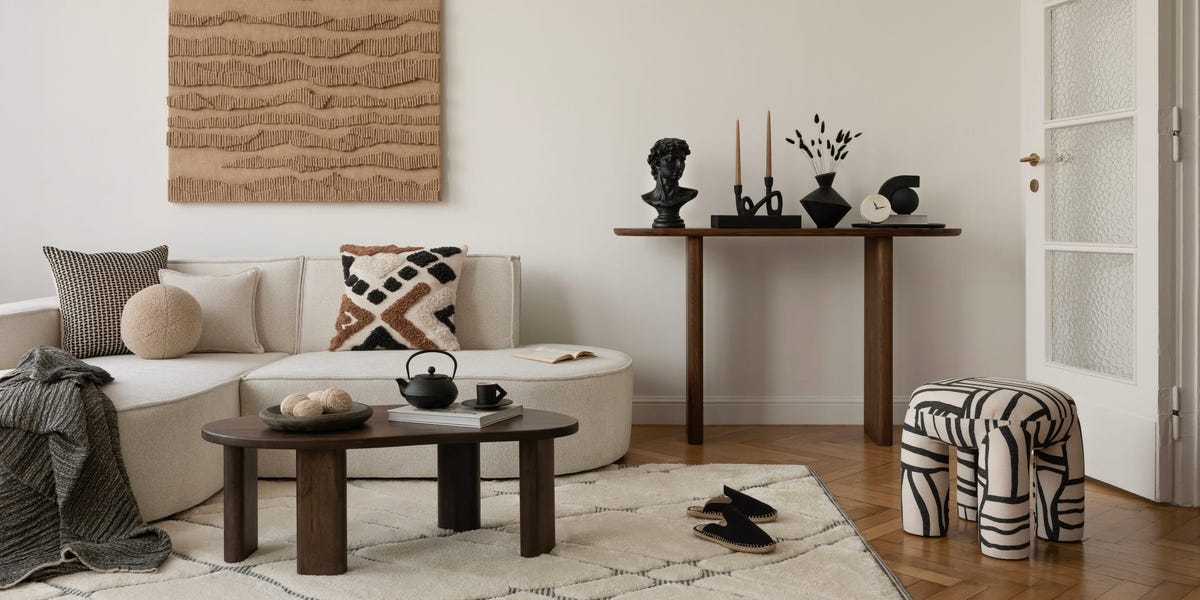
We’ll most likely see these patterns in pops this fall season, from tiger-print stools and leopard-print blankets to cheetah-print pillows and zebra-print rugs.
Slipcovers are making a comeback.
Jessica Davis, interior designer and founder of Atelier Davis design studio, said slipcovers are making a comeback, but not in the way they looked years ago.
Instead of the loose, washed-white styles commonly associated with beach or coastal interiors, she’s seeing printed cotton, with more tailored details like piping or pleating.
Davis also suggests using slipcovers on unexpected pieces of furniture, such as a wooden dining chair. She said this could give the chair a completely different look and warm up an otherwise hard surface in the colder seasons.
Gallery walls are getting an upgrade.
Gallery walls are still on trend, though they’re moving beyond traditional framed art and photos.
Humphrey told BI that he’s seeing more unconventional displays, like ones featuring things like vintage plates or mirrors to add more visual interest to a wall.
What’s great about this approach is that you don’t need a curated art collection to get in on the trend. Sculptures, vintage signs, pottery, and even framed fabrics can work for a gallery wall.
“It’s also something that can be made to feel really personal,” the designer told BI.
Café curtains are having a moment.
Humphrey said café curtains, which usually cover half to two-thirds of a window, are very much on trend this season.
Beyond their charm, the designer said they’re also particularly functional in spaces like kitchens and bathrooms, where they offer privacy without blocking natural light.
Plus, he said they’re an inexpensive way to add a decorative touch to a space.
On the other hand, plain white ceilings are out.
Instead of sticking to a traditional plain white ceiling, Pryde said a lot of people are now treating the ceiling like a fifth wall.
She’s seen some embrace this trend by adding a painted pattern or wallpaper to a ceiling.
The designer said she especially likes the idea of painting a ceiling with a complementary color or using colors from the same family on the walls, such as pairing plum walls with a burgundy ceiling.
Synthetic fibers are losing some of their appeal.
According to Davis, there’s been less interest in synthetic indoor-outdoor textiles as people return to more natural materials, such as cotton. She even said these materials can be just as durable and can still function for both indoor and outdoor use.
When it comes to fall in particular, the designer said, try layering breathable cotton throws that can work inside or transition outside if you’re gathering around the fire pit as temperatures start to cool down.
Overcomplicated home automation may not helping anyone.
Humphrey said technology can be useful when it actually makes life easier, such as remote-controlled Roman shades that eliminate the need for a traditional cord or chain. However, there’s a balance that needs to be struck, he said.
“If it’s adding another layer between you and the thing that you’re trying to do, I don’t like it,” the designer told BI.
There’s also the aesthetic to consider. Humphrey said some overly complicated automated features can be harder to use while also not looking as good as their more traditional counterparts.
For example, a mounted tablet for controling lights may look worse than simple knob and switch while serving a similar purpose.
All-brown-everything interiors have been overdone.
“Brown has been the trend color for a while now — muddy browns and darker tans — but I think we’ve kind of hit the saturation point,” Humphrey told BI.
The color has been everywhere, from walls to furniture and upholstery, he said. Pantone’s Color of the Year for 2025 was also a shade of brown.
But now, Humphrey is looking to add more spark and personality with warmer yellows, honey, and mustard tones that still have an earthy feel.
He added that these warmer shades can also make a space feel cozier compared to the more serious feel of brown.