

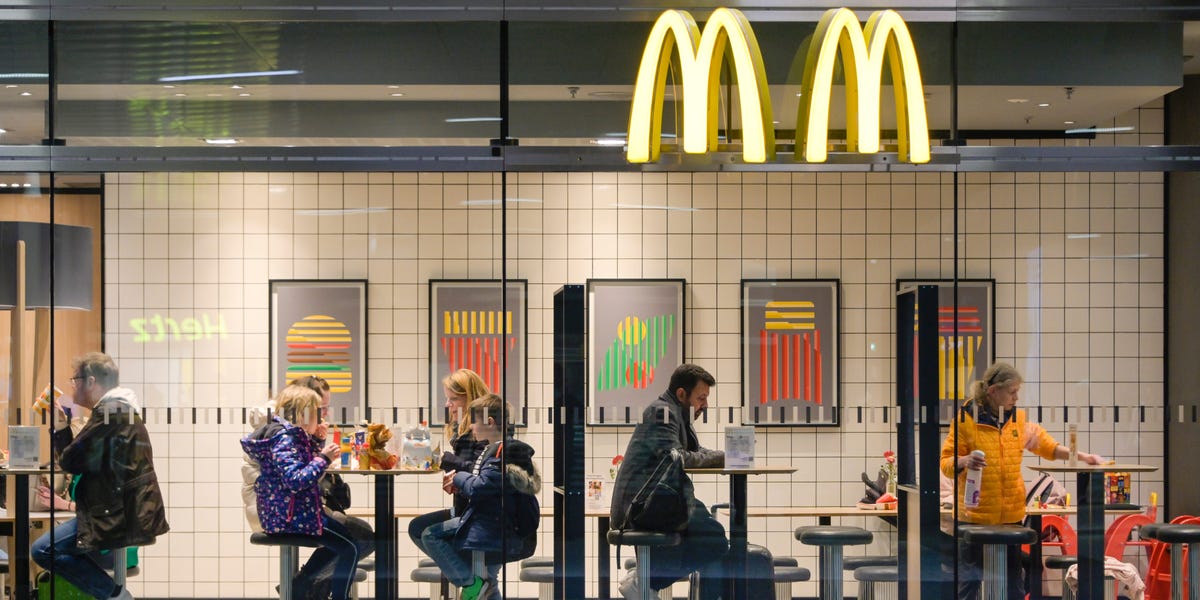
If you’ve recently walked into a McDonald’s, the image most likely to stay with you is a row of touchscreen ordering kiosks.
For digitally inclined customers who do not want a conversation, the kiosks can be a blessing. But many people would rather speak with a person, and increasingly there may be no one behind the counter to talk to.
These impersonal customer interactions are one of the challenges McDonald’s hopes to address through its new “Next” initiative, which the company outlined Wednesday during its investor day.
The company plans to invest roughly $8.5 billion to help franchisees renovate their restaurants, with the goal of improving food quality, simplifying operations, and enhancing the customer experience. That includes a stronger focus on chicken and beverages, new equipment and restaurant designs, AI tools, and additional hospitality training.
On paper, the plan sounds appealing. But investors’ initial reaction was not especially encouraging: shares dropped 5% that day, reaching their lowest level since 2022. Wall Street appears unconvinced that heavy spending to repair and modernize McDonald’s core business will produce sufficiently strong returns.
“Next” did not create that skepticism; it simply gave investors a new reason to act on it. That raises the question: what exactly is going on with McDonald’s?
Why a reset is needed
The macro picture comes first. The US economy is currently dealing with a damaging mix of weak retail sales, declining sentiment, and a contracting job market. This has led to a broad consumer pullback that has affected not only McDonald’s, but the entire discretionary sector, including Walmart.
Still, McDonald’s has not simply been swept along by an industrywide restaurant downturn. Over the past five years, its shares have fallen 3%, while Burger King parent Restaurant Brands is up 14% and Yum Brands — owner of Taco Bell, KFC, and Pizza Hut — has gained 13%.
That performance gap points to a long list of McDonald’s-specific problems: underperforming value deals, slowing US growth, fewer guests, declining service and satisfaction, and a lackluster World Cup promotion.
Skye Anderson, a longtime McDonald’s veteran, was announced last month as the company’s new US president. She is now responsible for overseeing the “Next” turnaround effort at a time when the consumer environment leaves little room for error.
The burden of proof
That leaves “Next” with a difficult assignment. McDonald’s has to convince budget-conscious customers that it still delivers real value — and that a costlier, high-tech overhaul will actually improve the experience.
It also has to persuade franchisees that the investment will pay off, and show Wall Street that an expensive renovation of its core business can restart growth.
Ultimately, the plan is a “back-to-basics” effort. There is no single fix-all promotion coming to the rescue. It is all about better food, faster service, and making customers feel more comfortable.
As a lifelong McDonald’s patron and weekend breakfast regular, I know what would make me the happiest: the return of PlayPlaces. My kids need to experience the joy of eating a Happy Meal while going down an indoor slide. Make it happen, Mickey D’s.
Here’s what is moving markets