

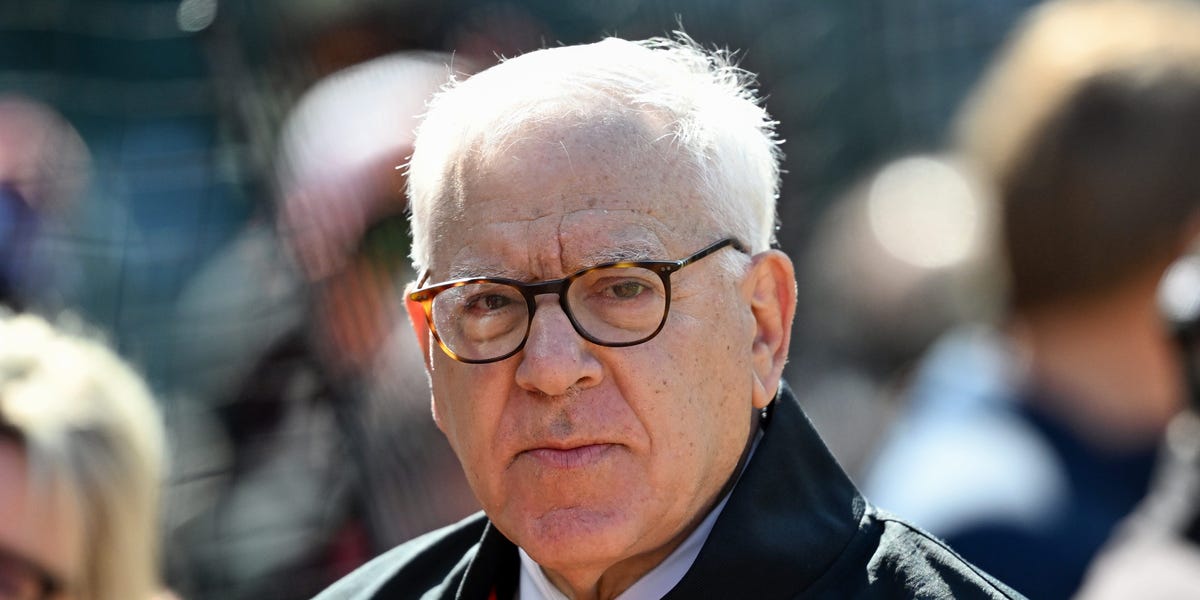
David Rubenstein explains why he bought a baseball team, missed out on Amazon and Facebook, and would be careful betting on or against the AI boom.
The cofounder of Carlyle Group, one of the world’s largest private equity firms, spoke to Themoneytimes ahead of the release of his new book “Inside the Owner’s Box: Conversations on Power and Leadership in Sports.”
In his book, Rubenstein recounts purchasing the Baltimore Orioles for approximately $1.7 billion in 2024 and shares interviews with fellow team owners, such as Robert Kraft of the New England Patriots.
He told Themoneytimes that decades ago, the ultrawealthy avoided the scrutiny of team ownership. However, shifting attitudes and soaring valuations now lead them to believe they can both enjoy the spotlight and profit from sports.
Rubenstein explained that he acquired the Orioles because he had done little philanthropy in his hometown of Baltimore, and wanted to “make a positive impact on the city.”
**Early mistakes**
He also noted that his best investment was likely “founding Carlyle with minimal capital,” while his gravest mistake was “passing on Facebook and Amazon early on.”
Rubenstein said Amazon’s founder Jeff Bezos offered him and his Carlyle partners a stake in the e-commerce startup “from the very beginning.” However, they sold it after Amazon’s stock plummeted during the dot-com bubble, a position that would now be worth “many billions of dollars.”
He also recalled that his future son-in-law was a classmate of Mark Zuckerberg, who asked Rubenstein to invest when the Meta cofounder needed $30,000 to launch his website.
“I didn’t take it seriously,” Rubenstein said. Eduardo Saverin provided the initial funding for Facebook instead, and now ranks among the world’s 60 wealthiest people with a net worth of about $40 billion, according to the Bloomberg Billionaires Index.
**Navigating the AI race**
Rubenstein told Themoneytimes that AI company valuations are “extremely high” and difficult to justify with earnings in some cases. However, he cited Nvidia’s recent strong results as proof that “not all AI hype is unfounded.”
As we learned during the dot-com era, not every tech startup survived and profited, and the same will apply to AI companies, Rubenstein noted.
However, those that are currently thriving will likely continue to succeed for some time, he added.
Rubenstein also acknowledged concerns about aggressive accounting, circular financing, hidden debt, and excessive AI investment. Quoting Warren Buffett, he warned, “When the tide goes out, we’ll see who’s been swimming without a bathing suit.”
Nevertheless, Rubenstein stressed that markets have historically recovered after crashes, noting that “the biggest mistake people make during bubble bursts is selling everything and fleeing.”
Instead of panic-selling, he advised, “that’s likely the time to hold on and perhaps buy more.”