

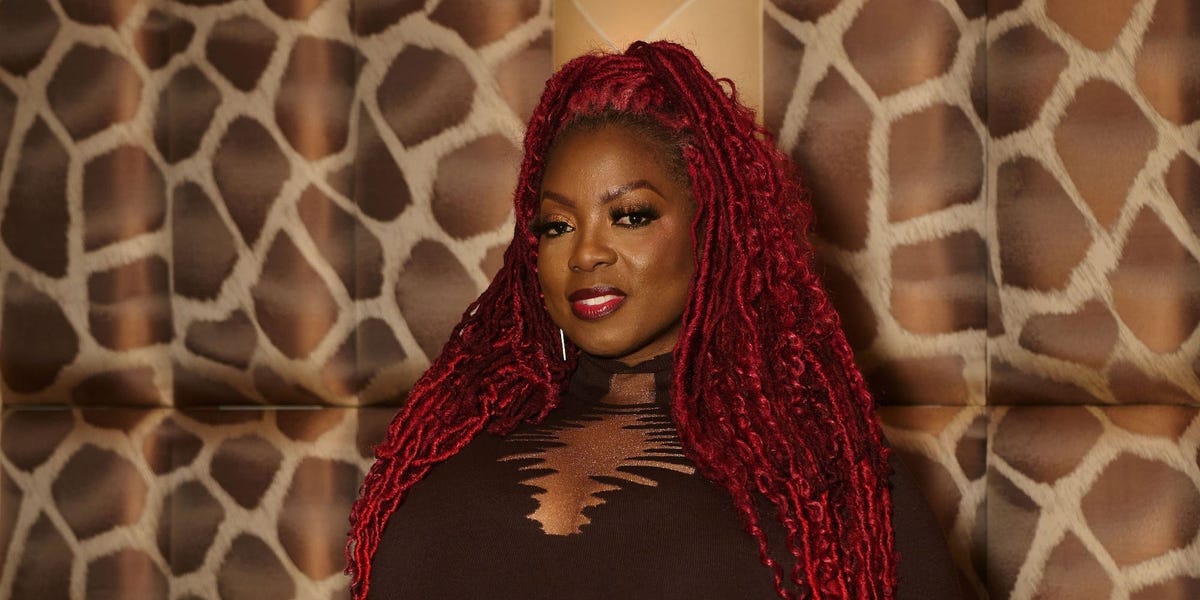
In 2018, Maekaeda Gibbons worked as a loan officer at Bank of America, where she spent her time assessing clients’ financial situations.
She faced a dilemma: her love for luxury fragrances exceeded her loan officer salary. This led her to experiment with creating her own versions of expensive scents, initially just wanting something pleasant-smelling, affordable, and suitable as gifts for colleagues and friends.
“After covering all my expenses, I had some money left over and decided to bet on myself,” Gibbons shared with Themoneytimes.
With approximately $300, she began crafting fragrances in her kitchen. She allocated roughly $54 for bottles purchased from Amazon, using the rest for carrier oils—base oils for fragrances—to test different formulations.
What began as a pastime evolved into a paid side business when coworkers caught wind of her creations and started requesting to purchase them.
Seven years on, Brown Sugar Babe generated $21 million in gross revenue, per digital sales dashboards and financial records examined by Themoneytimes. The brand now boasts an Atlanta flagship store, a devoted TikTok following, and zero external investors. Here’s her journey.
The Bootstrapped Financials
Gibbons has never accepted external funding, which she believes defines how the company operates. The compromise, she noted, was growth velocity.
Bootstrapping compelled the business to remain lean and expand gradually, with certain concepts shelved until sufficient capital became available.
“As an entrepreneur without capital, I had to trust my instincts, which I know sounds reckless,” she admitted.
By ‘instincts,’ she means heavily prioritizing customer feedback—she surveys her social media community on future products—then securing funding afterward rather than upfront.
“If that meant maxing out credit cards to secure ingredients, raw materials, and packaging, I did it,” she stated.
When Brown Sugar Babe required approximately two years’ worth of inventory and ingredients, Gibbons executed multiple purchases over roughly three months, totaling around $5.5 million, she revealed.
She explored financing options but chose to pay outright over time. ‘I wanted to protect our reserves,’ Gibbons explained.
Initially extremely stressful, this approach allowed Gibbons to concentrate on execution rather than supply chain uncertainty, knowing raw materials were secured for two years.
Focusing on Core Strengths
Despite her openness to experimentation, Gibbons draws a firm line at alcohol-based eau de parfum. Brown Sugar Babe specializes in fragrance oils, a segment she believes remains underutilized by competitors.
“There’s a definitive no on entering EDP, atomized perfumes, or alcohol-based fragrances for multiple reasons,” she said. “That market is saturated and expertly served by existing brands.”
Much of Brown Sugar Babe’s collection draws inspiration from notes in established luxury fragrances, which Gibbons acknowledges openly. She simply dislikes the term commonly used to describe this approach—’dupe.’
She doesn’t begin with a specific luxury bottle to replicate. Rather, she starts with a scent she loves, then determines how to amplify it.
This approach carries risks. For instance, in 2024, Sol de Janeiro sued MCoBeauty for false advertising, trade-dress infringement, and unfair competition, alleging their fragrance mists mimicked the Cheirosa body-mist line’s appearance, notes, packaging, and branding.
MCoBeauty countered with a January 2026 motion to dismiss, claiming the lawsuit attempts to obstruct a legitimate competitor. The case remains pending in federal court.
Gibbons believes criticism varies by brand. ‘Would you be upset with someone making mac and cheese the same way you do?’ she asked.
Other brands have begun replicating her formulas, so she understands the reverse perspective. She says this doesn’t bother her. ‘Everyone draws inspiration from somewhere,’ she added.
The Real Costs
While many fragrance brands remain online-only to avoid physical overhead, Gibbons wanted a brick-and-mortar touchpoint for customers craving in-person connection, which she felt digital channels couldn’t fully deliver.
After years of brand-building, Gibbons launched an Atlanta flagship in 2025, investing approximately $1.2 million covering construction, branding, and the grand opening.
“I often want to do more to give our community memorable experiences,” she said, discussing how the brand hosts in-person events and pop-ups. “Reining in my imagination for these experiences can be challenging.”
Gibbons has also underestimated demand. Brown Sugar Babe has sold out entire launches multiple times, and website crashes during releases have become a recurring issue.
“I often approach launches with naive optimism because I’m consistently surprised by the response,” she said.