

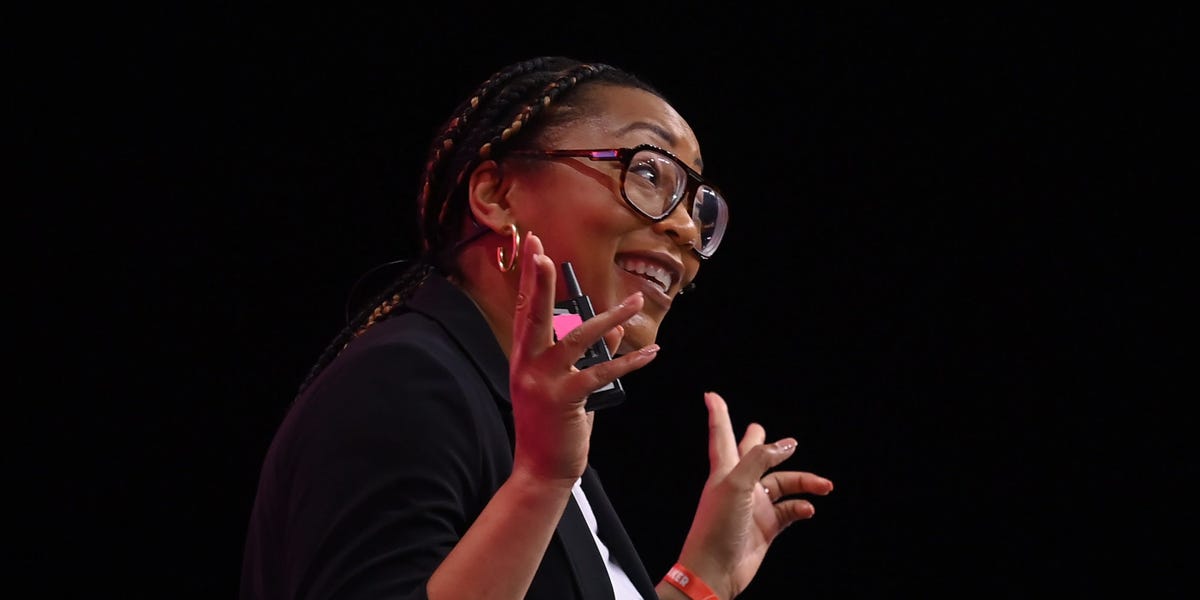
Shiloh Luckey secured millions in funding from prominent venture capitalists to develop a tax-compliance venture while dispensing personal finance guidance to her substantial TikTok following.
Last week, Florida authorities took her into custody on charges carrying potential decades-long sentences, accusing her of misleading venture capitalists and diverting capital toward her residence, a Tesla vehicle, and a Caribbean nuptial celebration.
This case underscores a fragile reality in venture capital: backers frequently commit multimillion-dollar sums to nascent firms lacking extensive financial track records or audited figures, placing immense reliance on founders’ representations. The model hinges on trust, which can collapse when the narrative pitched to investors diverges sharply from the startup’s actual operations.
Luckey declined to respond to inquiries for comment.
According to the Department of Justice, she was apprehended in Fort Lauderdale as she prepared to embark on a cruise vacation. After posting bond, she is slated to appear in federal court in Los Angeles within the next few weeks.
Luckey established ComplYant in 2019 to assist small businesses with tax compliance. The startup secured a $5.5 million seed round in 2022, spearheaded by Craft Ventures, the San Francisco-based firm co-founded by investor and White House advisor David Sacks. (A Craft representative did not reply to a comment request.)
Themoneytimes initially covered Luckey, previously known as Shiloh Johnson, in 2024 following her startup’s sudden shutdown and her cessation of communication with staff, several of whom found their 401(k) contributions had vanished.
A 15-page indictment alleges Luckey falsely presented herself to investors as a certified public accountant. It further claims she utilized funds outside ComplYant’s accounts to purchase a Los Angeles home via a ‘check kiting scheme.’
Prosecutors contend she drafted a $1.5 million check from a depleted corporate account, deposited it into a separate company account at another institution, and transferred the funds to finalize the property acquisition before the initial bank detected the check would bounce. The indictment asserts she subsequently covered the deficit using proceeds from an alleged separate securities fraud operation.
Luckey faces nine securities fraud counts, three wire fraud counts, one bank fraud count, and two money laundering counts.
Other tech entrepreneurs who have been incarcerated secured significantly more capital than the $13.3 million attributed to Luckey. Notable cases include Theranos founder Elizabeth Holmes, who amassed over $700 million and is serving an 11-year term; FTX founder Sam Bankman-Fried, who raised approximately $1.8 billion and received a 25-year sentence for customer fund misappropriation; and Charlie Javice, serving seven years for deceiving JPMorgan Chase into acquiring her financial aid startup for $175 million.
Luckey has also faced a separate civil action from the SEC over securities law breaches. The regulator stated she claimed revenue was surging, despite never exceeding $620 in monthly income and gaining merely four subscribers per month.
The SEC further alleged she diverted millions for travel to Aspen, Miami Beach, Turks and Caicos, and Lisbon, along with Super Bowl ticket purchases.
The civil matter was resolved last month without Luckey acknowledging any misconduct.
Following ComplYant’s closure, Luckey persisted in posting personal finance tutorial videos on her since-deleted TikTok channel, which had amassed nearly 24,000 followers.
Last year, she introduced a venture named HabitLoop, billing it as a digital financial aide designed to help individuals manage their finances.
“I grew up with very poor financial habits,” Luckey stated in a HabitLoop launch video, explaining it stemmed from a lifetime of living beyond her means.
“This is something I built on hard lessons,” she remarked.
No evidence suggests she secured funding for HabitLoop, and the venture never launched a product.