

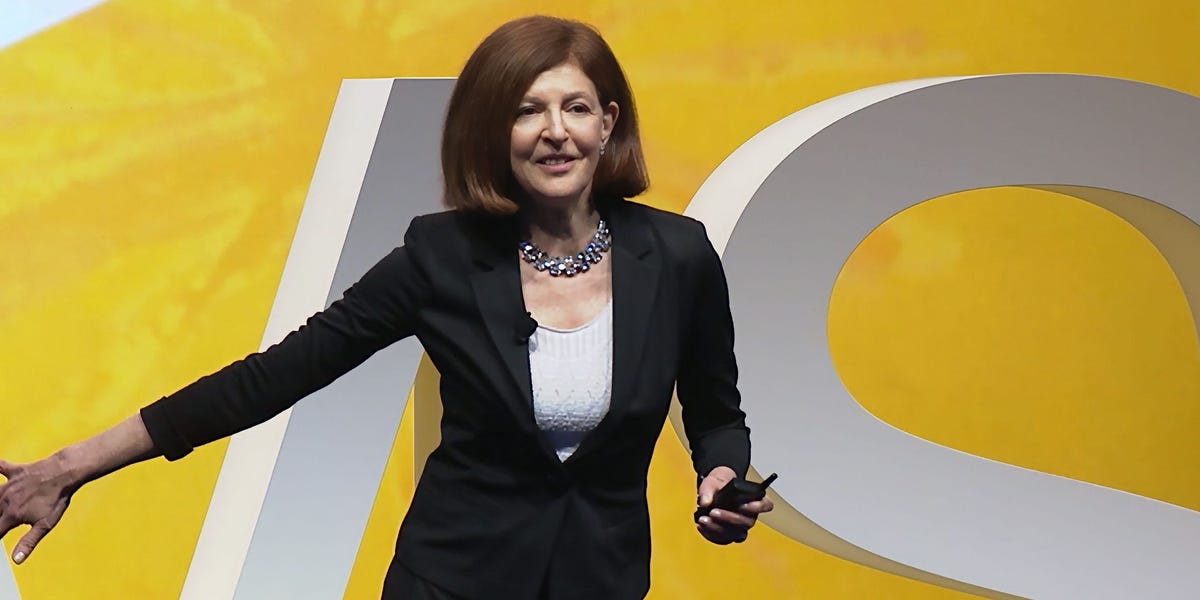
This as-told-to essay draws on a conversation with Pamela Meyer, CEO of Calibrate Inc., who trains organizations to detect fraud and reduce insider threats. She is the author of \”Liespotting\” and \”How to Read the Room\” and is based in Washington, D.C. This story has been edited for length and clarity.
Over the past decade, I have trained people to spot deception.
The ability to read a room is a fundamental but often underappreciated skill. Greater awareness, attention, and observation can improve leadership, relationships, and influence—and the skill is entirely teachable.
Doctors are trained to observe before making a diagnosis. Spies learn to enter a room, leave, and report who wore red, who wore blue, who had COVID, and whose feet pointed toward the exit.
Because we have not been taught to spot them, all of us overlook micro-signals. Yet this ability can be learned, and it offers clear workplace benefits: less time wasted, trust built more quickly, goals achieved more often, and problems repaired before they escalate.
Here are four ways to improve how you read any room:
Do your homework
Before entering, gather information about the people present; otherwise, you waste everyone’s time.
Meyer describes the \”Triple B method:\” background, behavior, and beliefs. Assessing these elements is part of formal profiling. You can begin by examining a person’s digital footprint, including social media, published work, Spotify playlists, or YouTube channel subscriptions.
Lower your cognitive load
When your cognitive load, or working memory, is overloaded, you cannot bring full presence or observational skill to the moment. When we try to hide our emotions or a story, our facial microexpressions, feelings, and body language can inadvertently \”leak out.\”
To reduce cognitive load, write down what you need to remember so it is not occupying all your attention. Then choose one central purpose for the meeting. You may have two or three objectives, but focusing on one—such as getting someone to lead budget planning—can anchor you before you enter.
Identify your blind spots
We enter every room carrying baggage: an argument with our spouse, pressure from our boss, an underwater mortgage, or whatever else weighs on us. Recognize these issues because they affect your accuracy and distract your attention.
Take time to understand your own blind spots and biases, and ask the people around you for feedback.
Pause and take in the room
When you enter, pause and observe before speaking. Simply note the atmosphere: Is it uncertain? Cool? Often, the person with the most influence sets the tone. Watch what happens immediately after a conflict—whom people look at, who smirks—to begin identifying who holds influence.
When something happens, do not simply sit back and watch it like entertainment; observe everything around it. Consider what triggered the action and what follows. On Zoom calls especially, we may treat the meeting like a movie instead of paying attention to the people. Consciously shift your focus around the room and observe.