

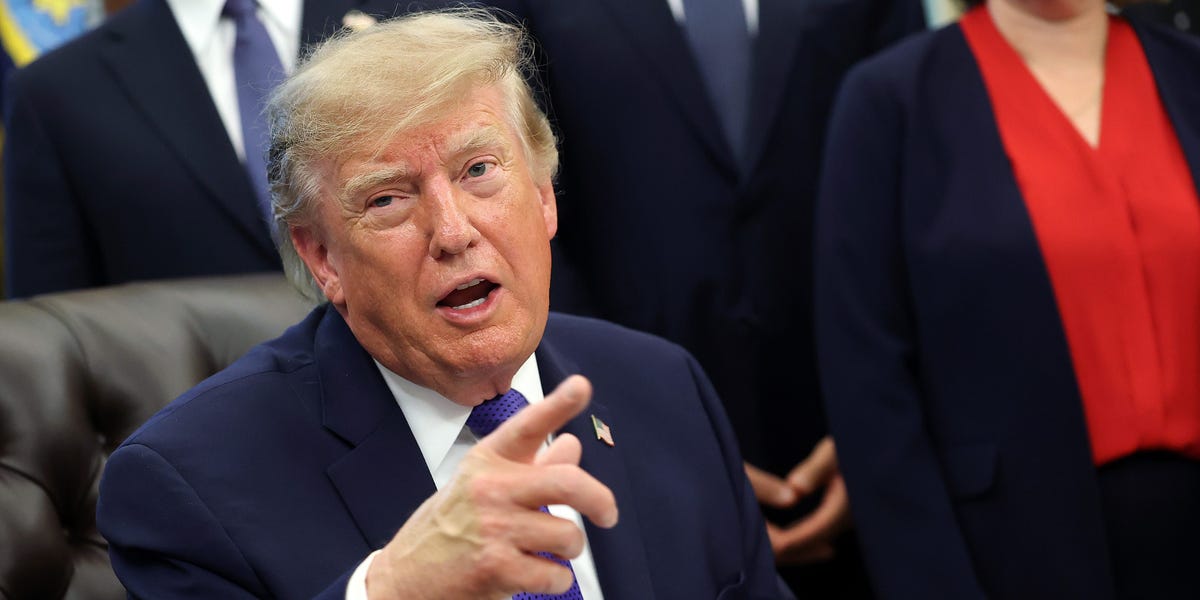
President Donald Trump is sending $500 checks to almost one million Americans in 30 states. He may be aiming to win votes, criticize his predecessor, and make an ideological statement, experts told Themoneytimes.
The White House says the program is returning “Obama overcharges” to Affordable Care Act enrollees, after the Biden administration collected surplus “user fees” from insurers that were passed on to consumers as higher premiums.
In a letter sent this week to recipients of the $500 checks, Trump wrote, “I am proud to return your money to you, and I will never stop fighting to put the American People FIRST, restore Affordability, protect your hard-earned money, and lower the Cost of Healthcare.”
While the cash payments to over 950,000 citizens may appear like a universal basic income, philosophy professor Karl Widerquist of Georgetown University‑Qatar, author of several UBI books, noted that the checks have “very little relation to UBI,” being limited to certain enrollees and presented as a repayment of overpayments.
He added that a “uniform payment to a million people, regardless of how much they might have overpaid,” raises doubts about the incentive to correct overpayments.
Cambridge University ethics professor Thomas Roulet described the program as “taking a dig” at the Biden administration’s policies.
Roulet said the initiative reflects libertarian ideology, arguing that “citizens know better how to spend their money than the government does” and that a “small state is good,” with Trump framing it as a return of resources to citizens.
Voters will go to the polls in November to determine if Republicans keep control of the House and Senate or hand power to Democrats.
Trump has presented the $500 payment as a financial boost for Americans who are feeling the pinch.
The US‑Iran conflict has lifted energy prices, and rising Treasury bond yields are increasing interest rates on credit cards, car loans, mortgages and other debts.
Health‑insurance premiums have risen for many households since the end of last year, when Republicans blocked Democrats from extending subsidies that had kept premiums low.
In September, the president floated a $5,000 “Trump Dividend” for every American if Republicans retain control of both chambers of Congress.
“The $5,000 promise is more akin to a UBI, yet it raises several suspicious aspects,” Widerquist said, questioning why Trump wouldn’t introduce the legislation now, with Republicans in control of both chambers, if he were truly serious.
“Republicans could easily secure enough Democratic votes to break a filibuster and distribute the checks before Christmas,” he noted. “It appears the President prefers not to send checks unless he gains politically from it.”