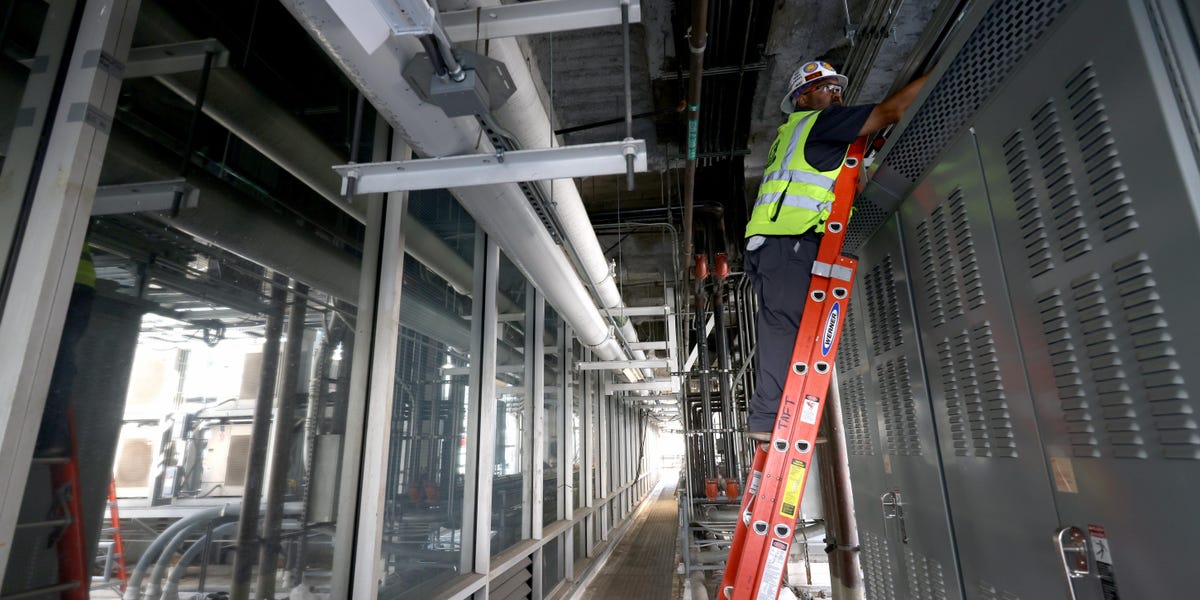
Amid a sluggish employment landscape, certain sectors continue to shine: healthcare roles and specialized positions within data centers. Throughout the previous year, the healthcare industry has remained a reliable performer. The most recent employment report from the Bureau of Labor Statistics verified that healthcare maintained its momentum in September, though at a reduced rate. Construction also delivered a solid performance with 11,000 net new positions, despite reductions among residential specialty trade contractors. Instead, growth was primarily driven by nonresidential specialty trade contractors — including electricians and other construction professionals involved in data center developments and similar projects. The healthcare sector added roughly 17,000 positions — a significant portion of the 29,000 total jobs created nationwide, but roughly half of the sector’s average monthly gain of 33,000 over the past year. Even with healthcare’s deceleration in hiring, Cory Stahle, an economist at Indeed Hiring Lab, noted that the industry still presents long-term opportunities due to the need for caring for an aging population. According to ZipRecruiter economist Nicole Bachaud, the moderation in healthcare hiring may stem from funding constraints that complicate efforts to hire additional staff. ‘The demand exists, but the ability to meet that demand is currently constrained by the federal funding environment,’ she explained. While healthcare added 16,700 positions during the month, the government sector reduced its workforce by 17,000. Office-based industries were among those that shed jobs. The information sector has dropped from its 2022 high of 3.1 million employees to 2.7 million last month. Construction’s 11,000-job increase was partially fueled by nonresidential specialty trade contractors, where employment grew by 12,300. This reflects how the data center expansion — poised to become the largest capital investment initiative in U.S. history — is supporting construction jobs and expenditures. According to data from Indeed, job listings related to data centers have increased by nearly 130% since June 2024, while overall job postings across the U.S. have declined. ‘Given the substantial investment flowing into these facilities and their associated roles, I expect this trend to persist in the near term,’ Stahle said. However, the sustainability of data centers as a long-term employment source remains uncertain. Guy Berger, a senior fellow at the Burning Glass Institute, cautioned that if the data center surge proves shorter-lived than anticipated, ‘we may suddenly find we’ve trained many electricians and similar workers for tasks that are no longer in demand.’
Trending
- Verum Exchange Adds Major Crypto Assets: Mining Roster Grows to 25 Coins
- How AI Is Transforming the Creator Economy, From High Pay to Fan Backlash
- September’s job market faced challenges, yet data center and healthcare positions saw growth
- Jamie Dimon’s Leadership Habit That Projects Confidence
- Nvidia alumni are fueling a new wave of robotics startups
- The bull case for stocks is intact despite bond market turmoil, Edward Jones CEO says
- Two policy analysts explain Trump’s mailing of $500 checks to nearly one million Americans
- 18 of the world’s most extraordinary new buildings
Friday, October 2