

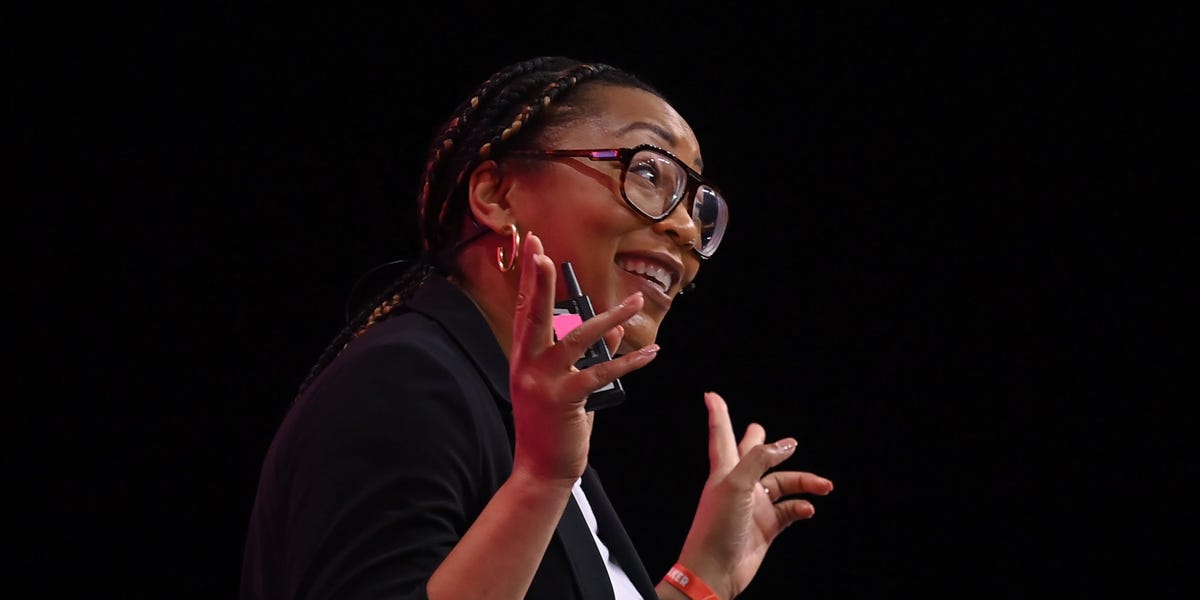
Shiloh Luckey secured millions from prominent venture investors to develop a tax-compliance startup and frequently provided personal finance guidance to her extensive TikTok following.
She was recently arrested in Florida and charged with offenses that could lead to decades in prison for allegedly misleading venture capitalists and diverting funds to purchase a house, a Tesla, and a Caribbean wedding.
This case underscores a vulnerability in venture capital: Investors often commit large sums to nascent companies with minimal financial history and potentially unverified figures, relying heavily on founders’ representations. This system hinges on trust, which falters when the narrative presented to investors diverges significantly from the startup’s actual operations.
Luckey did not respond to requests for comment.
Her arrest occurred in Fort Lauderdale as she attempted to board a cruise ship for vacation, according to the Department of Justice. She was released on bond and is scheduled to appear in federal court in Los Angeles in the coming weeks.
Luckey founded ComplYant in 2019 to assist small businesses with tax regulations. In 2022, the company secured a $5.5 million seed round led by Craft Ventures, a San Francisco venture firm co-founded by investor and White House advisor David Sacks. (A spokesperson for Craft did not respond to a request for comment.)
Themoneytimes initially reported on Luckey, formerly known as Shiloh Johnson, in 2024 after her startup abruptly ceased operations and she lost contact with employees, some of whom found that 401(k) contributions were missing.
In a 15-page indictment, prosecutors allege that Luckey falsely presented herself to investors as a CPA. Additionally, she allegedly used funds not belonging to ComplYant to buy a house in Los Angeles through a “check kiting scheme.”
Prosecutors claim she wrote a $1.5 million check from an empty company account, deposited it into another account at a different bank, and transferred the money to complete the home purchase before the first bank detected the check would not clear. The indictment further alleges that she later used money obtained through a separate securities-fraud scheme to cover the resulting deficit.
Luckey faces nine counts of securities fraud, three counts of wire fraud, one count of bank fraud, and two counts of money laundering.
Other tech founders who have been incarcerated raised significantly more than the $13.3 million Luckey did. Notable examples include Theranos founder Elizabeth Holmes, who raised over $700 million and is serving an 11-year sentence, and FTX founder Sam Bankman-Fried, who raised approximately $1.8 billion and received a 25-year sentence for fraud involving customer funds. Charlie Javice is also serving a seven-year prison term for defrauding JPMorgan Chase into acquiring her financial aid startup for $175 million.
Luckey has been the target of a separate civil lawsuit by the SEC for securities law violations. The SEC stated that she told investors her revenue was thriving, despite never earning more than $620 monthly and adding only four subscribers per month.
It also alleged that she diverted millions for trips to Aspen, Miami Beach, the Turks and Caicos, and Lisbon, as well as for Super Bowl tickets.
The civil case was settled last month without Luckey admitting any wrongdoing.
After ComplYant shut down, Luckey continued to post instructional videos on personal finance advice on her now-deleted TikTok channel, which had nearly 24,000 subscribers.
Last year, she launched a startup called HabitLoop, which she described as a digital financial assistant for managing money.
“I grew up with poor financial habits,” Luckey said in a video introducing HabitLoop, noting it was inspired by a lifetime of overspending.
“This is something I built based on hard lessons,” she added.
There is no evidence that she successfully raised funds for HabitLoop, and the product was never released.