

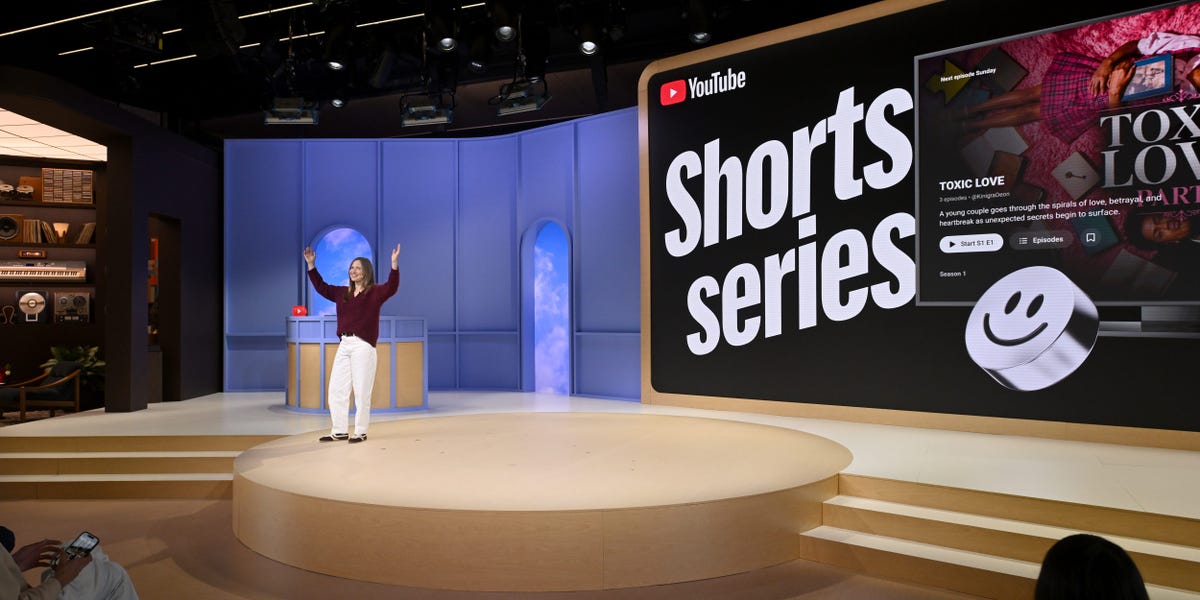
YouTube is jumping into the micro-drama trend, helping to move this fast-growing format from mobile devices to television sets.
On Wednesday, the platform unveiled a new feature that lets creators package their short videos into series of episodes or seasons, designed to be watched in order. The tool is available to all Shorts creators, but is especially useful for micro-drama studios that produce soap-opera-style shows broken into 1- to 3-minute segments.
“Micro-drama studios, even before this tool, are seeing strong results on YouTube, and we hope this improves the viewer experience for their content,” said Kurt Wilms, senior director of product at YouTube, during the company’s Made on YouTube event on Wednesday.
Micro-drama platforms generally use a “freemium” model, where viewers can watch a few episodes for free before being prompted to pay. Wilms noted that studios can replicate this approach using YouTube’s existing memberships feature.
He explained that a studio could release a few episodes of a series for free, then “place the remaining ones behind the membership paywall.”
YouTube also offers in-feed advertisements that provide a revenue share to creators, giving an alternative monetization path.
Serialized short dramas—often found on dedicated apps like DramaBox or ReelShort—have surged in popularity in the United States over recent years, both captivating and puzzling Hollywood. Despite their quirky storylines involving werewolf romances or scandalous billionaire sagas, they’ve become a serious business. Global short-drama revenue is projected to hit $7.8 billion this year, with the U.S. representing roughly 40% of that, according to a Deloitte report. Streaming services such as Paramount+ are experimenting with the format, while YouTube competitor TikTok is diving into short dramas at full speed.
Testing a basic micro-drama product will give YouTube insight into viewer demand and help determine whether to invest in further tools.
YouTube also shared compelling statistics on micro-drama viewership:
- In the first half of 2026, the format reached over 6.5 billion views, with year-over-year watch time increasing by more than 50%
- While micro dramas are mobile-first, TV views grew by over 90% year-over-year
“We’re seeing both micro-drama studios and individual creators saying people are watching Shorts on TV,” Wilms said. “People are watching episodic Shorts on the TV, and it’s awkward to watch one after another. That’s why the Shorts tools were created. This should improve that use case.”
YouTube emphasized that its Shorts series feature isn’t limited to dedicated micro-drama studios. It highlighted creator Kinigra Deon as someone already embracing short episodic storytelling.
The growth of micro dramas on YouTube in the living room illustrates how the line between video apps and traditional TV continues to blur. YouTube has captured a larger share of TV viewing, with more advertising dollars following as marketers see less distinction between the two.
YouTube’s vast reach can energize a new format, just as it did for podcasts. In 2025, YouTube reported that over 1 billion people listened to podcasts there each month, helping drive audio into a visual medium.
According to Wilms, the micro-drama category is expected to keep expanding as audiences consume more short-form content across various devices.
“Micro dramas are fast-paced and action-packed,” he said. “Overall, we see great success with bite-sized content tailored to individual tastes. There’s a continuation of short-form content that now extends to episodic formats capable of engaging and retaining viewers.”>