

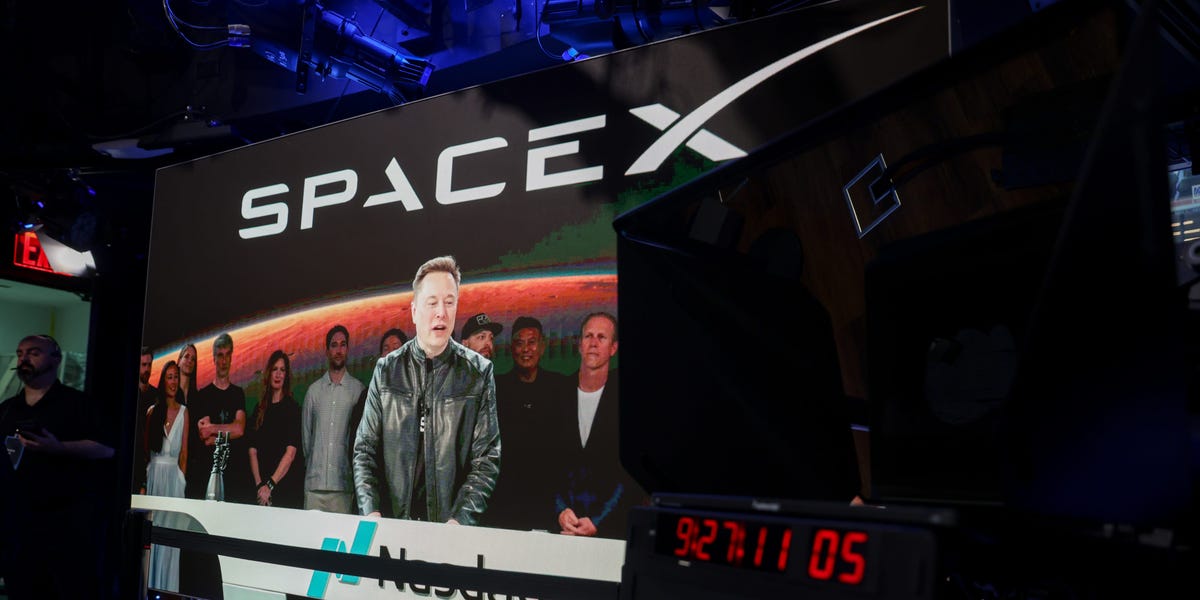
SpaceX’s shares have experienced significant volatility following their record-breaking debut this summer.
While Elon Musk’s rocket and artificial‑intelligence venture started strong, the momentum faded quickly. For investors observing from the sidelines, the high‑profile IPO did not alter the market as many had anticipated before the launch.
Morningstar noted on Wednesday that SpaceX’s massive market capitalization did not lead to the overweighting in indexes that many investors had worried about. This concern had been circulating as index providers adjusted their rules to accelerate the stock’s inclusion in major benchmarks such as the Nasdaq 100.
“Even though SpaceX hit a $2 trillion market cap on its first trading day, the limited public float meant it accounted for only roughly 0.1% of the Total Market Index by the end of August, despite earlier anxieties about its fast‑tracked index inclusion,” said Alex Poukchanski, director of analytics.
The worry was that index‑tracking funds would be compelled to purchase SpaceX, exposing investors to the company even if they had no interest in the IPO. Because widely followed indexes like the Nasdaq 100 are cap‑weighted, there was fear that these funds would have to sell other holdings to make space for SpaceX’s huge valuation.
So far, that fear has largely proven unfounded.
Poukchanski pointed out that the constrained public share float kept the risk low, and the resulting index weight remained modest. Consequently, passive funds needed to acquire fewer shares, reducing the chance that large purchases would drive the price sharply higher.
For market participants, this is an encouraging sign ahead of future mega‑IPOs, suggesting that rule changes may not be the disruptive force some had feared.
However, Poukchanski cautioned that extreme concentration remains a risk in the current era of large tech offerings. He noted that upcoming giants such as Anthropic and OpenAI are likely to dwarf smaller deals and could intensify that concentration risk.
“With expected IPOs from Anthropic and OpenAI, coupled with persistently weak small‑cap IPO activity, overall market concentration could continue to climb, necessitating further tweaks to the mega‑cap segment to keep indexes in line with the broader market,” Poukchanski added.