

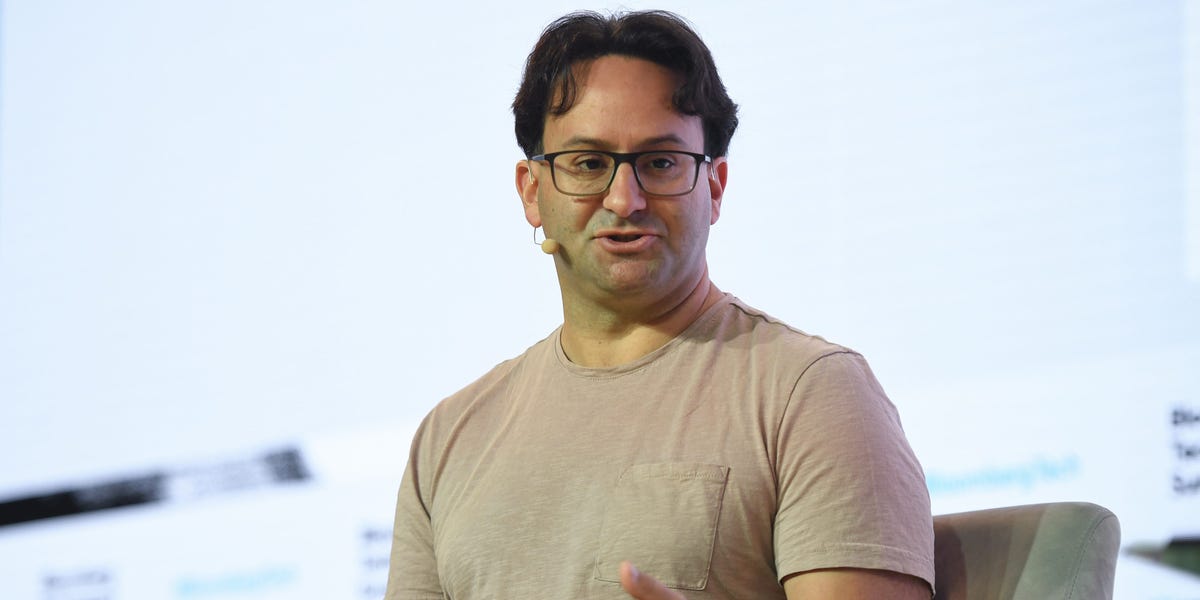
Anthropic sits at the heart of the AI catastrophe debate, and its cofounder Jared Kaplan is central to that discussion.
The Anthropic cofounder warned last year that the consequences are uncertain if frontier developers allow AI to self‑train. He told the Guardian that such self‑training could spark an intelligence explosion, representing the ultimate risk and perhaps the toughest decision. He estimates the critical moment could occur between 2027 and 2030.
We are on track. As 2026 draws to a close, cutting‑edge AI systems are already assisting researchers at both Anthropic and OpenAI in building models.
A former physicist now working in AI, Kaplan departed OpenAI to cofound Anthropic with CEO Dario Amodei and colleagues in 2021. His role as chief science officer gives weight to concerns about AI becoming dangerously out of control, and he oversees technical research, AI safety, and Anthropic’s responsible scaling policy, tasked with mitigating risks from powerful AI.
Public attention to Kaplan’s warning is growing. Jacob Coxon, a former Anthropic researcher who quit earlier this month, highlighted the danger in a viral X post, saying OpenAI and Anthropic are “gambling with our lives.” A recent Politico poll showed that roughly two‑thirds of Americans believe AI could destroy humanity.
The discussion has also reached Washington, where lawmakers are drafting new legislation and focusing on longstanding AI safety issues. Jeffrey Ladish, a former Anthropic engineer and founder of the AI safety nonprofit Palisade Research, told Themoneytimes that, during meetings with lawmakers, he cited Kaplan’s remarks — especially the concern that allowing AI to train itself could cause it to get out of control.
Ladish added that it’s valuable for more engineers, researchers, and company insiders — who aren’t tasked with PR — to voice their insights, as it’s their responsibility to work out the problems.
Although now a billionaire, Kaplan maintains a low‑key public presence, and AI researchers who have worked with him regard him as a key leader at Anthropic. The company has declined to make him available for an interview.
Kaplan first met Dario Amodei well before the AI era began.
By that time, Kaplan was already demonstrating promise. He co‑authored the influential physics paper “The Effective Field Theory of Inflation,” worked at a Department of Energy lab in Menlo Park, then at Stanford, and later returned east to join the Johns Hopkins faculty in 2012.
Nima Arkani‑Hamed, Kaplan’s Harvard advisor, recalls being skeptical of the inflation paper before it outperformed a paper by a renowned Nobel laureate. Arkani‑Hamed told Themoneytimes that Kaplan’s physicist strength lay in following big conceptual ideas, which prepared him for AI work.
Arkani‑Hamed said this approach is ideal for a new field with many low‑hanging opportunities.
In a 2017 interview with a Johns Hopkins magazine, Kaplan described his method as wanting to be confused at a basic level and asked whether we’re posing the right question and asking it correctly, while also noting his fondness for Brazilian jiu‑jitsu, which is now popular in Silicon Valley.
In the late 2010s, many of Kaplan’s friends, including Amodei who had started at OpenAI, began discussing AI. Kaplan said he deepened his understanding of the technology alongside other physicists and gradually started contributing to OpenAI research as a consultant.
In 2020, the breakthrough occurred. Kaplan led a landmark paper titled “Scaling Laws for Neural Language Models,” demonstrating that larger models produced better results and establishing the foundation for the ensuing AI boom.
Kaplan explained at a 2025 Y Combinator talk that the insight arose from asking what seemed like a dumb question, which aligns with a physicist’s training to probe fundamental issues.
AI researcher Sören Mindermann recalls the paper’s release as his first encounter with Kaplan.
Mindermann said he presented the work enthusiastically to his group, noting that many were initially skeptical but he saw it as a promising direction, and later collaborated with Kaplan on additional papers.
That same year, Kaplan and other OpenAI researchers unveiled the large language model GPT‑3, which laid the groundwork for ChatGPT.
OpenAI was emerging as a leading research lab, but Kaplan, Amodei, and their colleagues soon departed. Defector Tom Brown later noted on the Lightcone Podcast that this group took the scaling‑law trend most seriously and felt they needed to prepare for a future where humanity hands control to transformative AI. Kaplan, Amodei, Brown, and others cofounded Anthropic in 2021.
Arkani‑Hamed, Kaplan’s former advisor, recalled being excited about AI’s potential impact on physics five years ago. Kaplan told him he was more focused on preventing AI from harming society, Arkani‑Hamed said.
So far, the scaling‑law trend has persisted, with frontier labs boosting AI capabilities through more data and computing power. Anthropic has leveraged these advances to reach the brink of a massive initial public offering.
This financial milestone coincides with renewed emphasis on Kaplan’s warning about the risks of letting AI train itself. Amodei, Anthropic’s public face, wrote in a recent essay that leading labs should “pace” development.
Since early summer, AI has been advancing dramatically faster, driven mainly by AI’s growing ability to create the next generation of AI. Amodei warned that, left unchecked, it could outpace our ability to understand and control these systems, and therefore must be pursued very carefully, if at all.
David Duvenaud worked two levels beneath Kaplan on Anthropic’s alignment science team in 2023 and 2024. He recalls Kaplan showing him some of his own experiments and describing himself as approachable, driven, and sensible.
Now, Duvenauf watches Anthropic grapple with the growing power of the technology it builds. He told Themoneytimes that seeing company leaders call for a “kill switch” demonstrates how seriously they view the risk of things going wrong, and he feels “trepidatious” about allowing AI to automatically improve itself.
Duvenaud called it an insane gamble, regardless of the outcome, even if the most sensible humans are running it.
If you have a tip, contact this reporter via email at scouncil@Themoneytimes.com, or via text, Signal, Telegram, or WhatsApp at 415-757-8198. Use a personal email address, a nonwork Wi‑Fi network, and a nonwork device; see our guide to sharing information securely.