

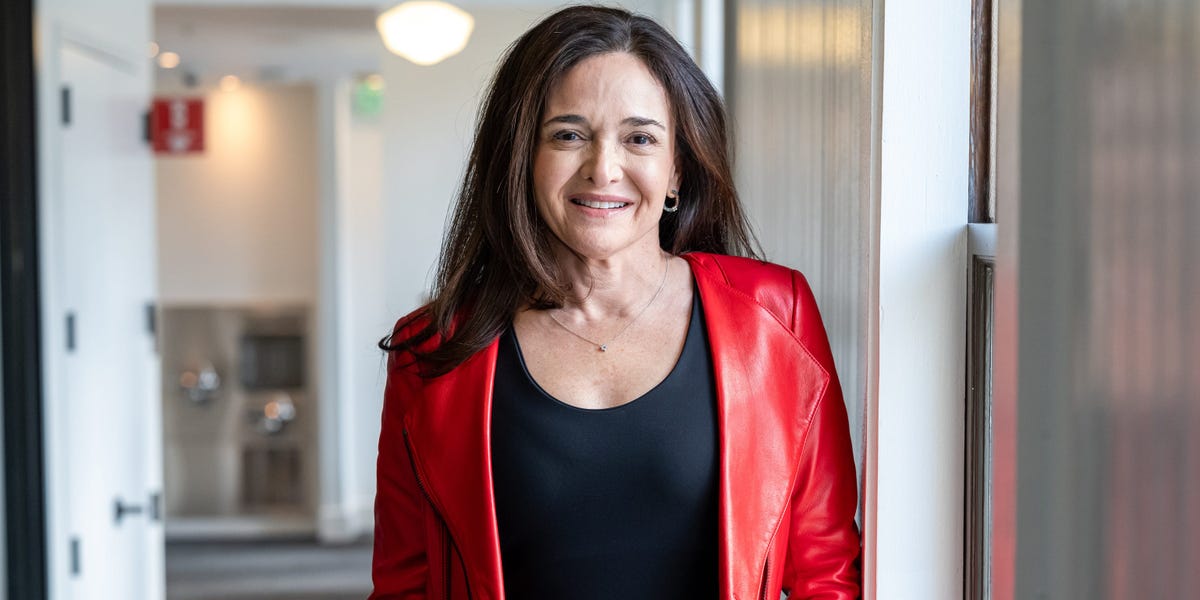
More than a decade after urging women to “lean in,” Sheryl Sandberg worries that many are now leaning out—yet not because they lack ambition. Sandberg, Meta’s former COO and author of the 2013 bestseller “Lean In,” told Themoneytimes that a gender gap persists in leadership aspirations for 2026. “This isn’t about women saying, ‘I don’t want to do it,’” the 57‑year‑old said. “It’s about women saying, ‘I don’t want to do it because I’m not wanted, I’m not getting the same opportunities and support, and I face an unfair burden at home.’”
Lean In, the nonprofit she co‑founded with her book’s release, has partnered with McKinsey to publish annual Women in the Workplace reports since 2015. Its 2025 report, which surveyed 9,500 U.S. employees across 124 organizations, found that despite having virtually identical career motivation as men, women were less likely to seek promotion. When asked why, 25 % of women who didn’t want to advance cited “personal obligations,” compared with 15 % of men. The study also highlighted disparities in household labor and mentorship access for women.
At Themoneytimes we’ve been covering this trend. Amid widespread layoffs and newly enforced return‑to‑office mandates, some women who rose through the corporate ranks during the “Lean In” era are feeling burnt out and are stepping back. They’ve shared stories with us of launching their own businesses, going freelance, or, in one case, relocating to Antarctica.
Sandberg calls this shift “concerning”—both for women and for companies at large. “We’re at a critical moment for women, because what many women are seeing is leadership commitment to them pulling back,” she said. “Then what happens to them is their ambition pulls back. And that’s a loss. It’s a loss for our economy. It’s a loss for our companies. It’s a loss for our children.”
Why corporate women never ‘had it all’
A common critique of Sandberg and the “Lean In” movement is that it unrealistically encourages women to “have it all,” even though the book argued the opposite. “Lean In” included a chapter titled “The Myth of Doing It All,” and in a 2013 McKinsey Quarterly interview Sandberg denounced the pressure on women to be everything at once: “No one can have it all,” she said. “That language is the worst thing that’s happened to the women’s movement.”
Turn expert insights into growth.
Try a Level Up action pack.
Health & Wellness
Longevity Morning Routine
Build a simple, steady morning ritual that supports energy, recovery, and the long game.
Want more Themoneytimes in your news feed?
Add Themoneytimes in Google so our reporting is easier to find when you’re searching for what matters.
Sandberg told Themoneytimes it’s easy to “overly characterize the words ‘lean in.’”
“What I mean by them is very clear,” she said. “I think women should make decisions based on believing in their own abilities, based on believing that they should and can have the same opportunities as men.”
Recent data shows trouble in that arena, especially for working mothers. Matthew Nestler, a senior economist at KPMG, recently found that labor‑force participation fell most between 2023 and 2026 among women with children under five, regardless of education level. Participation rose for nearly all groups of men, college‑educated women with school‑age children, and women without kids.
Sandberg said some patterns have stayed steady over time. “We know women do more of the housework at home,” she said. “We know women do more of the childcare.” This is doubly true for women in the sandwich generation, who care for both their kids and aging parents or in‑laws.
For women facing short (or nonexistent) maternity leaves, inflexible schedules, and paychecks that pale next to daycare costs, leaning out can feel like the best option.
When women are in corporate, they push for policies that retain more women
Sandberg said there are big benefits to having more women in charge. “We know when companies have more women in leadership, performance is better,” she said. “We also know they have better work‑life balance, better policies, better care for their employees.”
A 2025 working paper from Germany’s IZA Institute of Labor Economics examined how gender diversity affected retention in U.S. firms using Census data. It found that adding a woman to a board increased female employment and earnings at public companies by 1‑2 %, driven by retaining existing female workers rather than hiring more women.
“What’s really interesting is that the ambition gap in our data collapses when women believe companies really want them in senior leadership,” Sandberg said of Lean In’s annual reports.
More specifically, she noted that female leaders are more likely to advocate—or even consider—policies that keep other women around, from longer maternity‑leave options to lactation rooms.
Throughout her career, Sandberg said her personal experiences as a woman motivated her to change workplace culture. In the early 2000s, when she was Google’s VP of global online sales and operations, Sandberg was pregnant and nauseous while hunting for a parking spot before a meeting. After learning Yahoo had pregnancy parking, she asked then‑CEO Sergey Brin if Google could do the same. He agreed. Google did not respond to a request for comment on whether the policy still exists.
“You kind of need a pregnant woman to think of that in order for that to happen,” said Sandberg, who had two kids with her late husband Dave Goldberg and has three stepchildren with her husband Tom Bernthal.
Later, while at Meta (then Facebook) in 2014, an employee with cancer sought fertility preservation before starting treatment. Because the company didn’t cover egg freezing, she couldn’t afford it, she told Sandberg.
When Sandberg looked into adding egg‑freezing coverage for cancer‑related infertility, the head of HR wanted to go further. “She said, ‘We should just cover egg freezing. Why should we decide why people need it?’” Sandberg recalled. Meta, through Progyny, a fertility‑benefits program, covers up to four “Smart Cycles” that can be used for IVF, egg freezing, and related care, as well as adoption and surrogacy assistance.
In 2012, when she publicly shared that she left the Facebook office at 5:30 p.m. every day to have dinner with her family and put her kids to bed, she said she received thank‑you notes from competitors.
“I got flowers from the Yahoo legal team—I didn’t know anyone on the Yahoo legal team,” Sandberg said. “Someone said to me: I couldn’t have gotten more press if I had murdered someone with an ax.”
She believes companies need to do a lot more
When asked what companies can do to improve, Sandberg quipped: “How long do you have?” She listed better parental and bereavement leave and opportunities for more flexible schedules among policies that could retain more women.
There were also cultural changes that could help. She said she still talks to people who won’t take a meeting with a woman alone.
“Who’s ever been promoted by someone they’ve never had a meeting with? No one ever. You can have a meeting alone with a woman: keep the door open,” she said. “Let’s not find cultural reasons to give better opportunities to men than women. We absolutely shouldn’t be sexually harassed, but we shouldn’t be ignored, either.”
For now, Sandberg, who stepped down from Meta in 2022 to focus on her other ventures—the Sandberg Goldberg Bernthal Family Foundation (which runs Lean In) and the early‑stage VC firm Sandberg Bernthal Venture Partners—said she supports the choices women make, even when that includes bowing out of corporate leadership.
“I think being at home with your children is great,” she said. “Going back to school, great. Starting a company, great. Going part‑time, great. Anything you want to do is great.”
Sandberg just thinks it’s a shame if fewer stick around at all.
“I just hope that enough women want those senior leadership roles,” she said, “that we get the environment for women that they deserve.”