

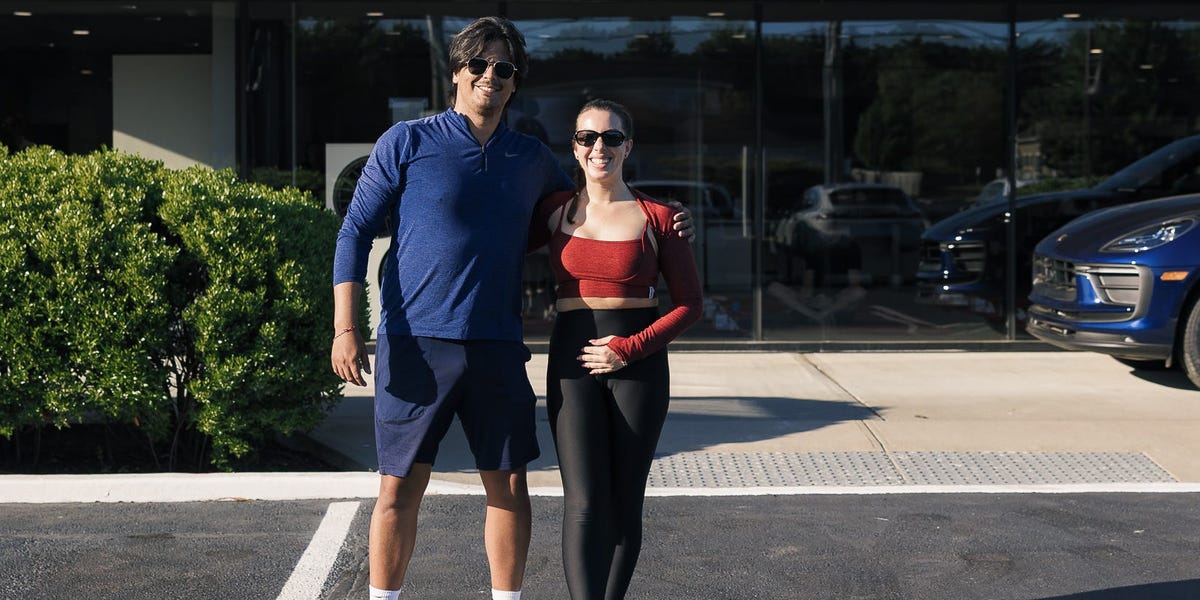
I have always known how to turn an idea into reality.
As the founder of East End Taste, an events company based in the Hamptons, I built my career on the foundation of relationships, creativity, instinct, and determination.
For a long time, I believed those strengths were enough to move my small business forward, but when I wanted to expand after eight years of operation, I saw an opportunity to work with more clients.
As a single mother, I also hoped to set an example for my children. The idea that growing my business would teach them to take pride in what they’ve built while staying open to learning something new appealed to me.
I knew expansion wouldn’t be easy, but then I met my business partner. He approached almost everything differently, yet he helped elevate the small business to the next level.
My new business partner operates in a way that contrasts with mine.
Born in Venezuela, my business partner, Edberg Espinoza, has experience across project development, technology, and visual production.
Where I instinctively spot relationships, possibilities, and creative opportunities, he looks for the structure needed to support them.
I often evaluated opportunities based on their potential. Could an introduction lead to a client? Could an event boost our reputation? Could a creative idea grow into a larger partnership?
Edberg understood that, but he wanted to know what happened after the introduction: Which relationships needed follow‑up? Which conversations had led to proposals? Which opportunities had turned into paid work? Which services were clients repeatedly requesting?
Those questions were harder for me to answer than I expected. The information existed, but it wasn’t in one place. Parts of it lived in my memory, while others were scattered among notebooks, business cards, text messages, email threads, and informal lists.
Edberg helped establish a centralized method for tracking contacts, conversations, potential opportunities, follow‑ups, and responsibilities. Information that had previously existed mainly in my head became accessible throughout the company.
My relationships gave the company access. His systems helped us turn that access into consistent action.
My business partner then helped expand my business.
As we reviewed client inquiries, project notes, and production requests, we began to notice the same combination of needs recurring. Brands weren’t necessarily looking for one isolated deliverable. They increasingly wanted connected support: event production, photography, video, editorial exposure, social content, and partner coordination managed through one trusted team.
I had viewed each request as an individual opportunity. Edberg saw the operating model hidden inside those requests.
Instead of asking, “What else could East End Taste offer?” we started asking, “What are clients already asking East End Taste to become?”
Before investing in a new capability, we began asking more disciplined questions: Would this resource solve a problem that clients repeatedly brought to us? What personnel, training, and technology would be required? How would we price the service?
That shift allowed us to present clients with a clearer production model, rather than rebuilding the process from scratch for every project.
Our differences weren’t always comfortable.
I was used to believing that if I said yes, I would somehow find a way to deliver. That determination has helped me build my career. It also meant that I occasionally accepted tight deadlines and relied on stamina to solve problems.
But that’s not how Edberg works. “No sugarcoating,” he would tell me.
At first, I sometimes experienced his directness as intensity. Over time, I came to understand that clarity wasn’t pessimism. It was a form of responsibility.
The lesson for me isn’t that every founder needs an opposite. It’s that we need someone who can recognize what our strengths leave unaddressed, and we need to be willing to listen. My instincts helped create opportunities. Edberg helped build the structure to follow through on them.
Start with the opportunities already in front of you.
Now, when we consider a service, client, partnership, or investment, we ask three questions: What could it create? What will it require? Does it support the company we are deliberately building?
Today, our work spans event production, staffing, photography, video, wellness, and hospitality activations. We have expanded our network of private chefs and other production partners. The systems we developed help us manage that broader scope with clearer responsibilities and deliverables.
My business partner didn’t replace the instincts that helped me establish my career. He gave me another perspective through which to test and strengthen them.
That’s a lesson I want my children to carry into whatever they choose to do: You can trust your abilities and still have something to learn from someone who sees things differently.