

Earnings season. Jackson Hole. The August jobs and inflation reports. The Fed’s rate decision.
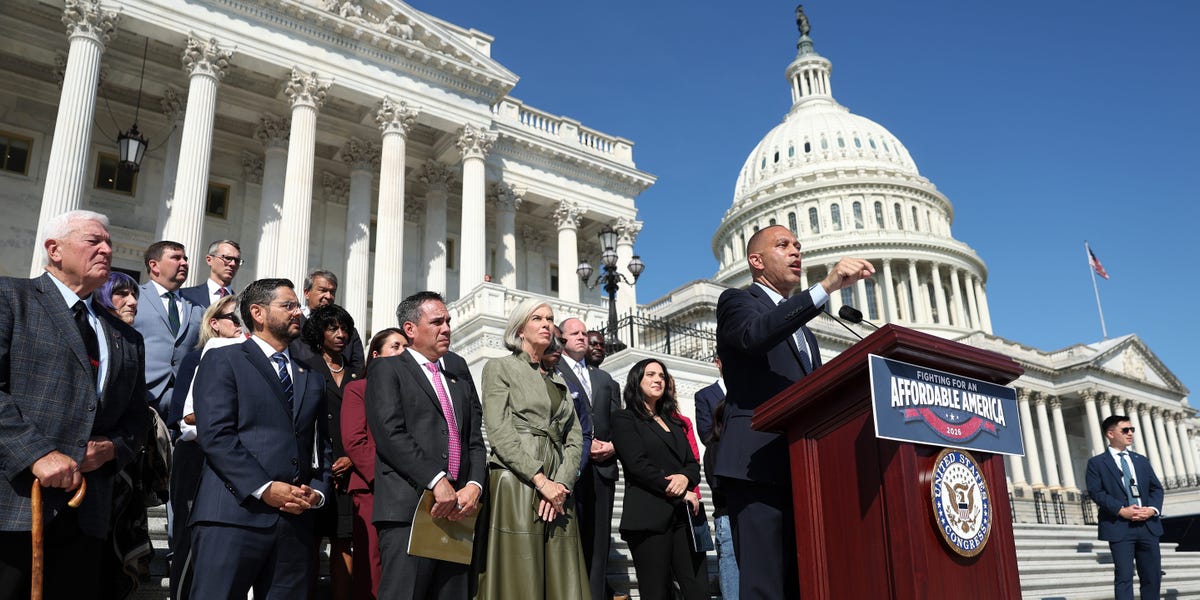
It’s been a blistering multi-week period of developments for markets, with hardly time to breathe in between. Lost in the blur have been the upcoming midterm elections, which are now less than seven weeks away.
Add it to the market’s growing list of inputs. You didn’t think you’d have time to relax, did you?
The challenge for investors is getting ahead of the election results, rather than waiting for them to play out. That means making a call before a single ballot is cast.
For now, Wall Street strategists and prediction-market traders point to two scenarios they see as most likely: (1) Democrats take the House while Republicans retain the Senate, or (2) a “blue wave” under which Democrats win both.
Let’s break down each outcome, looking at which areas of the market are best-positioned to benefit, and which could get hit:
1. Dem house, GOP Senate: The gridlock trade
A Democratic House and Republican Senate would, above all else, make major legislation harder to pass. Here’s the catch: That’s a good thing for investors worried about excessive spending and constantly shifting rules. The less opportunity for intra-government volatility, the better.
Potential beneficiaries: Defense contractors, AI- and chip-linked tech, industrials, and financial firms — all areas of the market supported by current policy. If gridlock blocks any major new legislation, it’ll be business as usual.
Potential pressure points: Healthcare, energy, private equity and crypto. A Democratic House would gain subpoena power and committee control, giving them the power to target these industries for investigations and oversight.
2. Blue wave: The accountability trade
Under this scenario, President Trump would still have veto power, allowing him to block any sweeping reversals of his agenda. But control of Congressional committees and spending bills would change hands, meaning more restrictions on GOP interests.
Potential beneficiaries: Companies tied to clean-energy programs, public-health spending, hospitals, and Medicaid managed care. Democrats could be more supportive in Congress, and also make it more difficult to cut or redirect spending.
Potential pressure points: Healthcare private equity and crypto are particularly exposed. Democratic lawmakers are already pushing to limit private equity’s role in medicine, while Senate Democrats recently helped stall a major crypto bill.
Bonus: The no-matter-what trade
Data centers have accomplished the near-impossible by getting Dems and the GOP to unite around one idea: diverting the cost of the AI buildout away from households. This week, the House voted 417-3 to pass a bill designed to make data centers pay more of the grid costs they create.
But it’s important to note that Washington doesn’t want to stop AI’s power buildout altogether. It just wants someone else to pay for it. This is a dynamic with the power (pun intended) to move markets no matter what happens in the midterms.
Potential beneficiaries: Grid-equipment makers, power producers, and utilities that build new power and grid capacity.
Potential pressure points: Big cloud companies, data-center operators, and data-center REITs — aka the ones who will absorb reallocated costs.