

The enormous, gleaming credit card appeared first.
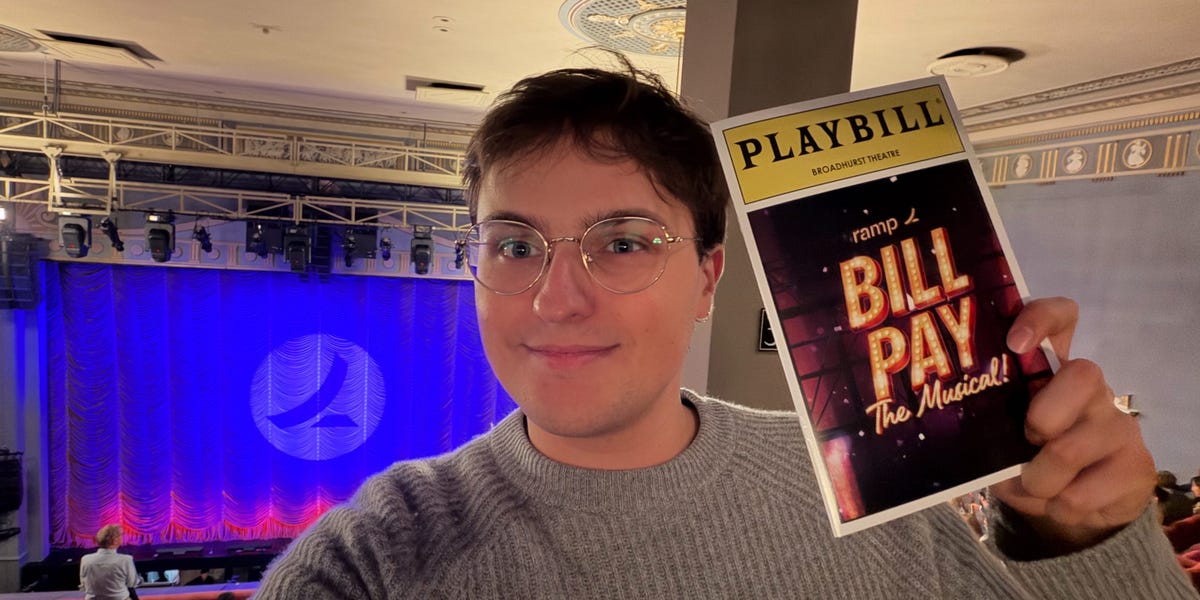
The fintech firm Ramp, in a puzzling decision, put on a musical. They named it “Bill Pay” and seized Broadway’s Broadhurst Theatre. From the mezzanine’s rear, I sat through the hour‑long, thoughtless ad.
Let me be clear: Ramp never claimed this was high art. Plenty of jokes poked fun at how ridiculous the show was. The tech‑savvy crowd lapped up the “Hamilton” spoof — swapping “I am not throwing away my shot” for “I did not throw away my receipt” — along with tap‑dancing hobbits.
I couldn’t stop asking myself what I was doing there. It felt like a perfect team‑building exercise for a firm gearing up for an IPO. Still, they threw the doors open to the public and summoned a group of theatre influencers.
In theory, Ramp’s musical made sense. Splurge on employee perks! Even better, compensate theatre talent! In practice, though, the execution was muddled and dull.
A self‑congratulatory musical from Ramp
As a straightforward promotional piece, the storyline of “Bill Pay” was oddly tangled.
Jessica Vosk portrayed Lisa Blupey, a struggling Etsy vendor overwhelmed by orders. She gets pulled into a YouTube ad and must dodge various bills to escape.
These aren’t the usual bills. An extended Bill‑bo Baggins segment explains the tap‑dancing hobbits. A candy‑coated Billy Wonka bit follows. (Weren’t there enough real “Bills” to keep the names unchanged?) Then Billy Zane, the sultry “Titanic” alum, drops in for a steamy number.
The show’s conclusion: Blupey can solve her life’s woes — you guessed it — with Ramp.
Billy Porter headlined the marquee and featured in Ramp’s ads, yet he barely appears. He opens the show, pops up in a few isolated moments, and chats briefly with co‑CEO Eric Glyman. One wonders if he’s being compensated per minute.
Much of the production was, predictably, kitschy. References to “A Chorus Line” and Billy Mays’ OxiClean spots abound. A surprise cameo arrives from Brian Baumgartner — Kevin from “The Office” — who has appeared in Ramp’s commercials before. We all snapped glow sticks aloft mid‑show.
And yes, it was chaotic. Not enough glow sticks for everyone, actors flubbed lines, hats tumbled.
Messiness is part of live theatre; it’s what makes it enjoyable! But I anticipate that from a strapped Off‑Broadway venue, not a multi‑billion‑dollar tech corporation.
Tech professionals and the ‘industrial’ paycheck
I’ve attended plenty of Broadway productions. The typical crowd consists of retirees spending their savings, suburban gay men in chinos, and doting mothers with teenage kids.
This audience was nothing like that. It was packed with tech workers.
Many wore tuxedos or jeweled gowns. Many checked their Slack messages just before curtain. I overheard M&A gossip murmuring through the house.
So I must admit, this wasn’t for me; it was for them.
The show kicked off with an announcement that phones could stay out for the entire run, breaking Broadway convention. Then an opening line noted they’d avoid niche musical references, keeping everything easily digestible.
I say: great! I’m pleased the tech bros now have a musical. But why open it to the general public? Why not limit it to invited guests, the investors they want to wine‑and‑dine, and the employees they wish to reward?
The production offered one additional benefit: the actors got paid. In his talk with Glyman, Porter thanked him for reviving the “industrial.” Those were the corporate gigs actors used to cover bills. They’ve largely vanished; today a boss buys a Cameo instead of staging a show. (I asked Ramp about the budget — I’ll share if I hear back.)
I’m glad the ensemble dancers received compensation. I’m glad Vosk got to ride Elphaba’s broomstick again. I’m even glad Porter likely walked away with a sizable sum for his brief appearance.
Kudos to Ramp for pouring hard‑earned cash into Broadway, a field desperately short of funding.
Perhaps next time they’ll simply make the show good.