

AI agents are now outnumbering human workers in many high‑tech offices, and overseeing them can be far more complex.
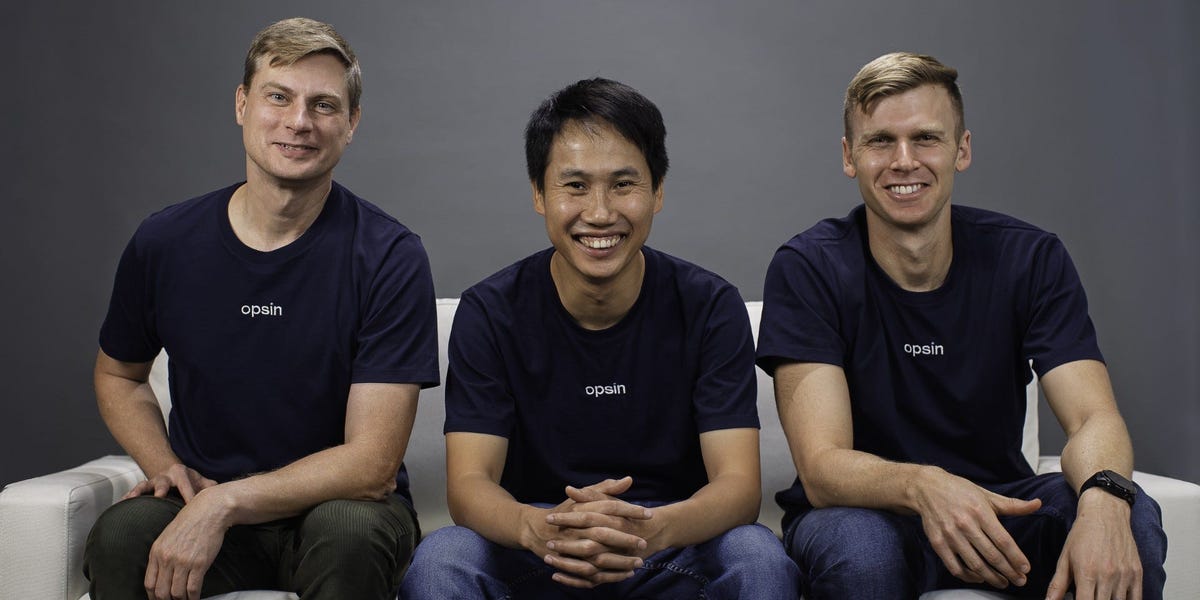
Opsin, an AI security and governance startup, announced on Thursday that it has raised $21 million to address the growing challenge. As employees across industries integrate AI assistants from companies like OpenAI and Microsoft into daily tasks, Opsin is helping to manage the new wave of potentially risky tools.
Deploying autonomous AI agents—software that can perform tasks without direct human intervention—has become trivial for non‑technical staff. When workers embed these agents into corporate workflows, codebases, and databases, they can lose visibility into what the AI is actually doing.
When Opsin’s CEO and co‑founder, James Pham, saw security concerns stalling AI adoption, he decided it was time to scale the company, he told Themoneytimes.
“Agents are actually more similar to humans than you think,” Pham said. “You don’t fully understand what’s going on inside a human mind, but you judge them by their actions.”
Opsin’s platform is designed to give organizations a complete picture of what their AI agents are doing and the risks those actions may create. SYN Ventures and Race Capital led the funding round for the roughly 20‑person firm, with the capital earmarked for expanding its sales and engineering teams.
Security professionals are scrambling to clean up a tangled web of AI agents.
Pham, an MIT graduate, and co‑founder Oz Wasserman first met at Abnormal Security and both left in 2022. Before launching Opsin, they consulted hundreds of business leaders to gauge concerns about integrating AI into operations.
The biggest red flag that emerged was the handling of sensitive data. Pham said again and again people worried that AI agents could access and misuse personal or confidential information.
Opsin now helps clients pinpoint where agents are active, which tools and data they tap, their original purpose, and which ones need remediation. The firm then offers continuous monitoring of corporate workstreams, oversight of the agents, and alerts for risky behavior.
“At the end of the day, it’s all about the behaviors of the users, the behavior of the agent,” Pham said.
The sheer number of agents—even in less tech‑savvy companies—has surprised some clients. At one firm Opsin worked with, an agent created by a chief financial officer unintentionally granted other employees top‑level access to financial information, Pham recalled.
AI‑driven cyber threats could spark a boom in demand.
The cybersecurity sector has been in a frenzy, and the proliferation of AI agents is adding fuel to the fire. Glenn Chisholm, a cyber investor who backs Opsin through SYN Ventures, told Themoneytimes that as firms adopt more AI products, hackers will have more targets to pursue.
“The more people that are doing it, the easier it is for an attacker to gain access and purchase,” Chisholm said.
Cyberdefense stocks have surged this year, and Chisholm noted an uptick in venture‑capital funding. Both Anthropic and OpenAI are aggressively hiring talent in the cybersecurity space.
Opsin aims to give companies confidence when using Microsoft Copilot, ChatGPT Enterprise, and similar tools. Chisholm is optimistic that the industry will adapt to AI rather than fear it.
“The next couple of years are about figuring out how to get the most out of it, not about fearing the concept,” he said.
Got a tip? Reach me by email at scouncil@Themoneytimes.com, or via text, Signal, Telegram, or WhatsApp at 415‑757‑8198. Use a personal email, a non‑work Wi‑Fi network, and a non‑work device; here’s our guide to sharing information securely.