

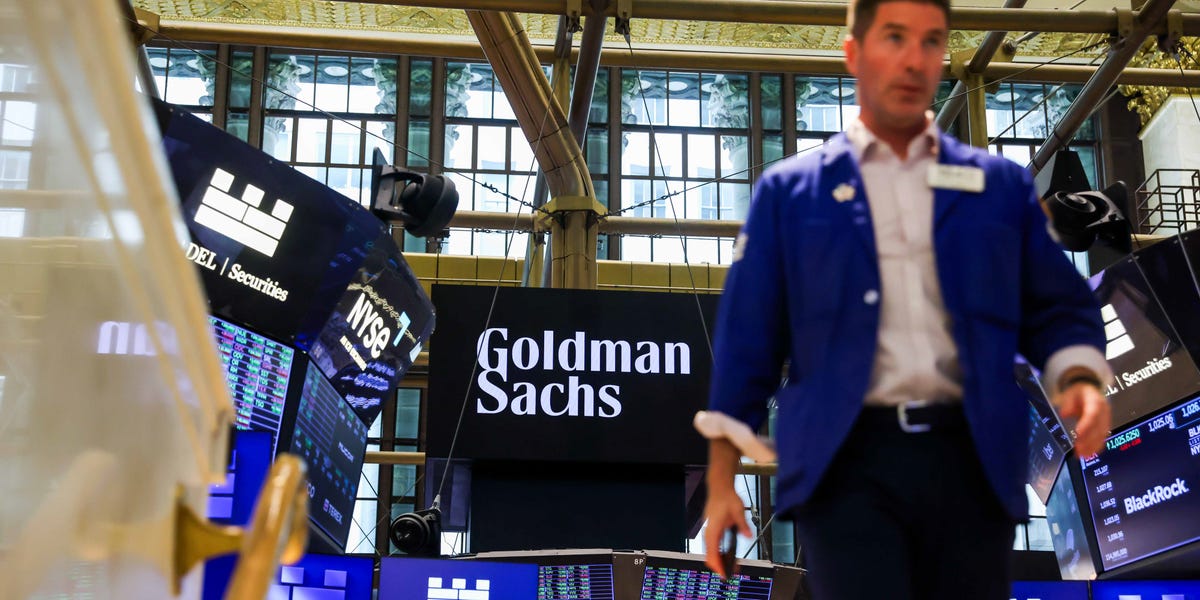
The stock market’s best-case scenario could be brewing, Goldman Sachs says.
Strategists at the Wall Street bank are eyeing a Goldilocks situation for markets, a dream configuration where economic growth is neither too hot nor too cold. The idea is that the economy is growing at just the right pace to fuel investor optimism while keeping a lid on inflation.
It’s a setup that looks poised to spark a fresh rally in stocks as well as bonds in the coming months, the bank wrote in a note to clients on Monday.
Goldman said it’s shifted back to an overweight stance on stocks for the next three months and to an overweight stance on bonds over the next 12 months, citing a strong backdrop for economic growth and cooling inflation.
Earnings are also expected to surprise to the upside for the third quarter, strategists added, estimating that the S&P 500 would post 18% earnings growth in 2027, when excluding “other income” related to the revaluation of equity shares.
“Our macro baseline remains constructive: growth should stay healthy, especially for earnings, recession risk remains low, and inflation momentum should moderate into 2027. This combination of resilient growth and easing inflation points to more of a ‘Goldilocks’ backdrop, which should be more supportive for balanced portfolios,” a team led by the bank’s Christian Mueller-Glissman wrote.
Some Wall Street strategists took a Goldilocks scenario off the table in recent month as inflation remains elevated. Energy prices saw a big mid-summer surge, largely due to the war in Iran and higher oil prices.
The market has also been rattled lately by a historic sell-off in government bonds, which has pushed yields to levels that haven’t been seen in decades. The benchmark 10-year US Treasury yield remains near its highest level since 2002, surging in recent weeks as investors recalibrate their expectations for interest rates.
While the major stock indexes remain near records, market breadth has deteriorated sharply. More than half of all stocks in the S&P 500 have fallen at least 20% below their recent peaks, falling into bear market territory.
But there are a handful of underlying economic indicators that suggest growth will remain strong. The economy is expected to grow 3.6% for the third quarter, according to the latest GDPNow estimate from the Atlanta Fed.
The job market has also remained resilient. Job gains fell far below expectations in September, though the US added a robust 133,000 jobs in August. The unemployment rate also remains near a historic low, at 4.2% in September.
Meanwhile, inflation Goldman strategists said inflation is close to peaking, noting that market-based inflation momentum dropped “sharply” in the second quarter. Consumer price growth held steady in August at a 3.4% year-over-year pace.
A 60/40 portfolio — a classic investment strategy where 60% of a portfolio is allocated to stocks and 40% is allocated to bonds — tends to perform the best when inflation is falling, the bank added, adding that it saw “less downside risk” for the 60/40 mix over the next year.
“The main near-term downside risk to equities remains higher rates and energy prices — also, US midterm election uncertainty could lead to a pick-up in equity volatility from current low levels,” strategists wrote.
The bank said it favored a barbell strategy, balancing high-growth global tech stocks with rate-sensitive, low volatility, high-dividend, or “bond proxy” stocks. A barbell strategy involves exposure to both high-growth and defensive investments, the idea being that losses on one side of the barbell could be offset through gains on the other side.