

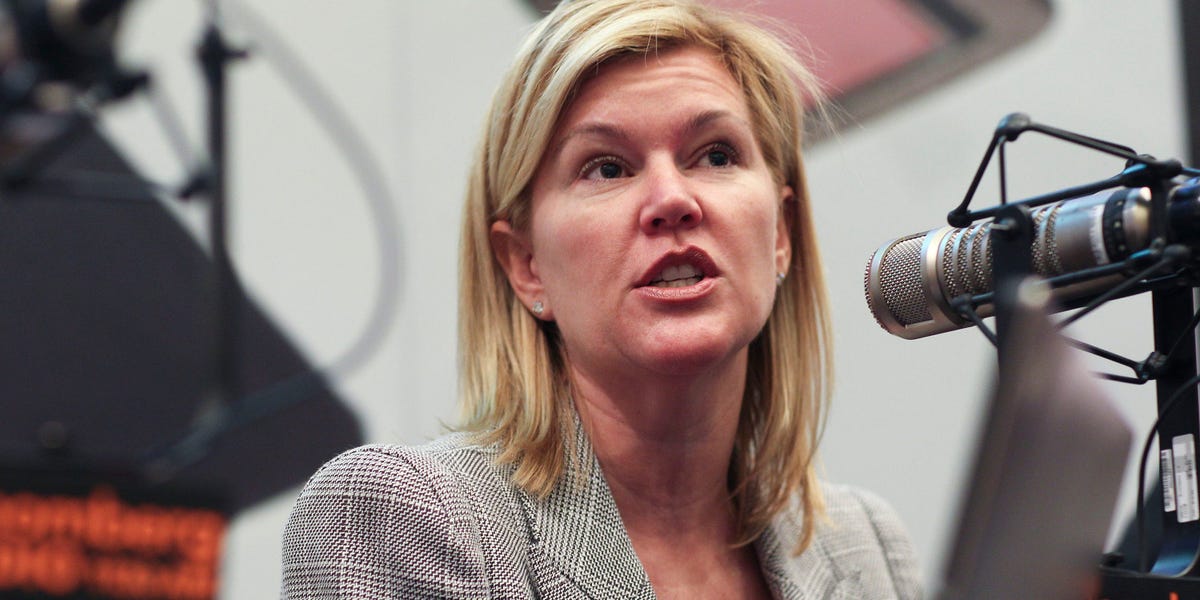
A renowned housing market forecaster who predicted the last crash has some grim news for buyers: affordability isn’t expected to improve anytime soon.
Meredith Whitney, dubbed the “Oracle of Wall Street” and known for her role in “The Big Short,” predicts that the US housing market’s prolonged slowdown won’t recover soon.
Even though home sales have fallen sharply in recent years, this decline won’t be sufficient to reduce mortgage rates or home prices, potentially leaving the housing market stagnant for at least another year, she told Themoneytimes in an interview this week.
Capital Economics forecasts that 2026 will be the weakest year for home sales since 2011. Whitney anticipates that 2027 will be at least as challenging as 2026 for home sales.
“I don’t anticipate a dramatic improvement anytime soon,” she said, noting that a 2008-style price correction is “absolutely” unlikely, even with declining sales and reduced buyer demand.
“For home prices to drop significantly, there would need to be more supply than demand, a situation that simply isn’t present,” she added.
The housing market has been experiencing a prolonged sales slump, with buyers withdrawing as home prices continue to rise. Simultaneously, mortgage rates have increased, causing homeowners to be reluctant to sell and finance new purchases at higher rates.
The S&P/Case-Shiller U.S. National Home Price Index has risen by 59% since the beginning of 2020.
In September, the average 30-year fixed mortgage rate surpassed 7% for the first time in years, and has remained above 7.5% in the most recent week.
Some prospective buyers are hopeful that sales will slow enough to drive prices down. However, Whitney argues that the necessary conditions for this scenario don’t exist, citing factors that will likely keep prices high in the near future.
1. Overall supply remains limited
Whitney notes that some US regions are seeing price declines, but these are exceptions where supply was overbuilt during the pandemic. In contrast, areas like the Northeast continue to face tight supply conditions.
According to a Redfin estimate, the total housing supply deficit reached over 4 million homes by the end of 2025.
2. High mortgage rates are preventing properties from entering the market
Many homeowners are holding onto their low mortgage rates, which discourages them from listing their properties. A Realtor.com analysis found that approximately 78% of borrowers had mortgage rates below 5%-6% at the start of 2026.
3. Baby boomers are reluctant to downsize
Whitney explains that many older Americans, who hold the majority of home equity in the US, prefer to age in place due to the significant rise in home prices, which is another reason she doesn’t expect supply to increase soon.
A 2024 Freddie Mac survey found that 68% of baby boomer homeowners indicated they were likely to remain in their current homes.
4. More individuals are securing revolving home equity loans
Whitney highlights an often-overlooked indicator: weekly HELOC volume, which measures the total amount of revolving home equity loans issued each week. She notes that higher HELOC volumes suggest people are staying in their homes, as many use these loans to finance renovations or home improvements.
Federal Reserve data shows that HELOC volume reached $291 billion for the week ending September 23, representing a 13% increase over the past five years.
“There’s no immediate sign of a housing market downturn,” she commented on the overall market. “Prices are not expected to decrease.”
Despite higher home prices and rates continuing to pose challenges, the market has shifted in favor of buyers in recent months, with sellers providing more price reductions and concessions as inventory remains on the market. In August, approximately 45% of home sales included sellers offering concessions to buyers, and 16% of sales involved both concessions and price reductions.