

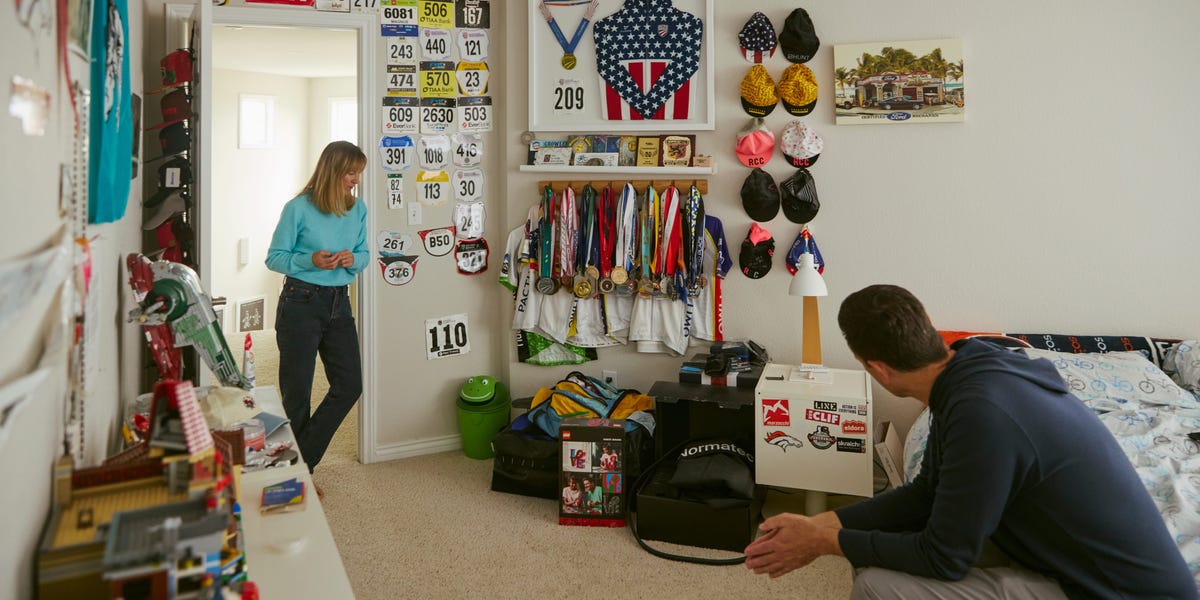
This as-told-to essay is based on a conversation with Michael White, 49, from Boulder, Colorado. In 2023, a driver struck and killed White’s 17-year-old son, Magnus. The piece has been edited for brevity and clarity, with facts confirmed.
Eight days after losing my son Magnus, we held his memorial service. By that point, I had already come to understand that death is a business.
My wife and I were suddenly thrust into making urgent decisions: hiring a lawyer, choosing between burial and cremation, and selecting an urn for our son’s remains. A police victim advocate gave us a glossy brochure filled with urns priced in the thousands. It all seemed absurd.
Soon, the financial burden began piling up — legal fees, lost wages, and ongoing therapy for years to come. While losing Magnus is the deepest pain, the economic aftermath rarely gets discussed.
When the hospital called, my thoughts spiraled immediately.
Magnus was my firstborn child. When your firstborn enters your life, everything changes. Over time, you learn what brings them joy or sorrow and do your best to guide them into becoming who they are meant to be. In the final year of Magnus’s life, we truly witnessed that transformation unfolding.
At 17, Magnus was a standout athlete on the USA Cycling National Team, yet he remained very much a teenager at heart. He had a tight circle of friends, often played pranks, and embraced life with enthusiasm. He was brilliant, gifted, and radiated charm. He was one-of-a-kind.
July 29, 2023, dawned as a perfect summer day. Magnus set out for a 70-mile bike ride along a highway near our home in Boulder. I brought him breakfast, but he’d already eaten. My last words to him were simply telling him to eat when he returned.
Like most parents, I frequently checked his location via Find My iPhone during his rides. The last update showed him roughly 15 minutes from home.
I was in the shower when the hospital left a voicemail. The moment I heard it, dread consumed me.
A motorist had collided with Magnus. He was declared brain-dead and placed on life support. My wife, then in Wisconsin, rushed back using a friend’s private aircraft since she couldn’t secure a commercial flight quickly enough. She reached us about ninety minutes before he passed away.
You prepare for the passing of elders or perhaps even your spouse, but never for the loss of a child.
I couldn’t focus on work while mourning.
Right after Magnus died, his doctor signed me off from employment. I worked as a creative director at a prominent outdoor gear company and was the primary earner in our household, bringing home around $187,000 annually.
A few weeks later, another major blow arrived. Our health insurer sent a notice stating it had covered nearly $137,000 for Magnus’s medical treatment and now sought reimbursement from any settlement we might receive. It was crushing. We assumed those costs would come out of our underinsured motorist coverage. Eventually, our attorney managed to reduce the lien, and only $5,000 was subtracted from our payout.
Nearly five months passed before prosecutors charged the driver responsible for Magnus’s death with reckless vehicular homicide. Throughout that time, we kept facing costs no one can truly prepare for. Colorado offers compensation to crime victims for specific expenses like counseling and funeral costs, but you must pay first and then apply for reimbursement. It felt oddly transactional.
Going back to work six months after his passing, in January 2024, proved challenging. I relied on vacation and sick time to attend court proceedings.
Everyone knew what had happened to Magnus, but most coworkers avoided mentioning it. They feared upsetting me, yet the reality of grief was that I was already distressed constantly. I longed to speak about Magnus and hoped someone would listen. Talking keeps his memory alive.
Roughly nine months into returning to work, by September 2024, I realized I couldn’t continue. Shoes and outdoor products no longer held meaning. After dedicating 25 years to building my career, I found myself unable to function professionally amid unrelenting sorrow.
My wife also took extended leave and has since resumed working at a university. Since stepping away from my job, I’ve had no income, resulting in hundreds of thousands of dollars in lost earnings.
Previously, we contributed regularly to our eldest son’s college fund. Now we’re drawing solely from those savings, uncertain whether he’ll afford higher education.
Every purchase demands careful consideration now, something we didn’t face when we had dual incomes. We’ve drastically cut spending — paid off our car loan, decided to hold onto our 2021 model rather than upgrade, and limited discretionary activities like dining out and hobbies. Occasional trips remain part of our healing process, but even those have been scaled back.
Earlier this year, nearly three years following Magnus’s death, we received a $25,000 settlement check from the at-fault driver’s insurance provider, plus an additional $13,500 from a separate claim covering Magnus’ bicycle and equipment involved in the accident. Our lawyer claimed a portion of each compensatory payment.
Therapy began shortly after Magnus’s passing, and I still pay $150 weekly for individual sessions out of pocket. My wife and I also participate in couples trauma therapy, partially reimbursed through Colorado’s crime victim assistance fund.
Eventually, I’ll need to return to work because we can’t maintain this indefinitely. I just don’t yet know when that will be.
You must safeguard yourself.
Most people underestimate the real cost of dying in America. Much of my time now goes toward The White Line, the foundation established in Magnus’s name, which seeks to protect lives on our nation’s roads. We’ve published guidance outlining steps families should take in the immediate aftermath of a serious crash or fatality.
Families should assess their life insurance coverage and prioritize maximizing uninsured and underinsured motorist protections. These safeguards become invaluable exactly when you least expect them. My wife and I have also purchased supplementary life insurance policies to ensure stronger financial security moving forward.
One of the hardest truths we learned is that self-protection is essential. You hope systems exist to shield you, but experience showed otherwise.
We share our story so others may benefit and to honor Magnus — ensuring his passing wasn’t in vain.