

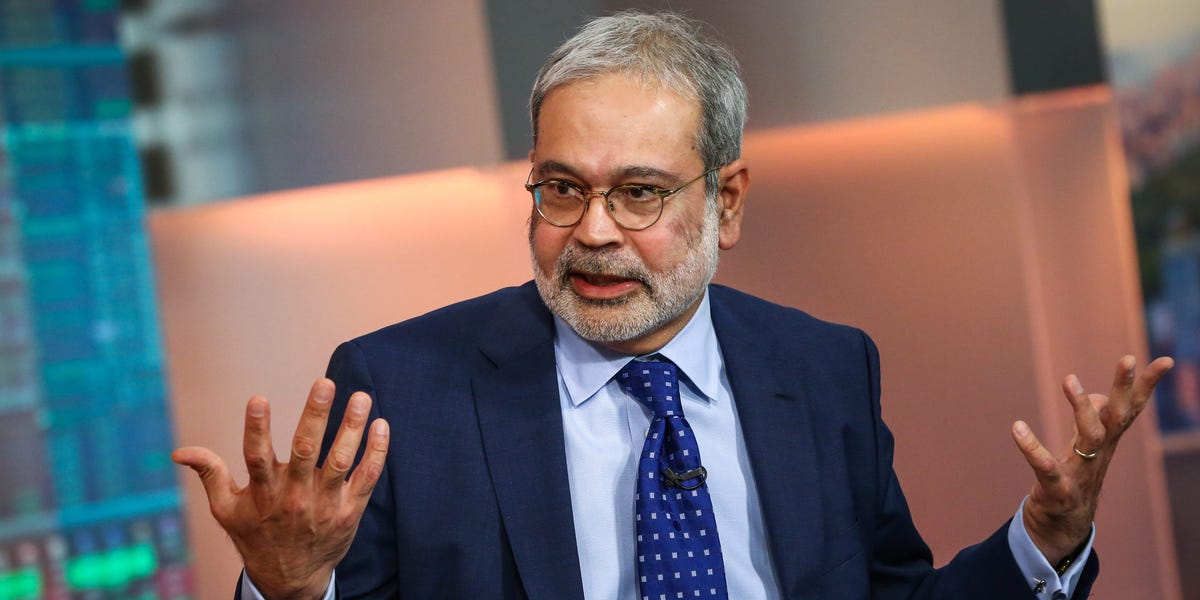
Investors will be eagerly watching President Trump’s summit with Chinese leader Xi Jinping this week as the two sides try to iron out a trade deal, but Deutsche Bank’s top US equity strategist says not to sweat the results too much.
The market hopes the meeting between the two global superpowers will lead to a cooling of trade tensions and a reduction in the steep tariffs in place. The US tariffs Chinese tech products, automobiles, steel, rare earth minerals, and more. Meanwhile, China has taxed American agricultural products and has restricted the export of critical metals.
But no matter if a deal ultimately gets done this week or not, investors can probably tune the meeting out, says Binky Chadha, the chief US equity strategist at Deutsche Bank.
That’s thanks to the ongoing strength of the stock market’s biggest driver: earnings.
Third-quarter earnings season will be in full swing around mid-October, and Chadha expects the results will be stellar, especially relative to where stock prices sit today, setting up the market for a rally, spurring the bull market.
When asked during an interview with CNBC on Tuesday whether the Trump-Xi meeting would have a market-moving impact, Chadha said that “the potential for making some diplomatic progress is there, but other than that, no. I would say the biggest issue for the market really now is Q3 earnings.”
Earnings have been impressive so far in 2026, and expectations continue to rise. According to FactSet, consensus estimates are for 28.9% earnings growth for the S&P 500 year-over-year in Q3. That would mark the third consecutive year quarter of annual earnings growth above 25%, FactSet said.
In August, Deutsche Bank said it expects S&P 500 earnings to grow by 28% in 2026. Chadha told CNBC that one indicator of upcoming earnings strength is the ongoing surge in manufacturing activity, which has been expanding since this past winter.
Stocks are coming out of a rough patch stretching bak to the start of June.
While a slew of strong Q2 earnings reports send the market soaring at the end of July into early August, the S&P 500 was down by 75 basis points from June 2 as of September 16. Rising oil prices and higher Treasury yields have weighed on stock prices as investors feared an episode of inflation.
But last week, a rate hike from the Federal Reserve tamed long-term Treasury yields, and oil prices have cooled, allowing stocks to rally. Strong usage of Meta’s Muse AI assistant also reinvigorated the AI trade, as investors became optimistic that hyperscalers are monetizing their AI spending, and that AI hardware firms would continue to benefit from heightened spending on the new technology.
The poor returns recently set the market up well for the rally to continue post-earnings rally, Chadha said.
“If you look at where equity prices are,” Chadha said, “they are well short of where earnings would suggest we should be. On Q3 earnings, we are short by about 7%, I would estimate, and Q4 earnings by 15%.”
On Tuesday, the Nasdaq 100 hit record highs, while the S&P 500 sat around 7,775, within 1% of all-time highs.
Deutsche Bank’s 2026 year-end S&P 500 price target is 8,000.