
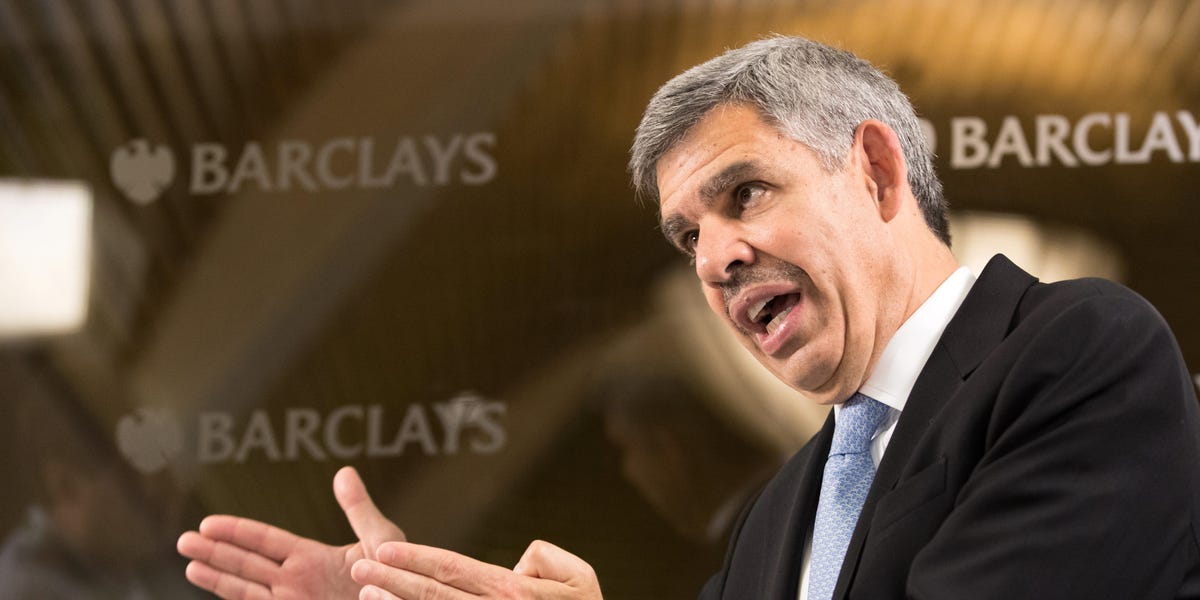
Markets have been relatively calm since last week’s rate hike from the Fed, but top economist Mohamed El-Erian is eyeing the beginning of a dangerous hiking cycle being egged on by markets.
El-Erian, the chief economic advisor at Allianz and former co-CIO of PIMCO, responded positively to Fed chair Kevin Warsh’s address, but in a Financial Times op-ed this week, he laid out why he sees new problems arising if the Fed and other central banks continue to tighten monetary policy.
“If all this comes to pass, both markets and the economy could end up in a bad place for a simple reason,” he wrote. “Monetary policy isn’t the best response tool for today’s economic and financial challenges.”
Investors have been focused on rate hikes in the name of lowering inflation. Monetary hawks have maintained that cooling price pressures should be the Fed’s top priority.
But as El-Erian noted, that type of focus can also make matters complicated for policymakers when markets become dependent on a particular outcome. In the case of the most recent Fed meeting, odds of a rate hike exceeded 90%, with predictions of dire consequences from market watchers if officials bucked the consensus.
“Rather than responding strictly to underlying fundamentals, institutions have often felt constrained by an implicit contract with traders: validate market pricing or risk unsettling financial volatility,” he added.
El-Erian said that this runs an unnecessary risk of sacrificing the health of the broader economy for the sake of keeping markets calm. Fed chair Kevin Wash has described this scenario as the “hall of mirrors” phenomenon.
El-Erian didn’t downplay the necessity of reducing inflation, but he made it clear that in his view, the measures to lower it should come from lawmakers.
He added that if supply and demand solutions are not implemented, the US could again be viewed as “the only game in town,” referring to the mindset that only the Fed can fix the economy’s problems. El-Erian recalled that scenario playing out after the 2008 financial crisis of 2008, when policymakers delegated much of the response to regulators and technical bodies like the Fed.
Want more Business Insider in your news feed?
Add BI in Google so our reporting is easier to find when you’re searching for what matters.
“If the focus stays on monetary policy, the economy risks stumbling into an unnecessary weakening that places a disproportionate burden on those who can least afford it,” he stated. “This would ill serve the economy and the health of markets.”