

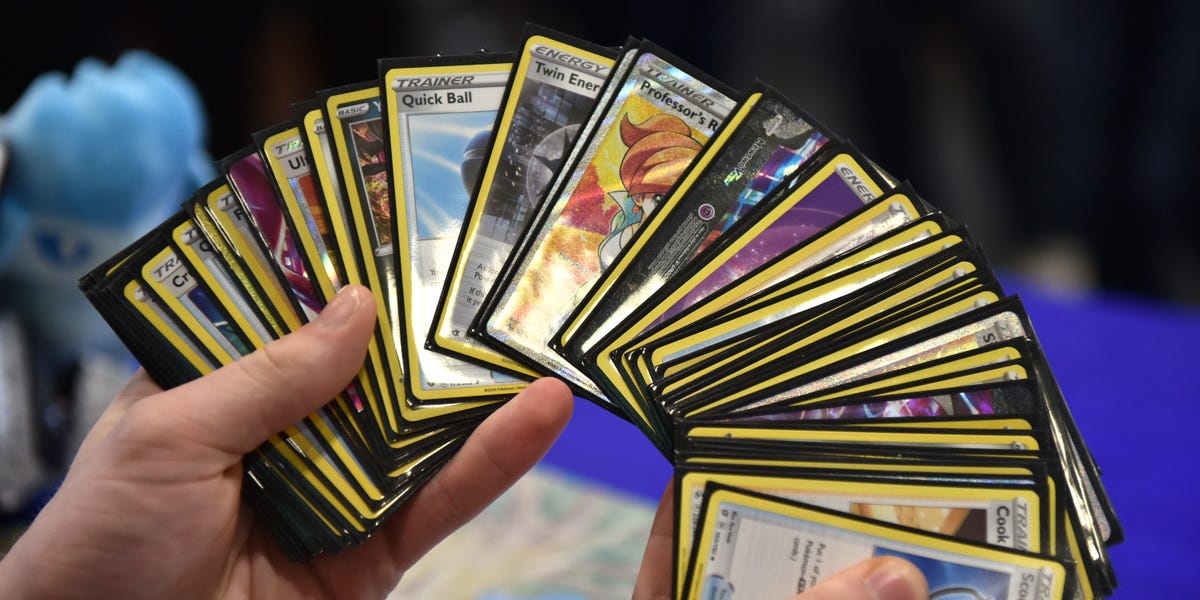
Recall the binder of Pokémon cards your mother gave you when you left for college? Those cards could be worth far more than you realize.
The trading card game has made a strong comeback, sparking a renewed collecting craze that has driven prices of sought‑after cards to astonishing heights. Some rare Pokémon cards are now treated as a distinct investment class, even outpacing traditional assets such as stocks in recent years.
“It’s the usual combo behind most alternative asset booms. Scarcity, nostalgia, and a generation that grew up with these cards now actually having money to spend on them,” stated Jenna Lofton, a professional stock trader and founder of Stockhitter.com.
Although Lofton does not collect Pokémon cards herself, her ten‑year‑old son is a fan. She told TheMoneytimes that his enthusiasm has turned her into an “unwilling expert” in matters like pull rates and grading scales, which are crucial for determining a card’s value.
Brian Dwyer, president of the collectibles auction house REA, offered an analogy that should resonate with owners of other collectible assets, such as sports cards.
While new installments added each year to the Pokémon universe become fan favorites and can command high prices, iconic characters like Pikachu, Charizard, Gengar, and Umbreon can be compared to Hall of Fame staples like Babe Ruth, Mickey Mantle, and Jackie Robinson,” he said.
A collector who spoke with TheMoneytimes is leveraging his finance background to conduct due diligence on cards. Kian Golshan, a valuations analyst who grew up collecting Pokémon, has turned selling cards into a profitable side hustle. He says his finance‑honed analytical approach helps him assess the risk‑reward profile of the cards he considers.
It helps me kind of think through the risks and when to take profits, when to sell, what to hold, what’s my like risk profile, what’s tracking the market,” he told TheMoneytimes.
In February 2024, he purchased a Japanese‑edition Charmander for $59.26 and sold the same card in April for $750, netting a 1,165% profit. Other recent sales from his collection have shown comparable gains, and several cards he owns have risen by thousands of dollars, as shown in screenshots of his eBay account viewed by TheMoneytimes.
When evaluating a card’s potential value, Golshan stresses the significance of specific eras, pointing to the 2003‑2007 period when new card supply declined because demand waned.
When you compound that with the fact that they’ve physically printed less of these cards, and they’re also from 20 plus years ago, that creates a potential good opportunity for value appreciation,” Golshan said.
Other collectors treat Pokémon like stocks. Jake Doll, who writes about Pokémon card collecting online, says he relies on market data to decide if it’s a good time to sell a particular card.
There are some card trading sites like TCGPlayer.com that display market fluctuations and line graphs showing price trends over the past six months and current average prices,” he told TheMoneytimes.
Doll notes that while the market has recently slowed and some formerly valuable cards have dropped in price, he believes the launch of a 30th‑anniversary edition will act as a strong bullish catalyst. Boxes of the anniversary set’s booster packs are already selling for hundreds of dollars on retailer sites.