

As a teenager, I would sit on my bed leafing through glossy magazines, captivated by their empowering stories about women. Men seemed to dominate the news, yet magazines opened onto another world—one in which women’s lives, bodies, professions, and viewpoints deserved full pages. Early on, I knew I wanted to help create more stories like those.
In 2012, after studying journalism at Northeastern University, I headed straight to New York City. I interned at Ladies’ Home Journal and Self before gravitating toward parenting publications such as What To Expect, American Baby, and Fit Pregnancy.
Long before I had a child of my own, motherhood held a powerful fascination for me. It stirred the same curiosity as magazines: women’s strength, what their bodies are capable of, and the profound identity change that comes with raising a child. Even though I understood pregnancy and parenting largely in theory, writing about them felt instinctive.
I enjoyed editing, but I wanted to be the writer
Magazine work did not unfold exactly as I had pictured it from my childhood bedroom. I adored editing—discovering a story’s core, rearranging its parts, and helping a writer express the idea they had in mind. My boss, Mindy, was among the first people to convince me that my creativity and instincts deserved trust, and she taught me almost everything I knew about shaping a narrative.
Over time, however, I grew restless. I poured so much of myself into stories that were ultimately published under someone else’s name. I wanted the ownership—and the daunting opportunity—of facing a blank page, deciding what I needed to say, and hoping it might resonate with even one reader.
Mindy cautioned that freelancing would be difficult, and I accepted that before resigning anyway. I had recently become engaged, was planning a wedding, and was already considering children. I also realized that if I waited until I felt sufficiently established to write, I could end up editing other people’s work for my entire career.
Giving up a reliable salary frightened me, particularly while planning a wedding and thinking about starting a family. Dan, now my husband, recognized the risk but supported my decision to take it. Neither of us knew whether I could support myself sustainably; I knew only that not trying would leave me with regrets.
The shift unfolded more quickly than I had anticipated. In the first few months, I received more assignments than I could easily handle, partly because leaving my 9-to-5 allowed me to attend daytime events, connect with editors, and develop relationships that generated further work. My monthly income still fluctuated, but it was much more consistent than I had feared. By my second year as a freelancer, I was writing at an almost frenzied pace for roughly 20 magazines and websites and earning nearly four times the approximately $30,000 salary I had made as an editorial assistant.
Once I gave up my staff position, my career expanded far beyond what I expected, though it bore little resemblance to anything I could have pictured.
Relocating changed everything
The picture shifted again in 2018, around a year into freelancing, when my husband lost his job. Since I did not have employer-sponsored health insurance, I had been covered through his position, and his job loss meant losing both his paycheck and our coverage. Our lease was coming to an end, we hoped to start a family, and leaving New York suddenly seemed less like a sacrifice than the only sensible choice.
We relocated to my hometown north of Boston, where my parents and oldest friends still lived. I became a mother the next spring, in April 2019. Less than a year later, COVID upended the world, and no one’s life looked the way they had expected.
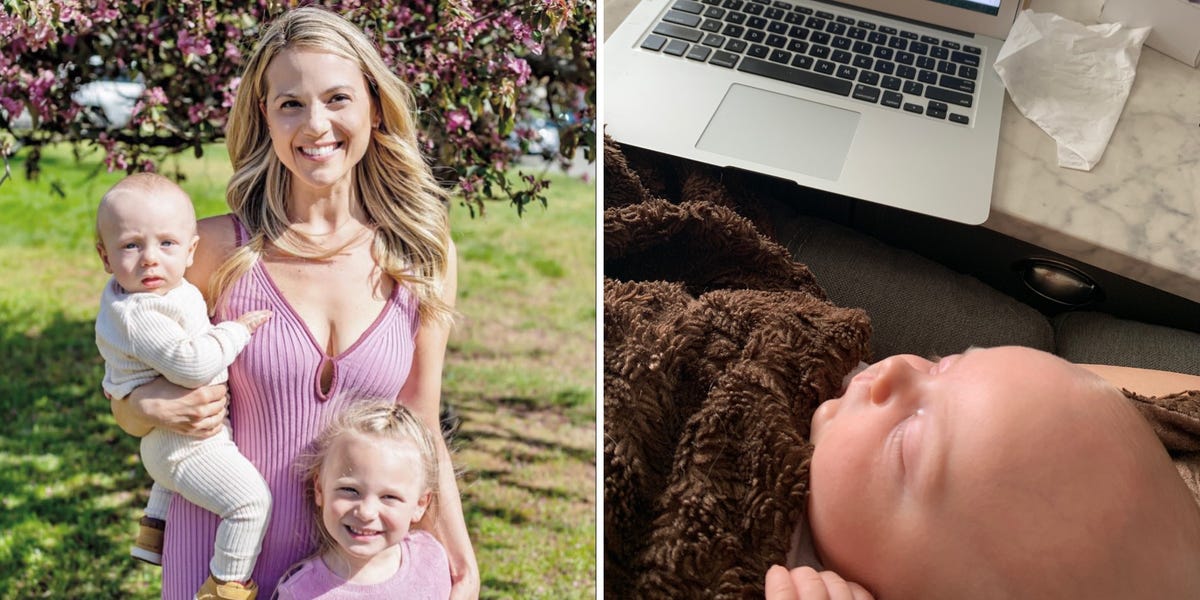
My workdays changed from events, meetings, and crowded New York sidewalks to writing alone in the corner of our small, old house—though it did have an ocean view. There were no nearby colleagues, glossy proofs passing around, or someone across the desk with whom to test an idea. It was just me, my laptop, my cat, and, at various points, a baby bump.
My most difficult experiences became part of my work
Motherhood turned out to be unlike anything I had envisioned, and my route toward it was unexpected as well. While we were trying to expand our family, I endured two miscarriages, experiences that profoundly altered my understanding of pregnancy, loss, and the entire journey into motherhood. I was fortunate to have two healthy pregnancies afterward, but I could never set aside what that process had taught me.
I felt more motivated than ever to create the kinds of platforms and communities I had once needed myself. I co-founded Miscarriage Movement to make pregnancy loss feel less isolating, along with The Mother Chapter, a space for candid conversations about motherhood, identity, mental health, and ambition. Neither platform emerged from a meticulous business strategy; both grew out of experiences and questions I could not stop thinking about.
Today, my career bears no resemblance to the one I imagined as a teenager. I still miss parts of New York and the shared energy of a magazine office. Freelancing remains uncertain, and managing my own platforms means the work is never fully done. Even so, I get to write, edit, create, and build something that is mine, while living near my parents and being present for the small, everyday moments of my children’s lives.
The magazines on my childhood bed inspired me to tell women’s stories. Many years later, that remains exactly what I do. I simply could never have predicted where I would do it—or how deeply my own experiences would eventually make their way onto the page.