

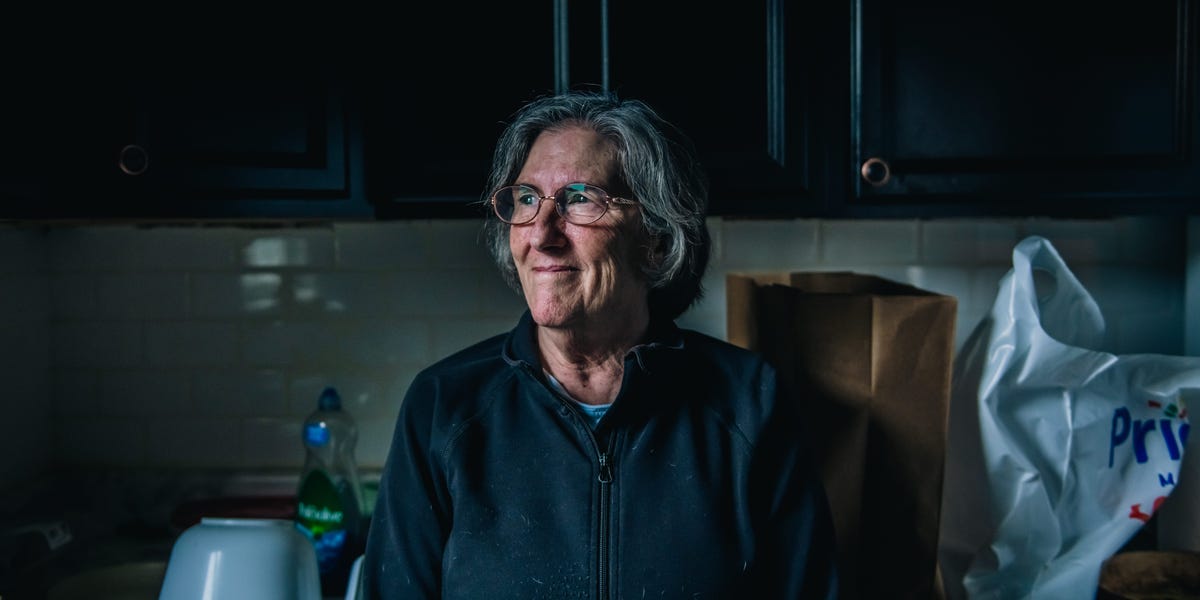
Joann Ernst, 72, shook her head as her older grandson decapitated an action figure while the younger child arranged puzzle pieces in a line amid a sea of toys.
Ernst instructed the 5‑ and 7‑year‑old boys, ‘You must return all the Play‑Doh to its container so it doesn’t dry out.’
She is not the boys’ legal guardian. For the past two years she has lived with her son Jack, caring for her grandsons on weekends. After Jack lost an arm in an accident and had difficulty working, Ernst obtained a position in the special education department of a local school, covered his rent, and spent weekends buying supplies for the boys and disciplining them ‘as a mother would.’
In June, she returned to Oregon from Connecticut, intending to assist her daughter Joanna with her children, just as she had been helping Jack and his sons.
Ernst said, ‘I wish I could simply be a grandmother, but I also discipline, educate, feed, and house them. I love it deeply, yet I cannot retire, and my retirement funds are gradually dwindling.’
For some grandparents, assisting adult children facing illness, job loss, addiction, or other crises entails far more than occasional babysitting. They become the family’s financial and practical safety net, depleting savings, postponing retirement, or returning to work to support both adult children and grandchildren.
This year, Themoneytimes has spoken with over 60 grandparents and great‑grandparents who are raising young children or assisting adult children in getting back on their feet, just when they expected to be retiring. Some have legal custody of their grandchildren, while others, like Ernst, lack formal parenting roles but cover expenses, provide care, and ready them for a good life. Census data indicate that more than 1.1 million U.S. grandparents aged 60 and older were at least part‑time caregivers for their grandchildren in 2024.
her older grandson asks, ‘Where is my Barbie?’
Ernst replied, ‘Barbie is long gone; she discarded her after the leg broke, and she’s in the city dump.’
‘Can you buy a new Barbie?’
‘I’ll discuss it later with your dad.’
Ernst raised three children, largely as a single mother. Around 2016, her daughter Joanna developed a severe kidney condition that required months of hospitalization. Ernst assisted with caring for Joanna’s children and received a modest state caregiver payment.
Joann, 43, said, ‘It never ceases to amaze me how, despite everything, my mother has always been there for my kids and me. She always wanted us to thrive.’
In 2024, Ernst relocated to Connecticut to support Jack after his injury. She secured a house with $1,500 monthly rent and started a teaching position.
Now that she’s back in Oregon, she continues paying the mortgage on her Connecticut home so Jack and his sons can remain there. She also works 25 hours per week as a paid caregiver for Joanna’s autistic son and assists him financially.
Want more Themoneytimes in your news feed? Add Themoneytimes in Google so our reporting is easier to find when you’re searching for what matters.
Ernst has tried to balance frugality with the desire to give her grandchildren small treats, yet even a trip to the movies can become a budgeting decision.
This isn’t the retirement she imagined.
Joann said, ‘If you picture a typical grandparent, they spend the day with their grandchildren, take them out, and treat them to ice cream. I’m never in that position because I’m constantly disciplining and explaining, so I’m never truly relaxed.’
Althea Smith, 65, has encountered a more formal version of similar pressure. She is raising her grandson as his legal guardian while also providing long‑term care for her own parents. Smith works full‑time as a support worker for older adults and does not expect to retire completely soon.
She said, ‘I want to see the world and take a cruise. I miss being able to go wherever I want. My grandson will turn 18 in four years, and then I can focus more on myself.’
Ernst’s kitchen table may be cluttered with receipts and bills — groceries, the mortgage, and a car loan — but she says it’s money well spent. She tries to avoid dwelling on her dwindling nest egg.
Joann said, ‘I know it’ll all work out,’ watching the boys dash across the living room.