
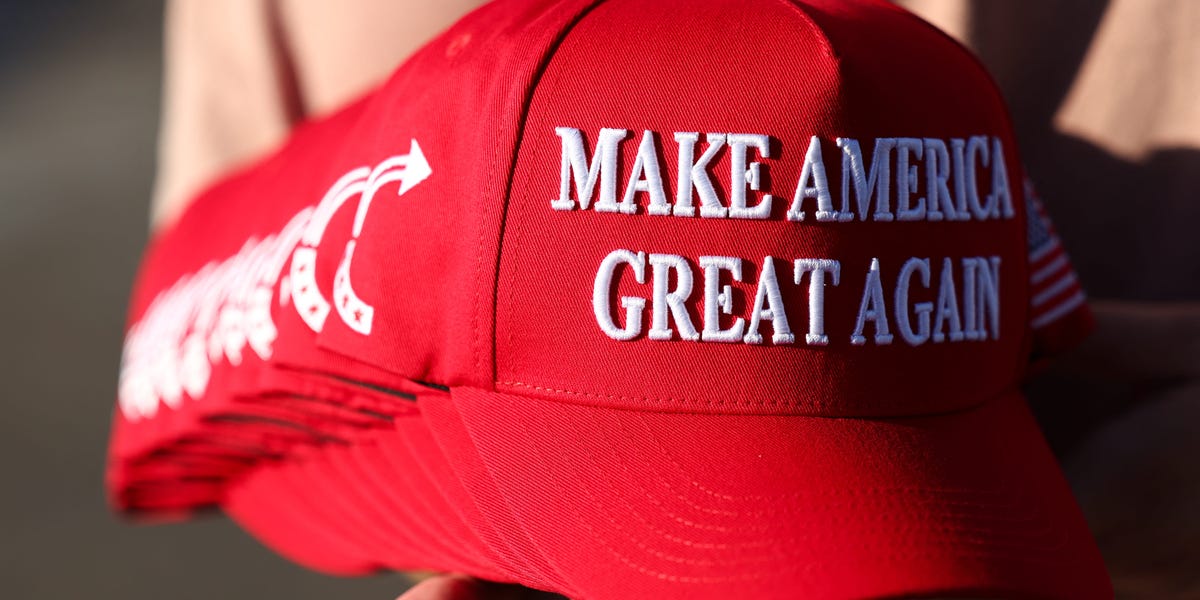
Tim and Moby, the popular human-and-robot cartoon duo known for teaching scientific concepts and historical events to students nationwide, were recently depicted in a White House video wearing MAGA hats. In the clip, the characters discussed the Department of Education, claiming it has “utterly failed our students.”
In response, the creators of the educational cartoon, BrainPOP, released a video highlighting the complexities of copyright law. “Copyright is a tricky but important subject,” the company posted on X. Their counter-video quickly went viral, accumulating nearly 3 million views on the platform. Viewers praised BrainPOP for standing up against the administration, which has previously faced multiple copyright infringement lawsuits from artists.
The White House’s video was taken down from X on Thursday, although it remains accessible on Instagram and Facebook. Neither the White House nor BrainPOP provided comments on the matter. Although BrainPOP’s response did not explicitly target the administration, legal experts consulted by Themoneytimes indicated that the educational company has several legal avenues available.
“This is a pretty straightforward case,” explained Jane C. Ginsburg, a literary and artistic property law professor at Columbia University. “The characters were copied. They were incorporated in another work that doesn’t criticize, comment on, or otherwise say anything about the characters or what they stand for.”
According to Cathay Y. N. Smith, a law professor at Illinois Tech, one potential course of action is for BrainPOP to submit a Digital Millennium Copyright Act (DMCA) takedown notice to the platforms hosting the White House’s videos. “Copyright owners can typically file a DMCA takedown notice to the online platform hosting the content and ask them to take it down,” Smith noted. Ginsburg added that this approach “might be the most direct and least expensive way of dealing with this.”
Smith pointed out that a DMCA takedown request is often a more practical alternative to a lawsuit, as courts can award monetary damages to a company suing the government but cannot issue an injunction to remove government-owned content. If BrainPOP were to sue, Smith argued that the White House’s use of the characters might not qualify as “fair use,” given the highly creative nature of Tim and Moby and the fact that the video mimicked a typical BrainPOP episode.
As an educational company with agreements with school districts across the nation, BrainPOP is likely sensitive to its trademarked characters being utilized for partisan political campaigns. Smith stated, “What they want is an injunction, and they want the injunction so that their work isn’t now associated with a party.”
The Trump administration has previously encountered legal challenges and takedown requests for utilizing songs and other intellectual property in political campaigns. In 2024, a Manhattan federal judge ruled that then-candidate Trump was liable for damages in a copyright dispute involving Eddy Grant’s 1980s hit “Electric Avenue.” Additionally, in May, the owner of music featured in “Peanuts” animated specials sued the U.S. Department of the Interior, claiming the department used “O Tannenbaum” from “A Charlie Brown Christmas” on social media without authorization.
“This is not unusual for Trump or his associates,” Ginsburg remarked.