

Not many people have been blessed with anything like the couple of weeks that have just rained down on Jason Baum.
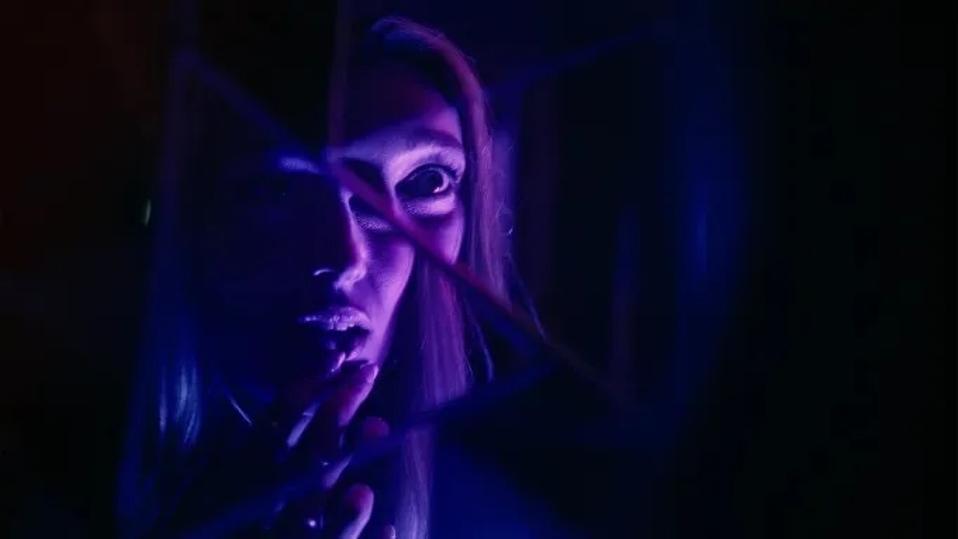
On Jan. 19, the film he produced with three others, It’s What’s Inside, debuted at the Sundance Film Festival, part of the genre-oriented Midnight section. Less than 72 hours later, Netflix locked up rights to the film, paying a whopping $17 million, one of the biggest paydays in Sundance’s 40-year history.
And this weekend, Baum will be up for another Best Music Video Grammy, for producing Kendrick Lamar’s latest visual landmark, Count Me Out, featuring Oscar winner Helen Mirren. It is Baum’s fifth Grammy nomination, and third for work with the rap superstar, after 2018 winner Humble and last year’s The Heart Part 5.
Baum is low-key about the Grammy prospects for his latest work, perhaps because it’s becoming something of a regular occurrence. He previously was nominated for the video of Arcade Fire’s We Exist, and produced two of the episodes in the Grammy-nominated Beyoncé visual album, Black is King. Baum also received Grammy and Emmy nominations for production on director Spike Jonze’s 2020 documentary Beastie Boys Story.
Helen Mirren’s involvement in the latest Lamar project “came about very organically,” Baum said. “We had a character where we wanted someone of note.”
Teams reached out to teams and Mirren, it turned out, was interested in participating. A meeting with Lamar and the production team was set up.
“We all really hit it off,” Baum said. “She couldn’t be lovelier to work with. They actually really enjoyed working together.”
Lamar and Mirren were so sympatico that he even had Mirren do additional voiceover work for another project, Baum said.
And it’s safe to say, despite the success of It’s What’s Inside, that Baum has a soft spot for music video, where he got his start coming out NYU Tisch School of the Arts.
“I really enjoyed music, and admired the work that a lot of people were doing,” Baum says of that time. “It was the end of the heyday of (video request show) TRL on MTV as I was exiting college. A lot of money was being spent, a lot of videos were being made. It was really exciting.”
Indeed, beyond the Grammy-nominated projects, Baum has worked on videos for a startlingly wide range of other musicians, including Paul McCartney, Sia, Muse, Jack White, Unknown Mortal Orchestra, Depeche Mode, Calvin Harris and Chromeo, among others.
He interned during that time with some of the directors he admired, such as Dave Meyers and Chris Milk. Working in the music video space has proved a fertile training ground, particularly on ways to work fast, save money, and still make a quality product, talents equally essential for anybody working in scripted independent film.
“What I’ve learned from so many years of working in short form is what kinds of corners to cut, but also how to stretch money,” Baum said. “I’m used to doing everything on a short-form piece, where you don’t have a lot of staff. I’ve been able to get my hands into the real nitty gritty, including post(-production), because I have to see post through for all my projects.”
That music-video background also connected Baum to a wide range of talent on both sides of the camera.
“I think what’s been really interesting is I’ve really been able to get to know so many crew members and directors and rise up with them,” Baum said. “So many of my classmates at NYU had projects in (Sundance), along with people who worked in the music industry.”
It’s What’s Inside director Greg Jardin is one example. The pair first worked together in 2010, on a music video with a $5,000 budget, Baum said.
“It’s been this beautiful relationship over 14 years where I’ve been able to work with Greg,” Baum said. It’s What’s Inside was their first long-form project together, designed to largely confine action to a single location without making the result look like a budgetary rather than a creative decision.
“It was designed to be kind of simple to execute,” Baum said. “In a way, it kind of has fallen into a trope or a genre of one-location film. But Greg was really adamant about not falling into that cliche, and really trying to push it forward and not make it feel like you’re limited in space, and take a twist on the genre.”
One of Baum’s first long-form projects was as a co-producer on Music, the feature-length drama co-written and directed by singer Sia. The film was designed for a theatrical release, but the COVID lockdown scuttled that plan. Baum also worked as associate producer with creator Joey Soloway on one of the last episodes of Emmy-winning Amazon series Transparent.
Now, he has an indie project that sold for big money, with has another big festival appearance at South By Southwest in March before Netflix brings the project to its 260 million global customers sometime thereafter. The challenge for Netflix may be deciding in which of its tens of thousands of categories to put It’s What’s Inside. Certainly, it’s a struggle for Baum to define the film’s mash-up of genres.
“I refer to (It’s What’s Inside) as a multi-genre cinematic experience,” Baum said in an interview four days after the Netflix sale was announced. “It’s really not one thing or another. It has elements of a thriller, mystery, straight-up comedy, sci-fi. The Midnight (section) gets stereotyped as horror and darker material. But you know, from what I’ve seen in the program, and being a part of it, I think it’s just kind of a place for more fun genre fare as a whole. ”
Netflix put down that $17 million acquisition price during ts own big week, reporting 13 million new subscribers and a 12.5% jump in revenue.
“I’m excited to partner with Netflix on this,” Baum said. “I’m excited to see how they bring it to the masses. They have such a worldwide platform, it’s exciting that so many people will get to see it.”
The big acquisition comes at a major inflection for the streaming giant, as it shifts away from awards-chasing prestige films and auteur filmmakers.
Netflix also announced the impending March departure of long-time film chief Scott Stuber, who’d presided over seven years of massive Netflix spending on feature-length original films, including 2023’s Ridley Scott-directed biopic, Napoleon, which cost a reported $130 million to $200 million.
After a creating 90 original films in 2018, three to five times as many as any traditional Hollywood studio, Netflix dialed back to a “mere” 49 original features in 2023. Six months of writer and actor strikes likely contributed to a slowdown already underway for other reasons, including Stuber’s own preference for fewer, better supervised projects. But expect the trend to continue.
For instance, Netflix committed $5 billion over 10 years for live weekly WWE Raw programs and related “shoulder” content. That’s a long way from expensive awards bait projects of the past few years, such as Napoleon, Roma, The Power of the Dog, Don’t Look Up, Da 5 Bloods, or Mank.
Netflix spending on programming has been largely flat the past couple of years, at $17 billion annually. The company signaled in last week’s earnings call that it plans to license more existing programming from putative competitors. That makes the price tag for It’s What’s Inside particularly noteworthy, and a bargain at that. Given the entire industry’s shift in economics and ambitions, Baum’s talents in low-cost, high-impact projects, with his deep music connections, may be particularly valuable.
“This space is where I first fell in love with movies,” Baum said. “And I think it’s just adapting with the times as you would see with some of these (feature-length) music projects like Taylor Swift’s Eras Tour and Beyoncé’s Renaissance. There’s a lot of interesting things happening and I’m very curious where the industry might be going.”