

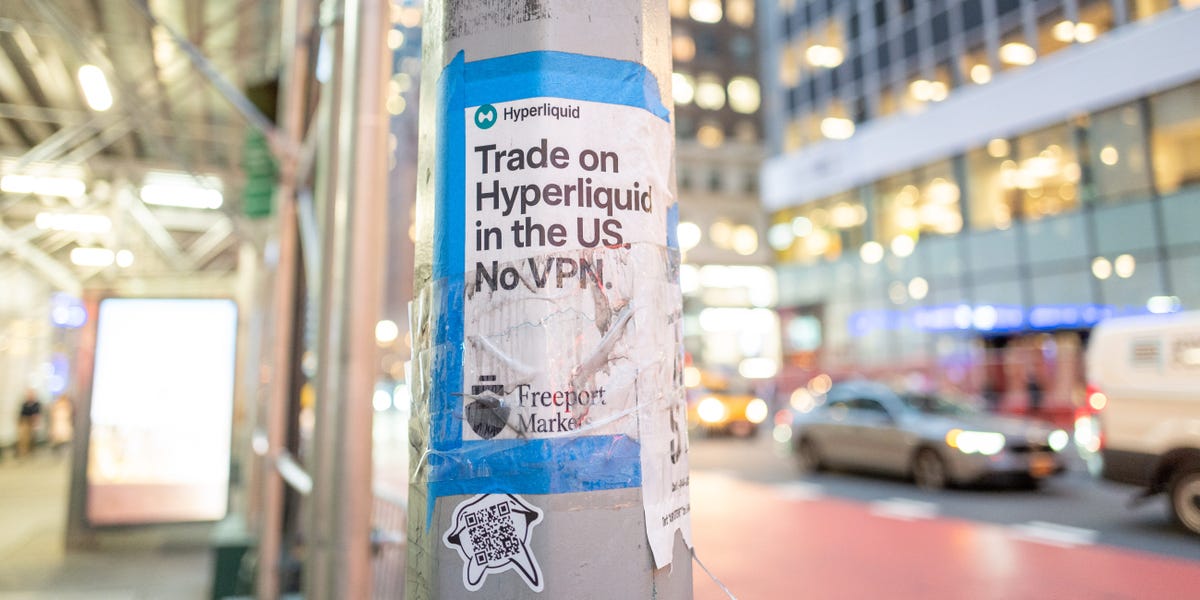
The perps are coming.
That’s not shorthand for criminals. We’re talking about perpetual futures, a once-obscure crypto-linked play that could soon expand across markets.
Perpetual futures have been in the zeitgeist lately. Along with “tokenization,” perps are seen as a structural engine for 24/7 trading, something that regulators and finance pros have advocated for recently.
The model has been championed by crypto proponents for a long time, but there’s a growing push to bring perpetual futures to other markets, including indexes, single stocks, and commodities.
“The bigger question isn’t whether perp futures are coming to traditional assets,” stated Jordan Knecht, head of strategic integrations at blockchain infrastructure firm Kresus. “It’s what happens next.”
What are perpetual futures?
Perpetual futures are a type of derivate contract that allows investors to bet on an asset’s price without owning it directly. But unlike normal futures contracts, perps have no expiration date and can be held as long as an investor meets any margin requirements set by their brokerage. The contracts were launched by offshore exchange platform BitMEX in 2016 as a way for traders to speculate on bitcoin.
“Instead of rolling from one contract month to the next, its price is kept in line with the underlying market through a periodic funding payment between buyers and sellers,” Mark Hiriart, global head of markets at Bakkt, said. “That simplicity made them hugely popular.”
While BitMEX has since shut down, interest in perpetual futures has increased. In May, 24/7 trading platform Trade [XYZ] was given exclusive permission from S&P Dow Jones Indices to offer trading of perps referencing the S&P 500 on Singapore-based exchange Hyperliquid.
Coinbase rolled out “perpetual-style futures” in July 2025 and Robinhood released a similar feature in September. Prediction platform Kalshi also offers perps for some assets.
Perps trading has exploded overseas, dominated by Hyperliquid, which has seen the price of its native crypto triple in 2026 on hopes that perps will be expanded to more markets.
In August, President Donald Trump surprised the market when he mentioned the possibility of the Commodity Futures Trading Commission bringing Hyperliquid to the US, a move that could vastly expand the options for onshore traders and grow the list of perps assets available, like single stocks and other commodities.
Who are they for?
Both Hiriart and Knecht said that for event-driven macro traders, perps are an opportunity to capitalize on recent headlines, which can crop up unexpectedly and outside of normal exchange-trading hours.
“During the Iran conflict, perpetual contracts referencing oil, listed on Hyperliquid, saw a surge in activity as people looked to express a view on oil over the weekend while traditional markets were closed,” Hiriart noted. “That was a real signal: there is demand for round-the-clock access to macro assets, and market structure built around weekday trading hours doesn’t always meet it.”
He also highlighted the importance of perpetual futures as the market in which price discovery frequently happens.
“When the first reaction to a major geopolitical event happens on a venue that’s open while others are closed, it affects everyone, including people who only ever hold the underlying asset,” he noted.
What are the risks?
That said, while there may be some strong benefits for savvy traders, some market pros urge caution.
Benjamin Sarquis Peillard, CEO of blockchain-based private credit platform Cap, emphasized that as with any tradable asset, the mechanics that make trading perps appealing to investors also make them risky.
“Approving Bitcoin perps is very different from introducing similar contracts for oil, gold or equities,” he said. “Each market has its own liquidity dynamics, and the consequences of excessive leverage can extend well beyond the traders holding those positions.”
Hiriart shared similar concerns, highlighting the leverage that can create additional risk. Perps allow traders to take on enormous leverage to fund their bets on a particular asset, which is partly the reason regulators in the US and elsewhere have been hesitant to give them the green light.
“These are leveraged instruments and they aren’t suitable for everyone so need to be handled appropriately,” Hiriart stated. “The more important takeaway for most investors isn’t the product itself, it’s the direction of travel: markets moving towards always-on trading, and institutional-grade rules and infrastructure continuing to arrive in digital assets.”