

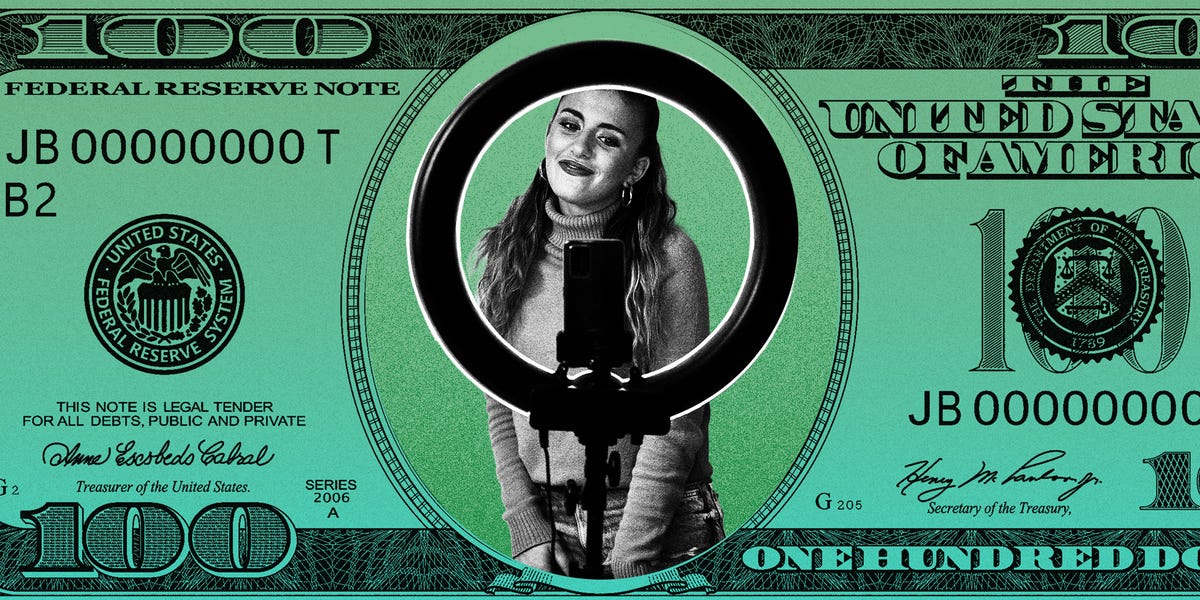
High-income earners have a special affinity for influencers, finding them more trustworthy when it comes to product recommendations. This is the key finding from fresh research conducted exclusively for Themoneytimes by Morning Consult.
According to a September survey of roughly 2,000 U.S. adults, individuals earning above $100,000 annually were more inclined to trust influencers, be influenced by their political views, and even aspire to become influencers themselves when compared to those making between $50,000 and $100,000 or under $50,000.
Amanda Acevedo, director of talent at G&B Digital Management, attributes this trend to a straightforward reason: influencers resonate more with those who have discretionary income.
“The general population online recognizes that creators earn substantial incomes,” Acevedo explained. “It’s difficult to relate to them if you don’t see yourself in their world or feel they haven’t experienced similar life circumstances.”
Relatability plays a crucial role in building trust within the creator economy.
“When you’re financially well-off, you don’t perceive influencers as disconnected because you can relate to their lifestyle more — you possess greater purchasing power,” said Natalie Barbu, founder of Rella and former lifestyle influencer.
In the Morning Consult survey, 61% of high earners expressed trust in influencer-recommended products, compared to roughly half of respondents from lower-income groups. They were also more likely than their lower-income counterparts to report increased trust in influencers compared to a few years prior.
Many followers romanticize the influencer lifestyle, yet in truth, numerous creators aren’t financially thriving — even those in the “creator middle class” often strive to project an image of affluence.
Nonetheless, creators and marketers acknowledge that lower-income individuals may feel increasingly detached from influencers.
Gild Creative Group CEO Tiffany Hardin noted she had to carefully consider this dynamic while collaborating with a brand at the Cannes Lions advertising event.
“We were very mindful not to come across as, ‘We’re on the boat, and you’re not,'” Hardin said.
Fans Feeling the Economic Pressure
Influencers are adapting to the financial anxieties affecting parts of their audience.
“People are exhausted by constant sales pitches and products that lack authenticity,” Acevedo said. “There’s a growing desire to return to simplicity.”
Acevedo and Grace Murray-Vazquez, EVP at influencer marketing platform Fohr, observed a decline in brands demanding hauls, unboxings, and brand-sponsored trips.
“Brands are becoming more conscious that they’re not just seeking visibility — they’re looking for trust, consideration, and relevance,” Murray-Vazquez stated.
For influencer content to succeed — particularly when promoting a brand — it must feel genuine.
Lifestyle influencer Jen Worman, with 15 years of experience, has discovered that sharing personal details helps her connect with followers who earn approximately $100,000 annually.
“I believe those who can relate to you are more likely to make a purchase,” she said.
Murray-Vazquez noted that content portraying the creator as an older-sister figure dispensing wisdom is currently gaining traction.
Creators often start off feeling accessible, but as their careers progress, their lifestyles evolve, Murray-Vazquez explained. There’s a distinction between content that alienates an audience and offering them “something to admire,” she added. Successful creators who maintain their fanbase “don’t lose touch with the real-life experiences of their audience,” she said.
What influencers should avoid, Hardin emphasized, is content that causes followers to recoil with reactions like “ew.”
For creators, that “ew” moment can be far worse than a brief moment of embarrassment.
“Once a creator loses credibility, regardless of the subject matter, they lose their following,” Hardin warned. “As a creator, you’re no longer viable to brands aiming to use you as a conduit to reach their target audience.”