

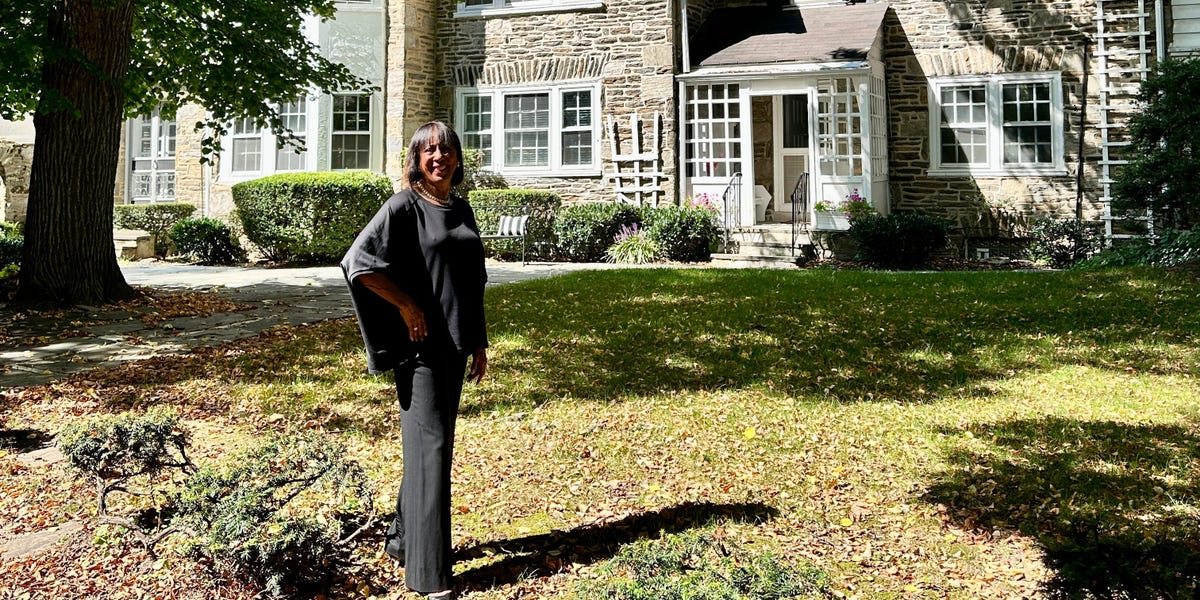
This narrative stems from a conversation with Scheryl W. Glanton, a 74-year-old real estate professional in Philadelphia, and has been streamlined for conciseness and readability.
The situation was becoming increasingly exasperating. Even after organizing more than 20 viewings for my property located in the suburbs of Philadelphia, potential buyers failed to submit any offers.
We listed the 5,100-square-foot Tudor-style residence, constructed in 1925, on the market in April 2026. I anticipated a swift sale at the $1 million asking price, given that it was an estate sale, the community boasted reputable schools, and the neighborhood was highly desirable.
However, when I inquired with the buyers’ representatives about the lack of interest, they consistently responded, “The property is excessively spacious.”
They indicated that the seven-bedroom, five-and-a-half-bathroom home was unsuitable for a typical family, irrespective of plans for additional children.
I chose to promote it as a multigenerational dwelling.
Additional attributes, such as its rich history, a one-third-acre lot, stone walls, and airy interior, rendered it an appealing choice.
Four months elapsed without any progress. Then, in August, I experienced a moment of insight.
The three-story home featured two distinct wings, along with two sitting rooms on the second floor, two bedrooms with private bathrooms, and a shared bathroom. It also included two separate entry points, two staircases, and a garage accommodating four vehicles.
The layout appeared ideally suited for multi-generational living.
To achieve a sale, I needed to reduce the price to $875,000 and adjust my approach.
Consequently, I redefined the listing. This time, I targeted young families and grandparents seeking to reside together while maintaining individual privacy.
Offers began to arrive promptly.
Within a single day, I received two proposals from multigenerational households, with one contingent on the other falling through.
The prospective purchasers, who agreed to a price near the asking amount, were a family from Los Angeles consisting of a couple, their two children, and the wife’s parents from Indiana.
They had chosen to relocate to Philadelphia due to a job opportunity, representing a significant move for everyone involved.
After seven and a half years in the real estate industry, I’ve come to understand that each property holds unique significance for me, and every house carries personal meaning. This experience has strengthened my conviction that individuals desire to live in a manner that suits their preferences.
It relates more to the lifestyle than the physical structure. I always emphasize this aspect.
There is an evident movement in the United States toward three or even four generations cohabiting, whether in a compound, a single residence, a duplex, or a triplex.
This trend might be linked to economic factors, but my expertise lies in luxury real estate. Other influences are at play.
As people age, what decisions do they make regarding their living arrangements? A primary concern nowadays involves childcare and eldercare. Multi-generational living can address both needs effectively.
The demand is clearly present. As the proverb states, the market ultimately determines the outcome.