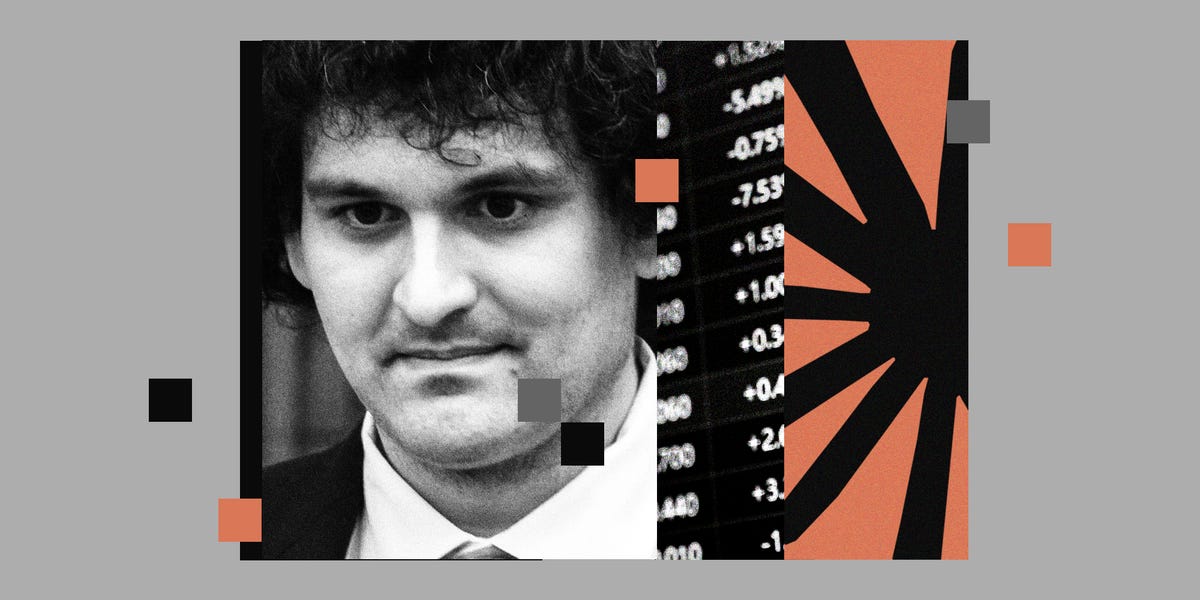
Approximately a year and a half ago, the federal government obtained ownership of Anthropic stock without spending any money. The securities were confiscated from individuals connected to cryptocurrency fraudster Sam Bankman-Fried. From there, they vanished into a legal void. As Anthropic hurtles toward what could become the largest IPO in history, those shares might now be worth billions. Bankman-Fried’s personal Anthropic stake was liquidated during the bankruptcy proceedings of his defunct cryptocurrency exchange. The Anthropic equity held by Caroline Ellison and Nishad Singh, two colleagues who invested alongside him, followed a different route. The government seized those shares and sold them to existing Anthropic shareholders, according to a person familiar with the transaction. It remains uncertain whether the proceeds will be distributed to victims of the $11 billion fraud case, or if authorities will simply retain the funds. It also remains unclear which investors purchased Singh’s and Ellison’s stock and the amount they paid, but Anthropic shares have experienced such a remarkable climb that those investors likely profited substantially. Bankman-Fried was found guilty in 2023 of fraud and money laundering charges and sentenced to 25 years in prison following the collapse of his cryptocurrency empire. Prosecutors claimed he utilized his crypto hedge fund, Alameda Research, to divert billions of dollars from customers of FTX, his cryptocurrency exchange. The narrative of the crypto criminals’ Anthropic shares contains extraordinary elements, including one of the most significant financial frauds in modern history, a complicated bankruptcy docket, and a company that achieved one of the fastest appreciations in business history as the world suddenly grasped AI’s existential significance. An intelligent investment Bankman-Fried, Singh, and Ellison each participated in Anthropic’s 2022 Series B funding round. Bankman-Fried acquired $500 million worth, which according to court documents represented 13.56% of Anthropic at the time. Singh obtained $40 million in shares, and Ellison acquired $10 million in shares, according to court records reviewed by Themoneytimes. The artificial intelligence company’s valuation has surged over the past four years. On the secondary market, Anthropic has been valued at $1.5 trillion. It ranks as the most valuable private company globally, according to Crunchbase. The Anthropic shares purchased by Singh and Ellison could together be worth between $4.17 billion and $5.03 billion today, based on the $965 billion valuation the company announced this May, according to Olav Sorenson, who teaches venture capital strategy at UCLA. Harrison Rolfes, an analyst at PitchBook, put the combined figure at $2.62 billion. If Anthropic went public at a $2 trillion valuation, the shares would be worth approximately $5.44 billion, Rolfes stated. Four of Bankman-Fried’s close associates and executives at his companies pleaded guilty as co-conspirators. Two of them, Singh and Ellison, testified against him. Ellison served as CEO of Alameda Research, which traded and invested funds belonging to FTX depositors. She was also Bankman-Fried’s intermittent romantic partner. Singh, an FTX executive and early employee, assisted in concealing the commingling of funds between the two companies. Following the collapse of FTX, Bankman-Fried’s Anthropic shares — which were owned by Clifton Bay, an entity affiliated with Alameda Research — ended up in bankruptcy court along with other recovered assets of his companies. His Anthropic shares were liquidated to pay FTX’s creditors. The estate in 2024 sold Bankman-Fried’s Anthropic shares to several dozen buyers for a total of $1.3 billion, more than double what he paid. The largest stake went to an entity affiliated with the United Arab Emirates sovereign wealth fund, bankruptcy court filings show. The feds take a stake in Anthropic As part of their sentences, a judge required Singh and Ellison to forfeit their Anthropic shares, which prosecutors indicated could be considered proceeds of their crimes. At Singh’s sentencing hearing, one of his attorneys, Andrew Goldstein, stated that Singh purchased his shares before participating in the criminal conspiracy and “he actually may have had a legitimate legal claim” to the shares but agreed to surrender them as part of his plea agreement “because it was the right thing to do.” Contacted for comment for this story, Goldstein told Themoneytimes that Singh hopes the government can promptly distribute proceeds from the sale to FTX victims. An attorney for Ellison declined to comment. A federal judge ordered Ellison’s and Singh’s Anthropic shares to be transferred to the federal government, which took ownership of Ellison’s shares in February 2025 and Singh’s in April of that year, according to previously unreported court records. Normally, victims of crimes receive compensation through a restitution process overseen by courts. However, the number of potential FTX victims could number in the millions, prosecutors stated in court filings. As a result, the judge ruled that victim compensation would be handled through a process called remission, overseen by the Justice Department. During Ellison’s sentencing hearing, Justice Department prosecutors informed the judge that the DOJ would either establish its own claims administration process to compensate victims, or collaborate with the FTX bankruptcy process to identify victims and provide forfeited funds to them. At the time, FTX’s bankruptcy process was in full swing. A Delaware court appointed Sullivan & Cromwell, the prestigious Wall Street law firm, to untangle the company’s assets, determine who was owed money, and pay them. The creditors in the FTX bankruptcy, prosecutors noted, largely overlapped with FTX’s victims. They were generally depositors, lenders, and investors defrauded by Bankman-Fried and other executives. Prosecutors stated the Justice Department could work with the bankruptcy estate’s lawyers to return money to them, as it had in previous large-scale financial frauds such as Bernie Madoff’s Ponzi scheme. There was an unusual twist that distinguished the FTX bankruptcy. Bankman-Fried’s investments — particularly the Anthropic shares, along with some cryptocurrency — had grown substantially in value since FTX’s collapse. Earlier in 2024, the Sullivan & Cromwell lawyers overseeing FTX projected that all creditors would be repaid in full, with interest. The Marshals take control While prosecutors indicated they intended to use Singh’s and Ellison’s Anthropic shares for remission, the Justice Department could technically do whatever it wished with them, according to Duncan Levin, a white-collar defense attorney who teaches a course on forfeiture at Harvard Law School. “It’s a very opaque process,” he said. “It’s completely at the discretion, by law, of the attorney general of the United States.” Typically, when federal authorities seize shares of private companies through criminal asset forfeiture, they send the shares to the US Marshals Service Complex Assets Unit for liquidation. The unit attempts to value the shares as any other investor would, said Michael Bachner, a white-collar criminal and securities litigation attorney. “They may look to: What would an institutional purchaser pay for these securities? Are there funds that are valuing the securities? Is there a secondary market already out there?” For the sale of the Anthropic shares, timing was critical. The Marshals Service is supposed to preserve as much value as possible, Bachner noted. By the time authorities obtained the shares, Anthropic had become an economy-shifting AI giant. In its March 2025 Series E fundraising round, Anthropic was worth $61.5 billion. By its Series G round at the start of 2026, it was worth $380 billion. At the same time, each fundraising round diluted the Series B shares. The FTX estate informed the bankruptcy court that Bankman-Fried’s shares, which in 2022 represented 13.56% of Anthropic, represented 7.84% of the AI company in January 2024. The Marshals Service sold Singh’s and Ellison’s shares to existing Anthropic investors sometime last year, according to the person with knowledge of the sale. It’s unclear when exactly the agency sold the shares, to which investors, how those investors were selected, at what price the shares were sold, or how much money the government earned from the sale. Depending on when they were sold in 2025, the combined shares could have been worth between $300 million and $1.1 billion, according to Sorenson, the UCLA professor. Rolfes, the PitchBook analyst, estimated a range between $250 million and $630 million, depending on the timing. The Marshals Service declined to comment. A representative for the Justice Department stated that information about asset sales and victim compensation is confidential. The revenue from the sale of Singh’s and Ellison’s Anthropic shares does not appear to have been transferred to the FTX estate as of the end of June this year, according to bankruptcy court filings from the estate, which continues to compensate victims and creditors. The FTX estate received $638 million last year from assets seized by the Justice Department, according to the estate’s annual report for 2025. Other filings show that nearly all of that amount came from the sale of Robinhood shares previously owned by Bankman-Fried. The estate expects to receive approximately $400 million more from the government at some point in the future, according to the annual report. That would include proceeds from cryptocurrency and other investments made by Bankman-Fried. One of Bankman-Fried’s victims, Sunil Kavuri, told Themoneytimes that the Justice Department should use the proceeds from Ellison’s and Singh’s Anthropic shares to compensate victims. It would be “diabolical” for the government to retain the proceeds, he stated. Victims haven’t actually been made whole, he said, because the bankruptcy court calculated the losses of FTX depositors using the time of FTX’s bankruptcy declaration, when crypto prices were at a low point. Kavuri previously argued in bankruptcy court that the FTX estate should have held onto its Anthropic shares longer to benefit from the company’s rapid growth. Representatives for the FTX estate declined to comment. The Justice Department spokesperson stated that the matter was ongoing, and that the DOJ “prioritizes victim compensation from forfeiture and takes all steps to ensure forfeited funds are provided to victims.” The government could end up simply keeping the money, Bachner stated. “They’ve invested millions and millions and millions of dollars in prosecuting Bankman-Fried. And they want to get at least reimbursed for their costs, so sometimes they’ll do that,” he said. “It’s really a unilateral government decision.” Jack Newsham and Katie Roof contributed reporting for this story.
Trending
- Unraveling the mystery of Sam Bankman-Fried associates’ Anthropic holdings
- Experts Dismiss Claims That Trump’s Venezuela Oil Deal Will Immediately Ease Gas Prices
- Cost of the City: What it really costs to live in America’s biggest cities — and the trade-offs residents make to stay.
- Leaked Microsoft pay data shows how much some employees are making in AI, cloud, and other teams
- Meta’s Landmark $18 Billion Deal: Who Comes Out Ahead and Who Falls Behind
- Canada hesitates to weaponize major exports against Trump; premier warns against it
- Nvidia explores multi-billion dollar acquisition of Hugging Face AI platform
- Economy by Themoneytimes
Monday, August 31