

Every day, trillions of dollars flow through Wall Street’s plumbing — much of it still running on systems built decades ago. Mortgage and bond trades can take days to settle. Intermediaries add layers of cost, tie up capital, and magnify risk. For the world’s biggest banks and asset managers, choosing the wrong rails could lock in another generation of inefficiency. Blockchain could change that. But which blockchain?
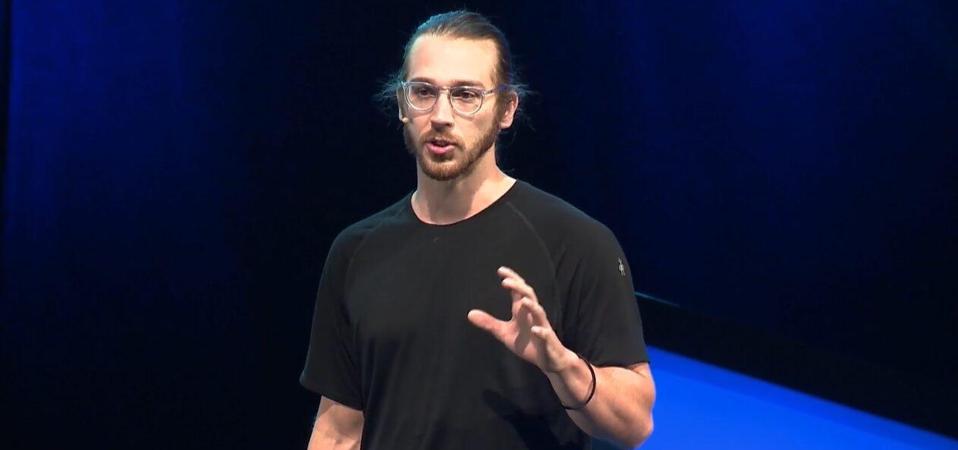
Critics call Ethereum slow and costly. Rivals boast higher throughput. Fintech giants are even building their own blockchains. Yet Danny Ryan — cofounder and president of Etherealize, and a central architect of Ethereum’s evolution, having led the coordination of the historic “Merge” to proof-of-stake — insists Ethereum’s security, neutrality, and cryptographic privacy make it uniquely suited to carry the weight of global finance. Yes, Wall Street needs rewiring — and Ryan argues Ethereum is the only blockchain that can do it.
Ryan spent nearly a decade at the Ethereum Foundation, working closely with Vitalik Buterin and shaping the protocol at its most critical turning points. Now, with Etherealize backed by $40 million from Paradigm, Electric Capital, and an initial grant from the Ethereum Foundation itself, he is betting Ethereum is ready for Wall Street.
Ryan’s answers — blunt, precise, and at times surprising — go well beyond crypto hype and outline why Ethereum may be the safest bet to rewire the financial system.
Security is a scarce resource
I began with the obvious challenge: why would Wall Street trust Ethereum, given its reputation for congestion and high fees?
Ryan didn’t hesitate. “Crypto-economic security is a scarce resource,” he said. In proof-of-stake systems, validators lock capital to make attacks prohibitively costly. Ethereum today has more than one million validators and nearly $100 billion staked. “You don’t just spin that up overnight,” he added.
By comparison, newer blockchains can create faster networks but often rely on a handful of institutional backers. “That looks more like a consortium model,” Ryan explained. “You trust the firms involved, the contracts, the legal recourse. That’s a different kind of security. It’s not the same as securing a neutral, global network with tens of billions at stake.”
The numbers bear him out. According to Etherealize’s recent research, Ethereum secures more than 70% of all stablecoin value and 85% of tokenized real-world assets. If scale of security matters, Ethereum has it.
Privacy: promises versus math
Privacy is another sticking point. No bank will put client trades on a fully public ledger. Isn’t that why projects like Canton, backed by major financial institutions, are getting traction?
Ryan’s answer was sharp. “Canton relies on honesty assumptions — trust that counterparties will delete sensitive data. That’s smoke-and-mirrors privacy. With cryptography, you solve privacy fundamentally.”
He was referring to zero-knowledge proofs (ZKPs), a field of cryptography developed long before blockchains but now being applied at scale on Ethereum. ZKPs are already the backbone of “rollups” that compress thousands of transactions and settle them on Ethereum. The same technology is being extended to privacy: enabling selective disclosure, where a regulator can verify compliance without exposing every trade detail to the market.
“You solve privacy with math,” Ryan added – a line that felt like a guiding principle for how Ethereum aims to meet institutional requirements.
Modularity: institutions own rails
I pressed him on Ethereum’s architecture. Isn’t it unwieldy compared to building a streamlined chain from scratch — as Stripe and Circle are now attempting?
Ryan countered that what looks messy is actually a strength. “Institutions love the L2 model,” he explained. “It lets them customize infrastructure while inheriting Ethereum’s security, neutrality, and liquidity. They get to own their rails, but still plug into the global network effects.”
He pointed to Coinb’ase’s Base network as a proof of concept. Built as a layer-2 on Ethereum, Base generated close to $100 million in sequencer revenue in its first year – showing both economic viability and institutional-grade scale.
For Ryan, modularity isn’t a technical detail. It’s the blueprint for how institutions can build their own blockchain infrastructure without losing the benefits of a shared network.
Neutrality and throughput
What about speed? Solana and other rivals claim thousands of transactions per second. Isn’t that more practical for global finance than Ethereum’s relatively limited throughput?
Ryan reframed the issue. “When financial institutions think about blockchains, they don’t just ask ‘how fast is it?’ They ask: who do I have to trust for this system to execute correctly and stay online? On Ethereum, the answer is: no one.”
That’s what he calls “credible neutrality,” the assurance that the base layer doesn’t tilt the rules in favor of insiders. Ethereum has operated since 2015 without a single day of downtime – a record the financial systems should envy.
As for scaling, Ryan pointed to the roadmap laid out by Vitalik Buterin, Ethereum’s cofounder and intellectual architect. The key, he stressed, is that capacity comes from the aggregate of many layer-2s running on Ethereum, not a single chain. Today that already means throughput in the tens of thousands of transactions per second across the system — and with upcoming upgrades like data availability sampling, Ryan said the total could climb above 100,000 TPS within just a few years. “Scalability is here — without sacrificing trust,” he argued.
The bigger picture
Ryan’s case wasn’t that Ethereum is perfect. It was that only Ethereum has the mix of security, privacy, modularity, and neutrality that institutions care about.
Stripe, Circle, and others may experiment with their own blockchains. But Ryan insists they will eventually face the hard truth: “Most of them will need to connect back to Ethereum. Because security isn’t free — it’s scarce.”
For Wall Street, that may be the decision point: build on islands of proprietary systems, or plug into a neutral, global network that has already proven resilient for a decade. Ethereum’s base layer may not yet be the fastest blockchain – but for Wall Street it could be the safest bet, with an architecture that is scaling quickly and privacy secured by math rather than promises institutions might one day break.