

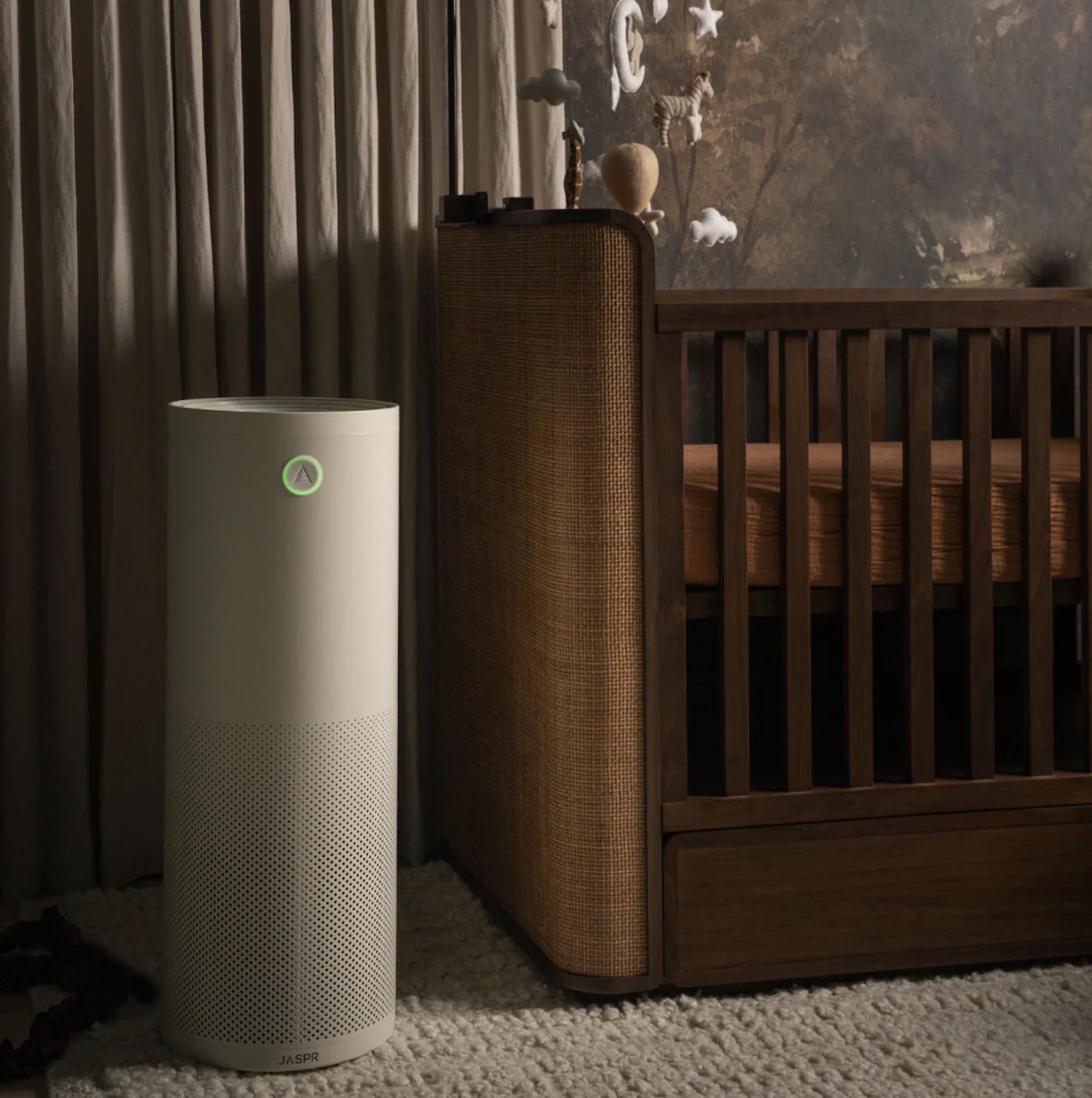
While indoor air quality has become a silent health crisis—exacerbated by natural disasters like California’s wildfires, long-latency urban pollution in dense cities, dust and mold allergies, and lingering pandemic concerns—innovative solutions and medical-grade air purifier and filtration systems are redefining how we protect our homes, living, and working spaces.
Gone are the days of simple air purifiers. Today, consumers are looking for high-grade HEPA filters for maximum particle filtration. Brands like Jaspr’s Air Scrubber are marketed not just as a purifier but as a true air scrubber with almost industrial standards. For example, Jaspr promises to turnover airborne particles by 95% in just one hour, offering a blend of high performance filtration and modern aesthetic appeal for home decor. As consumers increasingly prioritize wellness, the air filtration industry underscores the growing demand for devices that go beyond basic cleaning to deliver tangible health gains.
The COVID-19 pandemic catalyzed a dramatic surge in the home air filtration market, with U.S. sales of air purifiers spiking 57% in 2020 as households sought defenses against airborne viruses. Most popular high-grade devices from Dyson were sold out completely and the secondary market reflected surge pricing. This upward trajectory has been further fueled by intensifying wildfires across regions like the West Coast, driving demand for systems capable of filtering smoke, ash, and finer particulates that infiltrate indoor environments. Globally, the market—valued at USD 16.09 billion in 2024—is projected to expand at a compound annual growth rate (CAGR) of 7.13% to reach USD 29.91 billion by 2033, reflecting not only a sustained consumer interest but a growing one in the investment of air quality amid recurring environmental threats.
The Science
Air filters and air purifiers work by capturing contaminants through multi-stage systems. Today, most high-grade devices will offer HEPA filters that trap 99.97% of particles as small as 0.3 microns, alongside activated carbon for odors and volatile organic compounds (VOC). At home, where some individuals spend up to 90% of their time, these air filtration systems play a crucial role in mitigating indoor pollutants and known allergens like dust, pollen, pet dander, mold, bacteria, and viruses. Studies from institutions like the EPA highlight that while no device eliminates all airborne pollutants, high-efficiency filters can significantly lower exposure to particulate matter which is linked to cardiovascular and respiratory illnesses.
While most commercial-grade air purifiers lack the luster for a home, we’ve witnessed a host of brands cropping up to bridge the gap of industry-grade air filtration and aesthetic home use. Products like Jaspr is one that distinguishes itself this way. The device boasts a Clean Air Delivery Rate (CADR) exceeding 600, removing over 99% of airborne pollutants through a heavy-duty, four-pound filter featuring HEPA, activated carbon, and additional layers. Operating quietly at just 30 decibels—comparable to a whisper—it covers large spaces efficiently, making it ideal for bedrooms, offices, or open living areas.
Health Benefits
The advantages of incorporating an at-home air purifier into daily life in living and working spaces are backed by substantial research. For allergy sufferers, these devices drastically reduce triggers like pollen, dust, and mold, leading to fewer symptoms and improved breathing and sleep quality. Asthma sufferers, in particular, benefit from these purified air benefits, preventing flare-ups and easing breathing and the need for an inhaler.
Additional perks include better sleep quality because of cleaner air, reduced risk of respiratory and airborne illnesses, and even potential safeguards against certain cancers.
The Business of Air Purifiers
As the awareness grows, so does the demand — largely driven by newly discovered allergies, intolerances to mold and dust, and climate disasters. For investors, the air purifier sector is ripe with opportunity as consumer purchasing continues to spike post-pandemic. Ultimately, as tools like Jaspr and Dyson evolve, they remind us that investing in clean air isn’t just a luxury—it’s a necessity for fostering healthier homes and lives in an unpredictable world.