

Being a founder is a rollercoaster — a journey filled with uncertainty, stress, and relentless hard work. Being a female founder adds another layer of complexity, as historically, only a small fraction of venture capital funding has gone to women. Add immigrant to that title, and the list of challenges grows: navigating a new language, adapting to a different business culture, building a professional network from scratch, securing visas, finding financial stability, and simply figuring out how to live in a new country. The list feels endless.
And yet, immigrant female founders continue to build their American dream — disrupting industries, shaping the tech landscape, and achieving remarkable success.
Learn from the best, fail fast, grow even faster
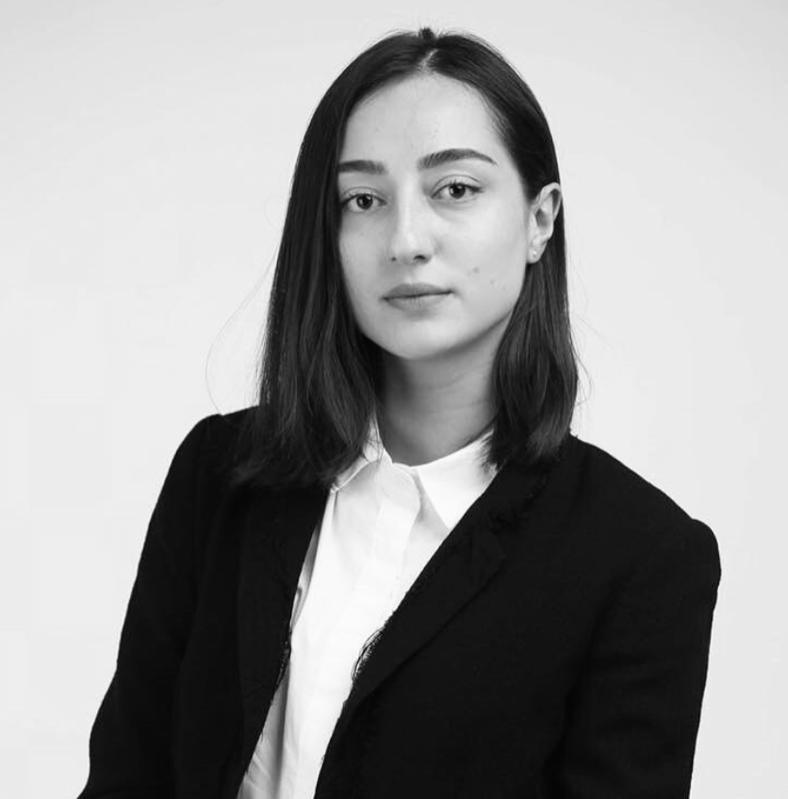
Nako Edisherashvili, Founder & CEO of Lawformer, didn’t begin her story in Silicon Valley. Born and raised in Gori, Georgia, she now leads a company developing industry-specific legal AI agents that help legal teams draft, review, and negotiate contracts with speed, accuracy, and full context. Lawformer’s initial focus: the automotive industry.
Her path began far from California. After earning a scholarship to study in the UK, Nako returned to Georgia to fulfill its terms — and it was there she built the earliest version of Lawformer. Even while operating remotely, her company gained national recognition: the Georgia Innovation Agency named it one of the country’s most innovative startups, and she was honored on the Forbes 30 Under 30 list.
But to move faster and stay close to customers and innovation, Nako and her co-founders made a bold decision: relocate to the U.S. Not just for fundraising, but to pressure-test their idea in the world’s most competitive startup ecosystem.
“Figuring things out with no map shapes you into a founder who doesn’t flinch when things go wrong. And in startups, things always go wrong,” she reflects.
In Silicon Valley, Nako quickly discovered that success isn’t only about building a great product. “It’s not about what you know, it’s about who knows what you know,” she explains. A brilliant solution means little if the right audience never hears about it.
What surprised her most in the Bay Area was the optimism — the willingness of people to bet on founders based on belief, not just metrics. “That’s empowering, but also pressure-inducing,” she admits. “You have to earn that belief every day.”
Still, one of her toughest challenges was time — because in the U.S., networks are the most valuable currency, and building one doesn’t happen overnight. Learning the “language” of investors was another hurdle.
“You build a startup by hustling, adapting, and never letting ‘no’ mean ‘never’ — rather, ‘not yet.’ We don’t romanticize struggle, but we do celebrate resilience,” she adds.
Her advice to other founders, especially immigrant women, is rooted in that resilience: “This country was built by people who crossed oceans with nothing but an idea. If you’re an immigrant woman founder, your ability to navigate systems, cross cultures, and operate without a safety net will be your greatest strength.”
Being different is your superpower, not your weakness
Another example is Kristy Kim, CEO of TomoCredit, an AI-powered financial assistant for everyday Americans. Kristy is a first-generation immigrant from South Korea—and she sees that as her superpower.
“I truly believe that being a female, first-generation immigrant from South Korea has been my superpower as an entrepreneur. It gave me a unique perspective and the courage to boldly question the status quo of the U.S. credit system,” she says.
For Kristy, the problem she’s solving is deeply personal. Once she discovered it, she didn’t wait around—she quit her job, dropped out of her MBA program, and committed herself to using technology to break the status quo and help more people achieve financial freedom.
One of the first things that struck her in the U.S. was the open-minded culture of Silicon Valley. Growing up, she had no role models in tech. In fact, like many in South Korea, the most prestigious career paths were becoming a doctor or a lawyer. “Once I moved to San Francisco, my entire world changed,” she recalls.
Her early years studying at UC Berkeley and working in San Francisco gave her a strong foundation as an immigrant with no connections.
Looking back, Kristy says: “Ironically, I have more to be grateful for than to complain about—especially coming from South Korea, where it’s still very rare and difficult for women to run businesses. I feel lucky to build a company in San Francisco, surrounded by many amazing female talents.
To all immigrant female founders hesitating to start their journey, Kristy offers simple advice, “Just go for it. Whether you succeed or fail, you’ll gain tremendous learnings—and those learnings will become the seeds for your future success.”
Stop asking for permission to dream—start acting
Aizada Marat and Assel Tuleubayeva are the co-founders of Alma, a company reimagining immigration legal services in the United States. They make immigration simpler for businesses and individuals, guided by three core pillars: speed, excellence, and care.
Aizada’s journey began at Harvard Law School. She was an attorney with top credentials—yet she still couldn’t stay in the U.S. because of visa issues. She moved to London, returned to California a few years later, and that’s when the real immigration mess began.
“I did what most people would do: I Googled lawyers, picked a firm, trusted their advice—and they completely mishandled my case. I couldn’t work for nearly 18 months. I almost lost a dream job because of someone else’s mistake,” she recalls.
That was the turning point. She realized the system wasn’t just complex—it was failing people. Not just her, but thousands of professionals trying to do everything right and still falling through the cracks. That’s how the idea for Alma was born.
“I’m building Alma for people like me—for immigrants who work hard, follow the rules, and still get left behind. That connection to the problem is what keeps me going,” Aizada says.
Assel’s journey carried its own set of challenges. Like many immigrants, she arrived in the U.S. with big dreams but quickly realized immigration status shaped everything—from the jobs she could accept to the risks she felt allowed to take.
“At Harvard Business School, I finally saw what was possible. Surrounded by people building companies, I stopped asking for permission to dream—and started acting on it. Immigration wasn’t just a barrier I had to navigate. It was the through-line of my journey. It’s what shaped my ambition, my patience, and my ability to operate in uncertainty. Those aren’t just survival skills—they’re founder skills.”
For Aizada, three things were absolutely critical when she returned to the U.S.:
- Get your visa situation locked down early.
- Build your network fast.
- Understand the business culture.
Assel adds, “For me, the first thing I had to get right was figuring out who to learn from.” Over time, she realized there’s rarely one “right” path. But if you’re curious, intentional, and willing to keep learning, you can chart your own.”
Both founders were struck by one thing: people are willing to support you—sometimes with real capital—if you’re working on something you deeply care about.
“Coming from Kyrgyzstan, I sometimes wonder if I would’ve had the same opportunities back home. In the U.S., if you work hard and stay focused, there’s room to grow and build in a way that feels expansive. That’s not something I take for granted,” Aizada explains.
Assel loves how boldness is respected in American culture. “If you have an insight and the courage to act on it, people are willing to listen—and even support you.”
When they raised their first round, the two had little more than a deck, an idea, and conviction. And yet, they found investors who believed in them—not just in the product, but in them as founders.
While Aizada’s previous U.S. education helped her adapt quickly, she faced a challenge many overlook—building a company while raising a young daughter. Assel, though not a parent herself, says watching her co-founder juggle both roles has been eye-opening:
“The level of strength, discipline, and tradeoffs it takes is something I deeply admire. It’s also made me think intentionally about the kind of support systems and company culture we want to create at Alma.”
Talking about being an immigrant female founder, Aizada calls it an adventure—especially because they are building a legal tech company in the immigration space.
“I’ve lived through the uncertainty of visa issues, the stress of navigating a system that’s complicated and unforgiving. So when someone comes to us for help, I don’t see it as just a legal process—I understand what’s at stake on a personal level.”, she explains.
Their work carries a deeper layer of responsibility—they are among the very few founders from their country building in one of the most competitive environments in the world.
“So every milestone we hit, every bit of traction we earn, isn’t just personal—it’s symbolic.”, Assel adds. “We’re not just building for ourselves—we’re showing what’s possible for everyone who comes next.”
Aizada offers this to immigrant women dreaming of building a company, “Be clear-eyed about what you’re signing up for. It’s hard—especially as an immigrant woman and a mom—but not impossible. Don’t wait to feel “ready.” You’ll figure things out as you go.”
The journeys of these immigrant female founders show that success isn’t about fitting into the mold—it’s about reshaping it. Their stories prove that resilience, boldness, and lived experience can form the foundation of great companies. While the barriers are real—whether visas, culture, or capital—so too is the opportunity to build, innovate, and inspire. In many ways, their paths embody the essence of entrepreneurship itself: turning uncertainty into possibility. For the next generation of immigrant women with big ideas, the message is clear—your difference is not a disadvantage, but your greatest advantage.