

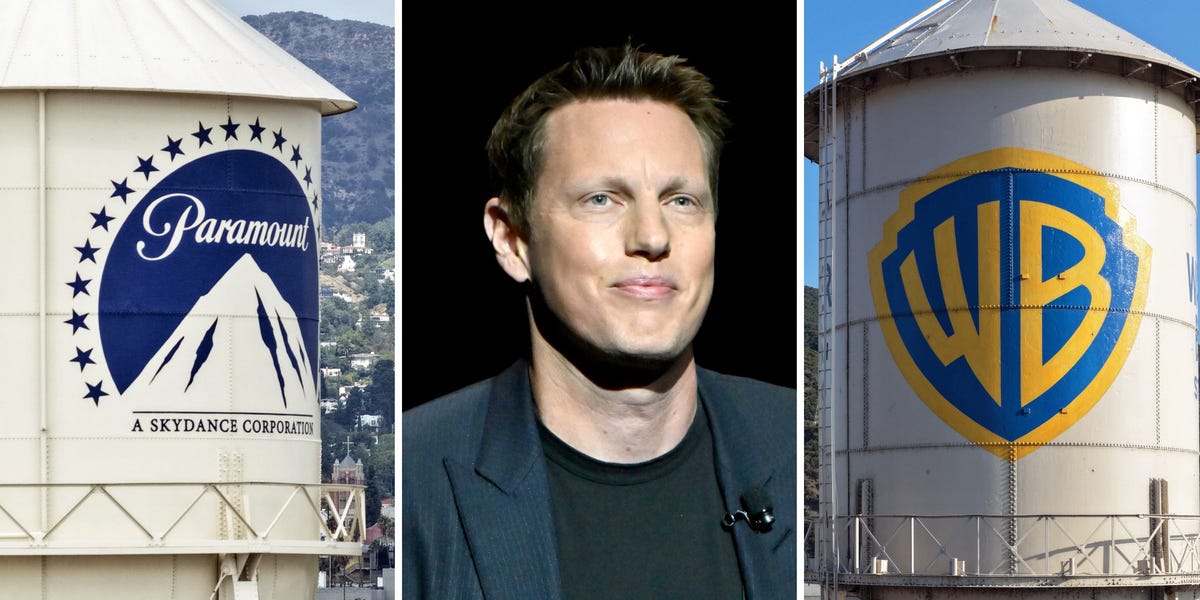
David Ellison and his partners have finalized their $110 billion purchase of Warner Bros. Discovery, a mega‑deal poised to reshape Hollywood.
The transaction, completed on Tuesday by the newly renamed Paramount Skydance (now simply Skydance), combines Paramount Pictures and Warner Bros. studio with a suite of streaming services—HBO Max, Paramount+, Pluto TV, and Discovery+—and a roster of TV networks including HBO, CBS, CNN, TNT, HGTV, and Food Network.
The combined entity also inherits iconic intellectual property such as DC Comics, Harry Potter, and SpongeBob SquarePants.
Skydance now stands as a potential entertainment powerhouse that could rival Disney and Netflix in scale and cultural impact. Ellison’s media mogul status is cemented by the acquisition, which follows the August merger of his 2006‑founded production house—responsible for hits like “Top Gun: Maverick”—with Paramount.
The financing came from Ellison’s billionaire father Larry (co‑founder of Oracle), partners such as RedBird Capital, and a trio of Middle‑Eastern sovereign wealth funds from Saudi Arabia, Qatar, and Abu Dhabi.
The new leadership team will be headed by David Ellison and former Mattel CEO Ynon Kreiz. Ellison will oversee Skydance’s creative and technology strategies, while Kreiz, joining as co‑CEO, will manage the merger integration and day‑to‑day operations.
Casey Bloys, head of HBO, will steer the combined streaming strategy after Paramount’s streaming chief Cindy Holland stepped down. CNN CEO Mark Thompson remains, and Bari Weiss will lead CBS News.
Skydance faces a steep climb, burdened by massive debt and fierce competition in the streaming arena. Even after the merger, Paramount+ and HBO Max still lag behind Disney, Netflix, and especially YouTube in viewership. “It’s a war for time spent, you’re chasing the juggernaut in the space, which is YouTube,” said media analyst Rich Greenfield of Lightshed Partners, commenting on Ellison’s streaming challenge.
The deal’s closure ends a months‑long saga that reads like an HBO drama. Ellison’s firm agreed in late February to buy WBD at $31 a share, aiming for a mid‑July close. Paramount outbid Netflix, which had previously offered $27.75 per share for WBD’s studio and streaming division.
The merger was delayed by lawsuits from 12 U.S. states and the Writers Guild of America. Paramount settled those suits in September, promising concessions such as increased U.S. production spending, a minimum number of theatrical releases, and no sale of the film libraries.
In a memo to employees, Ellison said the transaction will create “more opportunity for our creatives, production crews and employees across the business, and more great entertainment for audiences everywhere.”
Critics warn that merging Paramount and WBD could stifle competition, shrink jobs for creatives, and raise prices for consumers. Thousands of Hollywood creators, including stars like J.J. Abrams and Ben Stiller, signed an open letter opposing the deal in April. Paramount had moved quickly to finalize the takeover to avoid a $650 million quarterly bill—roughly $7 million a day—starting Oct. 1 if the deal fell through.
Inside both companies, employees are on edge, bracing for internal competition as the giants integrate. Ellison has pledged $6 billion in savings from the deal, though the firm says layoffs will not constitute the bulk of those cuts.
When asked which teams and staff would remain in the new Skydance, Ellison admitted in September that he and his colleagues “don’t have all the answers yet” and that he “won’t pretend otherwise.”