

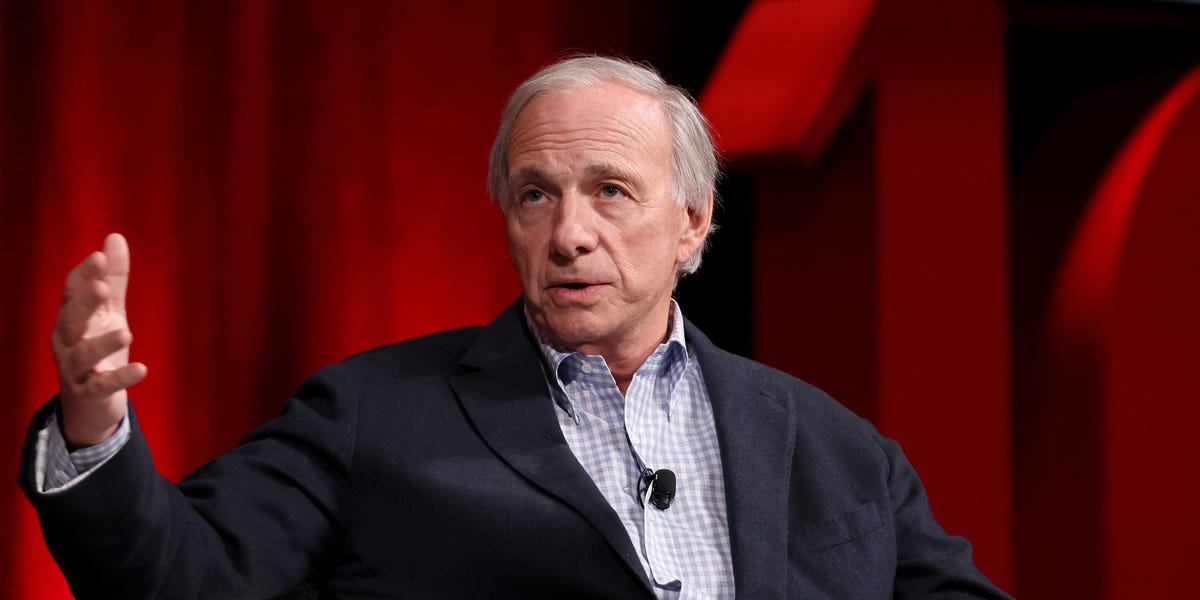
Ray Dalio says the US is heading toward a debt crisis before the close of this decade.
The billionaire investor stated in a Bloomberg Television interview on Tuesday that he expects a debt crisis “within the next three years,” or by the fall of 2029.
The author of “How Countries Go Broke” and founder of hedge-fund giant Bridgewater Associates noted that the scale of the national debt and its rapid growth indicate we’re “approaching our limits.”
US debt surpassed the $40 trillion threshold in August, marking an inflation-adjusted rise of over $10 trillion, or more than 33%, since 2019.
Dalio explained that this path is unsustainable due to the escalating cost of servicing the debt. These interest payments exceed $1 trillion annually, or roughly one-fifth of the federal budget, reducing funds available for Social Security, healthcare, defense, education, and other priorities.
“When debts build up faster than they are repaid, debt servicing costs increase,” he said. “This takes up a larger portion of one’s cash flow. Eventually, it begins to crowd out spending, creating a problem.”
Dalio also highlighted that geopolitical tensions have reduced foreign appetite for US debt. Additionally, he pointed out that the AI boom is “heavily debt-financed,” which could strain credit in riskier sectors such as auto loans.
The Wall Street veteran cautioned that this dynamic may deepen wealth inequality, as “those with fewer resources are hit hardest during this phase of the cycle.”
Dalio observed that even AI-focused companies are “starting to face challenges” in securing credit, and he’s “seeing these limits being reached.”
He suggested that AI firms are overinvesting to stay competitive in an uncertain market, which could inflate a tech bubble.
He noted that bubbles collapse when individuals need cash, such as to repay loans or meet a wealth tax, and advised investors to “keep an eye on this.”
Dalio has been warning about a potential debt crisis for several years. He has referred to rising debt as an “aggressive cancer” that “accumulates like plaque” on the financial system and could trigger a “heart attack” for the US economy.
He has also argued that growing debt, combined with political polarization and global conflicts, creates a “perfect storm,” leaving him feeling “like I’m on a boat heading toward rocks.”