

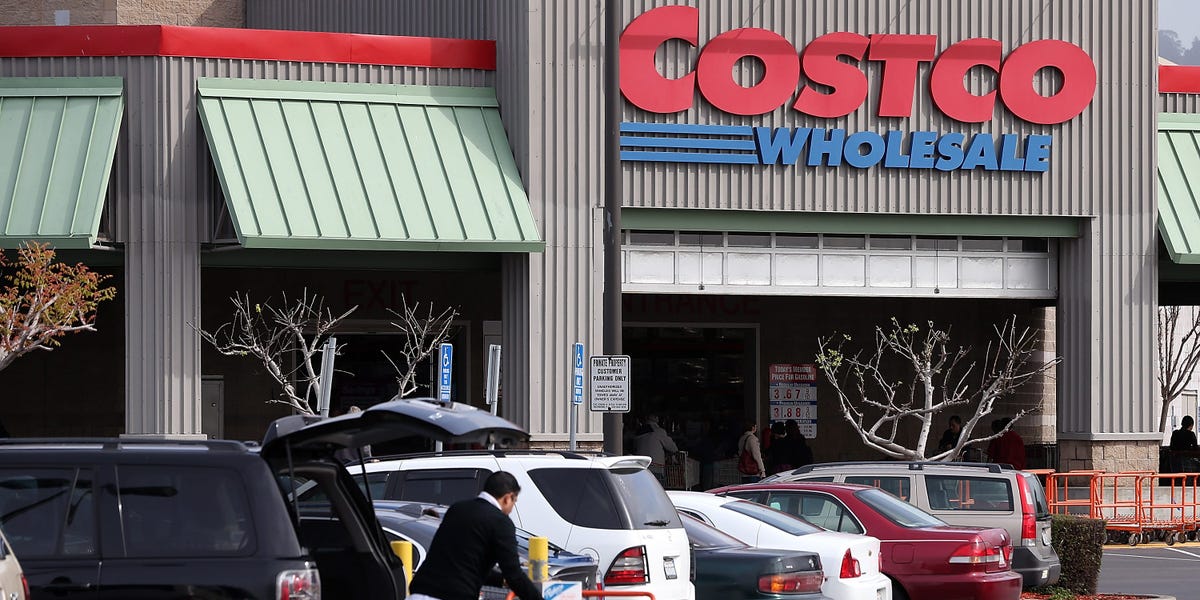
You drive past Costco and notice the parking lot brimming with vehicles. The left-turn lane to get in is backed up about 50 yards. The fuel station is crowded with shoppers who intend to go inside after filling up. It’s the town’s busiest crossroads.
Yet when you glance at a stock chart, you see shares down roughly 16% from their May peak. You wonder—didn’t you just read that earnings were strong last quarter?
The stock’s lag isn’t unique to Costco. Walmart, another retailer that consumers turn to when trying to cut spending, shows a strikingly similar recent chart even while it keeps gaining shoppers.
What’s going on? Aren’t these supposed to be all‑weather winners when consumers pull back?
Ironically, the very reputation of Costco and Walmart as defensive holdings may have backfired. As consumer worries rose, investors baked a premium into their prices. That left little margin for error and made the stocks extra sensitive to any hint of weaker spending.
The chart below illustrates how far both stocks have lagged the market—and the wider consumer‑staples sector—since they hit record highs on May 19.
The next day President Trump said Iran‑war talks were in the “final stages,” oil prices plunged sharply, and some of the luster faded from the defensive trade in Costco and Walmart. Then, on May 21, Walmart projected second‑quarter profit below analyst forecasts, sparking a sector‑wide sell‑off. Neither stock has managed to recover those losses.
Good isn’t good enough anymore.
Costco gave investors plenty to cheer in its last quarterly report. Both total and comparable sales rose year‑over‑year, and the firm said it plans to add 33 warehouses over the coming fiscal year.
Yet the resulting 3% bump after earnings was a mere drop in the ocean compared with the ground the stock needs to make up.
There were a few minor caveats. Costco’s profit beat got a boost from a one‑time tariff refund, while membership‑fee growth slowed. When so much optimism is already priced into a share, investors notice every asterisk.
Defensive, but not invincible.
Walmart’s trajectory has been even more tightly linked to consumer anxiety. Its late‑August results beat expectations and it lifted full‑year guidance. However, U.S. comparable‑sales growth slowed to its weakest pace in six years—a figure investors zeroed in on.
Earnings releases have turned into a minefield for Walmart, with shares dropping 9% after the prior report and 7% after the one before that. The pattern is clear: even though the chain is gaining market share and adding shoppers, the growth isn’t fast enough to satisfy investors.
The core tension with Costco and Walmart is that the more their stocks are priced up as defensive plays, the more investors scrutinize their growth—and the higher the stakes become when they report.
Ultimately, the Costco‑Walmart stock story isn’t about empty parking lots and bare aisles. It’s the opposite: the more people flock there for bargains, the higher the expectation bar rises. They may be great places to shop, but that doesn’t automatically turn their shares into a buy.