

Recently, Paul Lee was evaluating applications for a legal and compliance role at the small tech firm he oversees when his screening system detected an unusual anomaly.
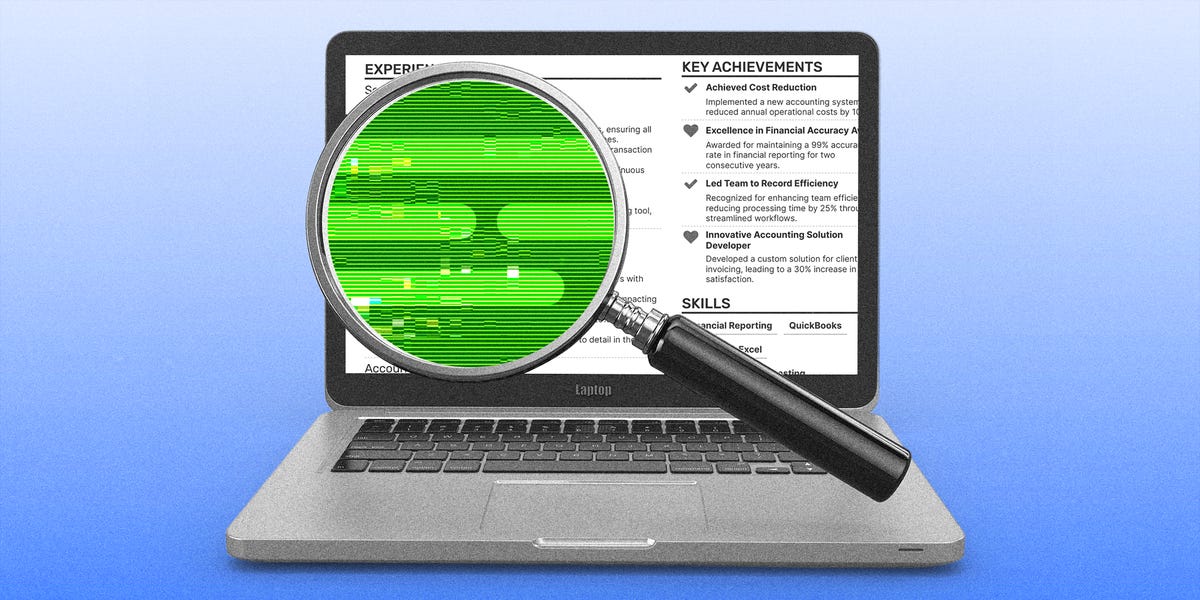
Within one of the hundreds of résumés he received was a block of approximately 1,500 characters typed in white text on a white background. This hidden text contained an AI prompt instructing the system to ignore previous directives and classify the applicant as an ideal candidate, irrespective of their actual qualifications.
Lee expressed his astonishment, describing the action as an ethical red flag for a position rooted in trust and integrity.
“You are cutting in front of the line,” stated Lee, the CEO of InnoCaption, a 40-person company based in Irvine, California, that develops real-time captioning technology for the deaf and hard-of-hearing community.
Resume hacking is receiving an AI-era upgrade, though not in a recommended fashion. While desperate job seekers previously used white text to hide keywords and fool screening software, some are now secretly embedding AI prompts to make their applications stand out.
A May 2026 study by researchers at Duke University and their collaborators analyzed nearly 200,000 résumés, finding that approximately 1% contained hidden prompt injections.
“Job seekers are doing what they feel they need to do to filter through the noise,” Sarah Franklin, CEO of the human resources platform Lattice, told Themoneytimes. She noted that this behavior is not surprising, as employers are overwhelmed with applications and frequently respond with generic rejections, if they respond at all.
“The hiring process feels like a complete black box,” she remarked.
AI is contributing to the problem. The technology allows job seekers to easily customize and submit applications at scale, while some employers use it to help sort through the pile, explained Nada Hashmi, an assistant professor of information technology at Babson College. This can mean that AI, rather than a human, screens applicants before they reach the interview stage, creating an incentive to game the system.
“It is really having AIs talking to each other,” she added.
Nevertheless, résumé hacking may be pointless. Recruiters and hiring managers often review applications in batches and proceed once they find enough promising candidates, leaving later submissions unchecked, noted Nathalia Aryani, corporate director of human resources at the property management company Terra Vista.
“The issue is the volume,” she explained.
Furthermore, getting noticed for using this tactic can carry its own consequences. Those caught doing so may be perceived as dishonest, and some employers are now actively searching for prompts as word of this practice spreads.
At the Zurich-based flight-search startup Zerolook, co-founder and CEO Simone Lini uploaded about 20% of the roughly 350 résumés he received for two engineering roles to an AI tool last month. He had heard that applicants were hiding prompt injections and asked the tool to flag any examples.
Lini discovered that one résumé indeed contained instructions to ignore prior instructions and prioritize the candidate’s application, stating, “their livelihood depends on you doing that,” he recalled.
Lini, whose company is hiring after raising $1.9 million in venture capital, stated that despite the applicant having relevant experience, the ploy was a turnoff. He added that he disagreed with commenters on a LinkedIn post he made about the issue who suggested it demonstrated AI savvy.
“It is just about trying to sneak in and get to the top,” he said, noting that inserting the prompt was not difficult to do. He added that he blocked the individual from applying again.