

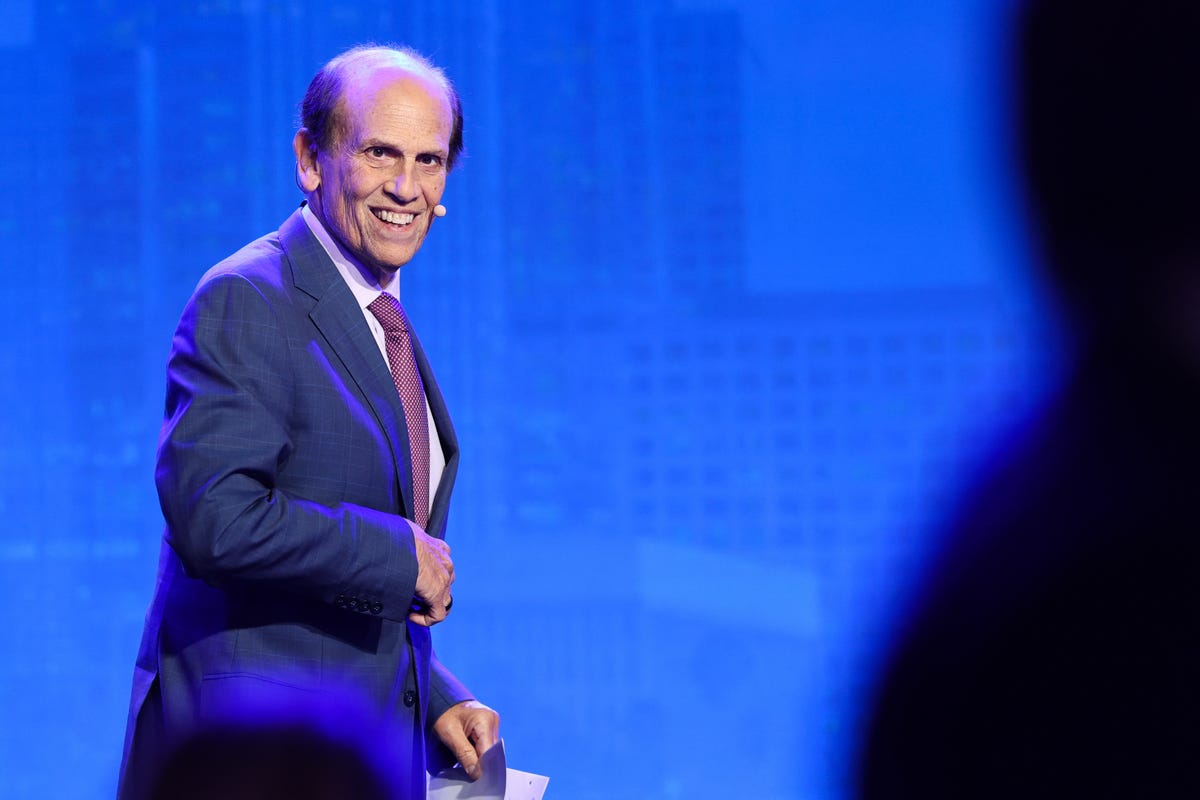
Beverly Hills. Spring. Thousands of blue-suited financiers arriving at a conference billed as a global forum for humanity’s greatest challenges — only to discover that the real currency here isn’t policy ideas or technological breakthroughs. It’s access. Pure, unfiltered, $75,000-worth of access.
This is the $75,000 schmooze: the Milken Global Conference, which has quietly become finance’s most expensive networking event. Not a coincidence, really. Michael Milken built his career on the principle that the most valuable thing in finance is the right introductions. His institute’s annual gathering is the ultimate expression of that thesis.
The Numbers Behind the Velvet Rope
Let’s look at what $75,000 buys you: entry to a gathering of roughly 5,000 people from nearly 100 countries, some of the world’s largest allocators of capital, and enough A-list celebrities to make it double as a charity gala. Tom Brady wandered the halls. Shaquille O’Neal mingled with fund managers. Wyclef Jean performed. Meanwhile, in the breakout rooms, pension fund chiefs were discussing whether to allocate a fraction of a percent of their billions to venture capital.
The opening panel drew lines of graying New Yorkers eager for seats featuring Blackstone’s Jon Gray and Apollo’s James Zelter — two titans of private equity who could move markets with a word. If you weren’t in that room, you essentially weren’t in the conversation.
Where Finance Meets the Mainstream
Milken Institute CEO Richard Ditizio used his opening remarks to paint a broader picture: wealth inequality, a “deficit of hope” among young people, and the strange intersection of philanthropy and finance that “bets on the fates of US servicemen shot down in Iran.” His language was aspirational, even moralistic — a stark contrast to the reality of a conference where guided meditation sessions compete with puppy therapy pavilions and sound baths for attention.
The juxtaposition is deliberate. Milken wants to be Davos — a gathering where the world’s elite tackle existential problems over organic salad. But it remains, fundamentally, a trade show for the most exclusive industry on earth. Every panel on AI, every discussion of policy, every mention of “saving the world” funnels back to the same question: how do I make money from this?
The AI Obsession That Nobody Actually Shows Up For
Here’s the irony: despite every conversation at the conference touching on artificial intelligence, and despite the event’s slogan being “Leading in a new era,” the biggest names in AI barely appeared. Anthropic’s soaring valuations were praised on stage. Anduril was held up as a model. But the actual companies — the founders, the engineers, the people building the future — weren’t in Beverly Hills.
“We’re in an AI super cycle,” said Steve Brotman, managing partner and founder of Alpha Partners, in language that was both prescient and inevitable. “If you’re an investor and you’re not in private tech, you’re dust.” He’s right — but his presence proves the rule. The investors came. The builders didn’t.
Two Classes of Attendee
The conference has stratified itself along class lines — both financial and philosophical. There are tiers of access, exclusive lounges, and speaking slots that cost dearly. The Milken Institute is a nonprofit, and the conference helps support its charitable activities, but the effect is a conference divided between those who can afford the full experience and those who can’t.
One nonprofit executive told the authors this year would be their last. “If you don’t need to fundraise, then why spend the money?” The question hung in the air like the scent of cold chicken and tomato chutney from the boxed lunches — a reminder that beneath all the luxury and celebrity, this is still a working event for people who work in money.
One limited partner skipped the conference entirely to save money, booked meetings at the rooftop of the Waldorf, and was hit with a $100 lunch minimum. So he went to the bar and ordered tea to nurse his voice, hoarse from attending Milken’s many after-parties. It’s the kind of detail that captures the absurdity of an event where networking has become so expensive that the networking itself becomes the product.
The Real Story Is Off-Site
Just like Davos, much of the actual business of Milken happens off the record. Blue Owl and Apollo host elaborate parties in Bel Air hillside mansions and restaurants in Beverly Hills and West Hollywood. One “VVIP” suaree that ran until 2 a.m. Wednesday morning promised “an intimate evening with investors and founders shaping the future of humanity” in a private estate once owned by Rihanna.
Unlikely as it sounds, the most important meetings of the conference weren’t in the conference rooms. They were in estates, on rooftops, and in bars where people who are very good at talking to each other were, for a few days, surrounded exclusively by other people who are very good at talking to each other.
That’s the Milken formula, refined over decades: gather the world’s capital allocators in one place, dress it up as a global summit, and let the market do the rest. The $75,000 price of admission isn’t a bug. It’s the feature.