

Automaker Mazda says its US sales jumped from 305,801 units sold in 2014 to 424,382 in 2024. That’s an impressive near-40 percent increase, a ray of light in a somewhat unstable market due to whipsawing tariffs. On top of that, Mazda has increased its market share from 1.8 percent in 2014 to 2.8 percent in 2024, no small feat.
What’s the secret to the company’s success? Mazda says it’s all about the improvements it made to the customer experience at dealerships across the country. As part of Mazda’s long-term branding strategy, its Retail Evolution project was created to transform the buying process.
It’s clear that this program is bearing abundant fruit: Since 2015, over 70 percent of Mazda’s dealers have invested in this program and those who did have nearly doubled their average dealership sales. Boosted by the best-selling CX-5, Mazda is on an upward trajectory.
“Mazda is building human connection through service, community engagement, and the
Japanese principle of Omotenashi, or anticipating customer needs before
they’re expressed,” says Senior VP of Retail Operations at Mazda North American Operations Tim Manning.
Mazda Strives For Omentashi
Transforming its dealership experience has been a major program, encompassing thousands of employees across 545 dealerships. The goal: to provide consistently excellent customer service across the board.
“It’s really about having that human connection through our community involvement, through what happens in the stores and the ownership experience as a Mazda owner,” Manning says. “We have a philosophy called omotenshi, a Japanese word that loosely translated to ‘anticipating customer needs before they’re expressed.’”
Taking care of customers in this way is a similar approach high-end brands like Ritz-Carlton and Neiman Marcus would use.
“We also use the phrase ‘Your happiness is my happiness’ at Mazda,” Manning says. “If you’ve ever been in a nice hotel and you feel cared for, that’s that feeling we wanted to have in our dealerships.”
Mazda Dealerships Go Upscale
Manning says the automaker is using technology to better understand its customers at each site. Mazda doesn’t want the technology to be the whole of the experience, but utilized to know more about its customers.
“A very easy example is if a particular customer comes to the dealership and we know they always want to take a loaner vehicle out versus waiting in the store for the service to be completed,” Manning explains. “We anticipate their needs and have the car ready so they can walk in and we hand them the keys.”
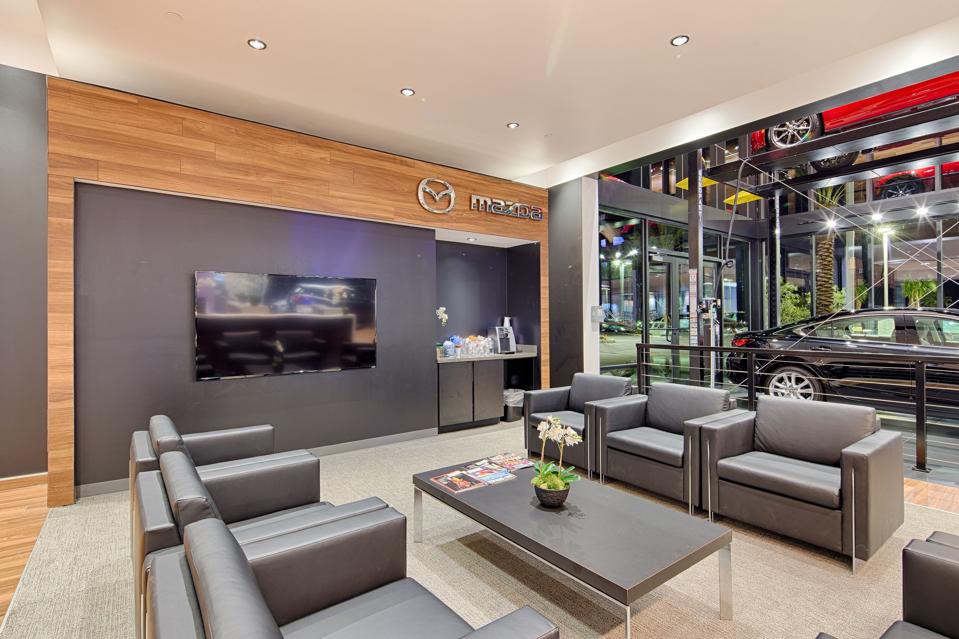
Mazda knows that other customers may want to sit and wait while their car is being serviced, so dealerships include plush lounges and even private rooms. Manning says upscaling the facilities had helped attract more affluent customers, too. The proof of success is in the numbers: roughly 72 percent of Mazda dealers invested in their future through the Retail Evolution program, and those locations account for almost 90 percent of Mazda’s retail sales.
It’s not just about buying new Mazda models, either. In the U.S., the automaker has improved its lease and brand loyalty scores as well. Ultimately, Mazda and its dealers are looking ahead. Buyers often dread the dealership experience, and Mazda is doing its best to mitigate those feelings. It appears the brand is on the right track, and looking to keep making improvements in the future.