

This holiday season feels like a tale of two shoppers. Consumer sentiment is near multi-decade lows, with the University of Michigan index hovering around levels historically associated with recession. At the same time, American household savings have been buoyed by a historic rebound in the stock market. A rally fueled by AI optimism and resilient corporate earnings has pushed markets higher while tariff concerns seem to have evaporated almost as quickly as they first surfaced. This widening gap between the financial health of American’s earning class and the buying power of market participants is becoming one of the defining narratives of the decade.
The driving force behind consumer sentiment is wage growth. Real wage growth for top earners continues to outpace inflation, but at the same time, lower-income households, still digesting the whiplash of the pandemic economy, have watched their wage gains stagnate or disappear entirely. Not having wage growth to fall back on when real, everyday inflation hasn’t gone away can have profound implications on spending habits for most Americans.
Note, inflation hits everyone differently. Every household has its own basket of goods, its own definition of “expensive,” and its own pain points. Recent earnings and consumer insights from retailers show almost everyone is looking for a deal. Strong stock market returns can bolster retirees’ spending habits, but for the majority of working Americans, this holiday season will likely center solely around finding the best deal in town.
Are Tariffs Impacting Shoppers?
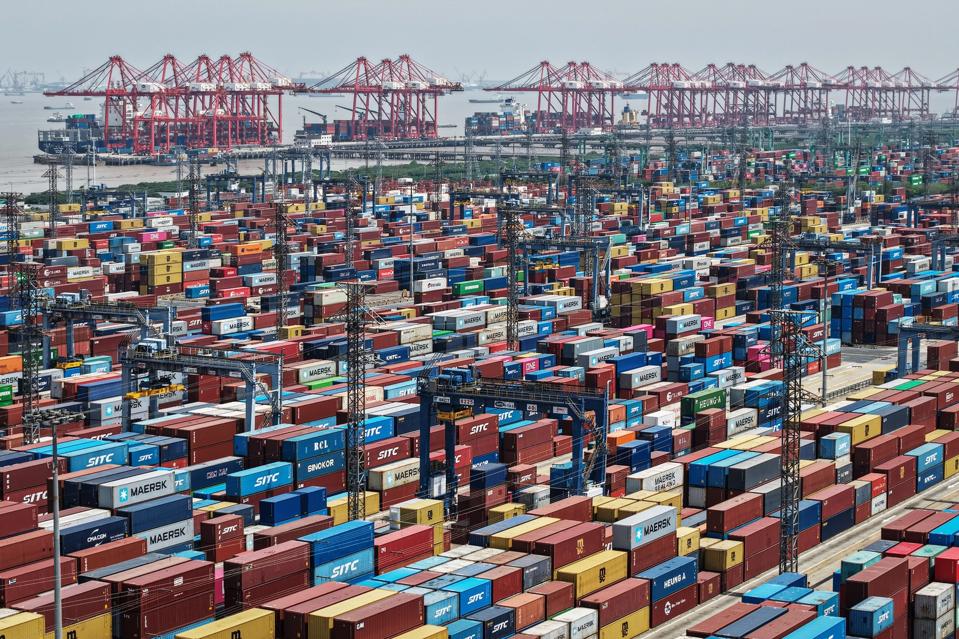
After dominating headlines earlier this year, tariffs seemed to have faded from public consciousness. Markets corrected in dramatic fashion following Liberation Day in April as investors tried to interpret the ripple effects of escalating levies on supply chains, consumer goods, and import costs. But as markets rebounded and AI-driven optimism took over, tariffs gradually drifted out of the spotlight, even though their impact hasn’t completely disappeared.
Part of the reason consumers don’t feel tariff-driven inflation is because of where those costs actually land. Much of the tariff pressure shows up in categories like personal electronics, appliances, and durable household goods – items that carry slower replacement cycles and more flexible margins across the supply chain. In many cases, suppliers and manufacturers have absorbed a majority of the hit to stay competitive, leaving prices at the counter or online relatively unchanged. Furthermore, when it comes to CPI, the highest tariff exposure sits in the goods categories that make up a smaller share of the average household budget. Even when higher input costs eventually make their way to consumers here, the impact on the overall “inflation rate” that gets reported in the data should be pretty minimal.
However, that doesn’t mean that Americans won’t feel inflation. They feel it every day because right now a lot of the items with perceived rising prices are items that are really visible, tied in to everyday living. Food, energy, and shelter are the three CPI baskets that tend to really matter for consumers and any moves here really attract attention. These items account for a disproportionate share of monthly spending, especially for lower- and middle-income households. A 3% rise in groceries hits harder than a 10% rise in laptop prices simply because families buy milk and eggs every week, not MacBooks. A 25%increase in the cost of coffee or beef, something people eat a lot of on a regular basis, the increases in prices there can really impact consumer perspectives on costs, even if the overall grocery bill is only up a few percentage points. Furthermore, shelter costs like rents, mortgages, and insurance also tend to dominate budgets, so even small moves there can start to crowd out discretionary spending.
The recent decision from the Trump administration to roll back tariffs on beef and coffee imports from Latin America is encouraging. Cheaper protein and cheaper caffeine may not solve inflation, but they do ease pressure on households that remain sensitive to grocery prices. More importantly, the reversal is a quiet acknowledgement of a long-standing economic truth – tariffs are inflationary by design, and consumers ultimately face the consequences in the long-run. The efficacy of tariffs at reducing our budget deficit can be debated, but general consensus on Capitol Hill is that American shoppers need some price relief.
Shopping for Deals
The evolution of the K-shaped economy has been on full display in 2025. Walmart’s recent earnings captured the dynamic better than anything else. Strong demand for fast shipping, online convenience, and private-label value pushed the stock sharply higher. Yet the real story was how much market share Walmart has gained across all income brackets. Wealthier households are trading down, middle-income households are stretching their budgets, and lower-income households are making uncomfortable substitutions. Everyone is hunting for a deal.
Consumers are no longer loyal to brands – they’re loyal to prices, and retailers know it. Even high-income shoppers, who historically gravitated toward premium labels, are gravitating toward generic-labelled essentials and groceries. Buy-now-pay-later usage is also climbing across income tiers and expected to reach over $20 billion worth of transactions in November and December, increasing 10% from 2024. Technology is changing the playing field too – holiday shopping searches will likely be heavily AI-assisted this year, making it easier to find a good deal and compare prices quickly. AI utilization is also going to reward digitally focused marketplaces. The ones that are not only competing on price, but who understand how AI is going to interact with their pages, those companies are likely set to receive more attention than ever before.
Retailers are also pulling forward discounts earlier into the season. Getting ahead of Black Friday deals gave big corporations a chance to compete against resale marketplaces like eBay (EBAY) and Poshmark, especially as more consumers are willing to buy secondhand, premium-branded clothing and gifts.
With retailers leaning into early discounts, they have also acknowledged the current state of the consumer through their store layouts and holiday inventory. Costco, for example, is accommodating the slowdown in discretionary spending by stocking up on seasonal basics like winter apparel, holiday meal prep, and paper products while still leaving some room for top-end luxury items like saunas and furniture for those unaffected by inflation. The unnecessary holiday décor likely won’t get as much shelf space this year. Simply said, there is no more middle ground. It’s deal or no deal now.
Technology Heating Up Shopping Competition
One of the most underappreciated shifts in the economy is the transformation of retailers into technology companies. Walmart (WMT), Target (TGT), and Costco (COST) are no longer defined solely by their physical stores. They are becoming full-stack platforms built on logistics networks, data infrastructure, and AI-driven personalization that rival the capabilities of traditional tech firms. Walmart, for example, will begin listing its stock on the more tech-focused Nasdaq exchange in December. Goodbye old-school retail, and hello AI integrated retail.
While it’s becoming evident for retailers, this theme can easily be applied across the U.S. economy more broadly – we live in a world where big companies with integrated technology stacks are able to leverage size and scale in a way that puts small companies at a serious disadvantage. Consumers often protest the domination of corporate entities over the small business – it’s a popular political refrain. But spending habits aren’t exactly aligned. Every time consumers restock laundry detergent through the Amazon (AMZN) app, they’re directly contributing to the dominance of big corporates!
The forces pushing retailers in this direction are straightforward. In the midst of elevated inflation, consumer spending has shifted toward groceries and essential goods, leaving retailers with little room for error when it comes to margins. To expand profitability, companies are turning to technology and data monetization as key growth engines. At the same time, consumer expectations have changed. Shoppers now demand same-day delivery, seamless returns, near-perfect order accuracy, and tailored recommendations – all of which require sophisticated technology behind the scenes.
Tariffs and supply chain volatility add another layer of complexity. Incorrectly forecasting inventory has never been more expensive, pushing retailers to rely on AI to determine what to stock, where to place it, and how to price it. In many ways, the retailers best positioned for the next decade are those that behave less like merchants and more like technology companies with powerful logistics capabilities. The winners will be the firms that use data to create a loyal following of consumers seeking protection from the seemingly ever-increasing cost of living in America.
Checking Out
This holiday shopping season is shedding light on America’s K-shaped economy. While wealthier households enjoy rising asset values and stronger wage growth, lower- and middle-income consumers continue to feel the pinch of everyday inflation. But across income brackets, the hunt for deals has become the defining theme. Retailers have responded by leaning into technology, logistics, and data-driven personalization to meet these evolving demands and protect margins. Tariffs and pricing pressures remain in the background, quietly influencing both what ends up on shelves and what consumers can afford. Americans are still going to shop this holiday season, but more cautiously and price-sensitive than ever before.