

In Roman mythology, the goddess Minerva was born when she burst through the forehead of her father, Jupiter. After all, it was the only way out; Jupiter had previously eaten Minerva’s mother while she was pregnant with the unborn deity.
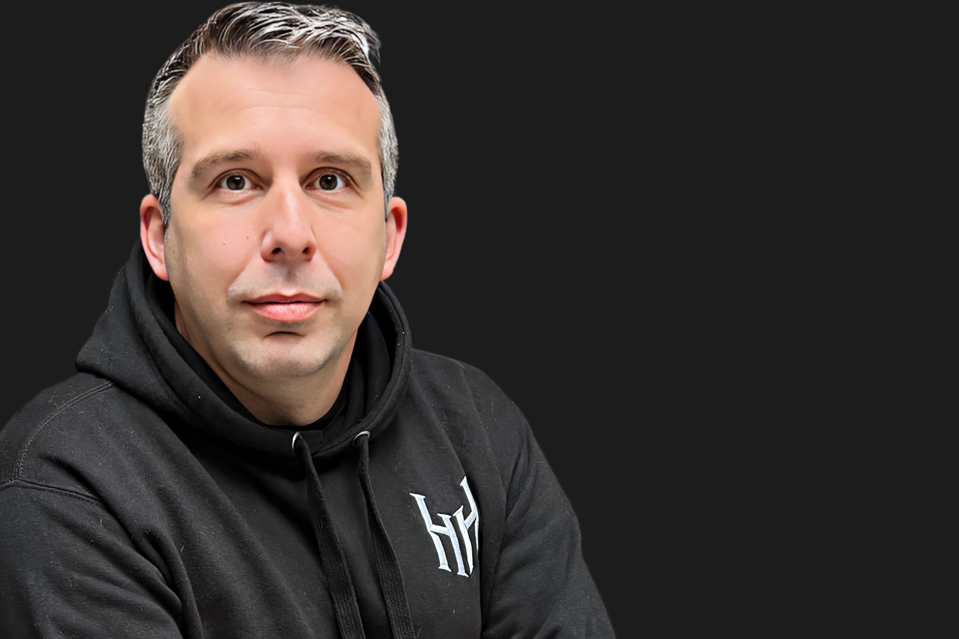
Myths and legends have fascinated us for centuries with elaborate tales like this: it’s the reason that Simon Lockerby, the founder and co-CEO of a British video game studio called Fateless, decided to base his debut game on some of history’s most fantastical characters.
“We originally considered trying to work with a big name like Marvel or Star Wars but the foundations for those kinds of intellectual properties are god-like characters from myths anyway” Lockerby explains over a Zoom chat.
Godforge is an upcoming turn-based roleplaying game (RPG) where the player has to assemble a squad of characters from nine different pathologies throughout history, including the likes of Odin and Leonidas. Players then battle through a cinematic story where a cataclysmic event has merged different mythologies together in one hectic world.
“There’s an unlimited and awesome potential with these characters and their stories. We really want to build a story-driven world where players feel really engaged. There are so many different directions we can go down with the mythological route” Lockerby adds.


By the time it’s launched early next year (no release date is confirmed yet), it will have taken Fateless around three years to develop Godforge. The origins of both the game and its development studio are far humbler than Minerva’s fanciful emergence.
It began on a train journey from a suburb in Kent, a county in the south east of England, to London. To pass time on his daily commute to work as a Sales Representative, Lockerby played a fantasy RPG called Raid Shadow Legends on his phone.
“I was trying to scratch the itch of my old MMO (massively multiplayer online) days with a game that has the same sort of vibe” the 45-year-old says, adding that he grew up playing titles from the Final Fantasy and Warcraft franchises.
Enamoured by Raid, Lockerby decided to start making YouTube and Twitch videos about the game as a hobby. His channels took off. Within three months, he’d developed a following – each video he uploaded received between one and two thousand views. People began paying him $50 to log into their Raid accounts and to use his knowledge of the game to upgrade their characters in it.
“I was just a very scrappy entrepreneur really. I looked at how I could get multiple revenues as a streamer. Eventually, I realised I couldn’t do my full-time job – which was very intense – and content creation at the same time. I’d get home from work, put the kids to bed and then stay up until one in the morning producing a video for the next day” he explains.
Realising he had a chance to pursue a dream career which involved video games, Lockerby quit his job of 20 years and became a content creator. “When else was I going to get an opportunity to do something I’m so passionate about?” he ponders.
“I remember my wife’s sister having dinner with us one night and she said: ‘when are you going to go back and do a normal job? Surely this content creation thing can’t work as a career.’ Ultimately, it just continued to grow” Lockerby says with a broad smile on his face.
After a year of making videos, Lockerby was approached by Dan Francis, a marketing executive who suggested that the YouTuber should establish a brand alongside his channel by utilising social media and a website to promote it. Together, they established Hell Hades Gaming, a site that provides users with news, guides and tools on Raid.
Lockerby says that the website blew up in popularity too. It amassed 500,000 members and upwards of 12 million page views in just a couple of years. Eventually, the community he and Francis had built through the website began suggesting that the pair should make their own video game in the vein of Raid. “In one meeting, we decided to stop laughing about the idea of designing our own game and just decided to do it” he adds.
If they were going to make a game, they would need to expand. This led to the hiring of Hisham Shaleh, a developer with a background in indie games who had already run his own studio, Skeleton Hand for a decade already. The trio formed Fateless in 2023 and recruited a team of 50 employees through recommendations and introductions, consisting of former staff at companies like Microsoft and Sony.
The first three months of development was personally funded by Lockerby at the cost of around $200,000. He then put a video out on his YouTube channel to announce that the production on Godforge was underway; that led to “angel investors” donating $6 million in total to the project. “It blew me away. It was very humbling to be in that position. It was beyond anything I thought was possible” says Lockerby.
Fateless has been steered by community feedback, taking into account opinions on character designs and gameplay mechanics after an alpha launch of the game in the summer which saw over 4000 people play the game in just three days. “We know our audience really well as the type of players that want to come and play this style of game is basically me, someone who doesn’t have 10 hours to play on my PC every day but can scratch that same itch on my phone” he says.
With Godforge due to launch sometime in early 2026, Lockerby acknowledges that the whole project was a risk but says he and his team are driven by passion, adding: “leading a development team and making a game in a genre I love was always a dream.”
Godforge is due to launch in early 2026. For the early access waiting list, visit www.fateless.gg.