

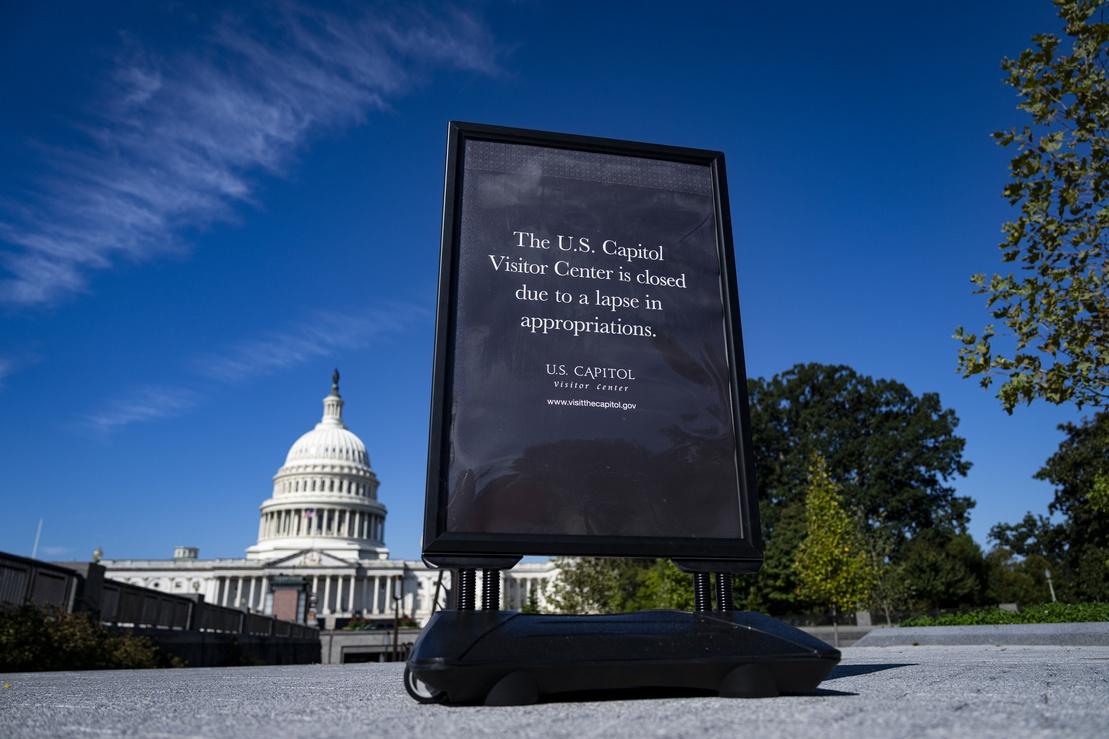
Welcome to November! We’re entering the second month of the government shutdown. For taxpayers and tax professionals alike, that means that IRS operations are limited. Some divisions, like Criminal Investigation, remain open while others, like Taxpayer Assistance Centers (TACs), are closed. You can find a summary of what’s open—and what’s not—at the IRS during the shutdown here.
Fortunately, with the upcoming tax filing season looming, the IRS is continuing to issue guidance—despite the shutdown. Much of the guidance applies to the One Big Beautiful Bill Act (OBBBA) that became law in July.
While the shiny new tax provisions under OBBBA may grab the headlines, many businesses are cheering the restored reporting thresholds for Form 1099-K (for payment card and third-party network transactions). Specifically, OBBBA reinstates the $20,000 and 200-transaction thresholds, retroactive to 2022 (as if the reporting changes under the American Rescue Plan Act of 2021 had never happened). As before, no threshold applies to payment card transactions—payment cards include credit, debit, and stored-value cards, such as gift cards, which must all be reported. To help taxpayers understand how OBBBA impacts Form 1099-K, the IRS has issued FAQs.
New reporting thresholds also apply to Form 1099-MISC (for payments not covered by other 1099 forms) and Form 1099-NEC (for nonemployee compensation). The new guidance did not address those changes.
The IRS has also issued FAQs to help taxpayers understand how OBBBA affects the Employee Retention Credit (ERC) program. OBBBA introduced new provisions to address improper ERC claims and clarify the time limits for claiming or refunding credits. Other parts of the new law strengthen compliance enforcement by imposing penalties on certain promoters of the ERC who fail to meet due diligence requirements when assisting with certain credit claims.
The IRS has also released transitional relief and guidance to help businesses adjust to new car loan interest reporting requirements. Under OBBBA, taxpayers who buy a new car assembled in the U.S. may be able to deduct up to $10,000 in interest payments from taxable income beginning in 2025. To help account for those sales, businesses must follow new reporting requirements. To help transition to the new reporting process, the guidance notes that the IRS will consider lenders to have met their reporting obligations in 2025 if they provide a statement to the buyer indicating the total amount of interest received.
As the IRS rolls out guidance about these new rules, Congress still hasn’t reached an agreement on the enhanced premium tax credits for the Affordable Care Act (a.k.a. Obamacare) set to expire at the end of the year. The issue? Republicans didn’t extend the credits under OBBBA. Now, Senate Republicans aren’t keen to do so in any short-term funding measure, and Democrats have said they won’t support any funding bill that leaves the tax credits out. The result is that health care coverage through the Marketplaces will be more expensive in 2026. Many Americans will be in for an expensive surprise as the Open Enrollment period for health care coverage through the ACA Marketplaces begins this month.
That’s not the only fallout from the shutdown impacting Americans this month. Tens of millions of Americans who rely on government food assistance may not receive benefits. That’s according to a notice posted on the website for the U.S. Department of Agriculture (USDA), which noted, “Bottom line, the well has run dry. At this time, there will be no benefits issued November 01.” It’s a reference to the Supplemental Nutrition Assistance Program, better known as SNAP or “food stamps.” SNAP is a federal program that helps low-income households afford groceries. The program, which has been around for nearly a century and provides food assistance to nearly one in eight Americans, was slated to go dark this month. However, on Tuesday, 25 states and the District of Columbia, arguing the USDA is obligated to use a contingency fund to cover benefits. On Thursday, a federal judge indicated she was likely to order the use of that fund—the Trump administration must inform the judge by Monday whether it will pay out the benefits. And on Friday, Rhode Island District Judge John McConnell blocked the suspension of the SNAP program, finding that emergency funds earmarked for must be used to at least partially provide eligible Americans with their benefits.
One safety net that’s not slated to pause during the shutdown? Social Security. Like Medicare, Social Security is an entitlement program, meaning it is guaranteed and not subject to discretionary spending by Congress. That’s good news for the nation’s 75 million Social Security recipients, who will also receive a 2.8% cost-of-living adjustment (COLA) increase in their benefits in 2026. That’s up slightly from this year’s 2.5% increase, reflecting the upward creep in inflation. Benefits will raise the average monthly check for all retired workers by $56 to $2,071, while retired couples who are both receiving benefits will see an average $88 boost to $3,208 a month.
And finally, some personal news. There wasn’t a newsletter last week because my dad passed away unexpectedly. I owe a lot of the success of Taxgirl and my column to my dad—and not in the obvious “I wouldn’t be around if it weren’t for him” kind of way. For those of you who haven’t heard me talk about it, here’s the story.
When I first started writing my tax blog, there wasn’t much information that was both available and accessible to taxpayers. A lot of what you could find was either very academic (written by professors for professors) or very technical. It was almost always long with lots of code sections and Regs thrown in for good measure. (If you read any early-era online IRS communications, you know exactly what I’m talking about.)
I started writing my blog to explain important tax issues and provide clients with updates. In the beginning, it was simply a few lines on my firm’s website about an upcoming filing deadline or a change in the law. But it became clear to me that taxpayers wanted something more.
If you’ve ever sat down to “just write,” you know that it can be challenging. How do you get started? How long should it be? How much detail should you go into?
Having an audience in mind helps you focus. And for me? That audience was my dad.
My dad was a smart guy, but he did not have a college degree (I am a first-gen college graduate). He read the paper, but not the tax code. He went to work and church, not tax conferences and seminars. And while he knew the basics of filing, he likely couldn’t explain the difference between a deduction and a credit.
So, I wrote Taxgirl with Dad in mind. I wanted to offer a digestible take on what are often complicated tax issues for readers who were simply looking for information, not a white paper or a thesis. And I didn’t want to dumb it down either. I knew there was a way to explain tax without being lofty or patronizing.
I joke that I’m pretty sure that my dad was my only reader in the beginning. But then, it caught on—the only comments on my articles were no longer just from my dad.
Dad was a reader right up until his death and was particularly a fan of the newsletter. Never one to gush, he would send me succinct reviews—a recent email simply read, “Excellent article.” He would also be quick to point out what didn’t work for him (he wasn’t a fan of the “noteworthy” section and wished I’d avoid referring to social media because he didn’t have time for it). I didn’t always agree with his take, but his feedback made me a better writer.
My dad and I were always very different people. He didn’t always understand me—I left home early for school, and my move up north to live in the big city perplexed him. He hated my taste in music and thought I wore too much black.
But Taxgirl? That he got.
So, next time you’re reading something that I’ve written, including this newsletter, you can thank my dad. I was probably thinking about him.
Enjoy your weekend,
Kelly Phillips Erb (Senior Writer, Tax)
Questions
This week, a reader asks:
I know that the new tax law changed the rules, and I’m confused. I had a tough year in my small business. Can I still write off all of my expenses, including big purchases?
I think you’re referring to Section 179. It’s true that the new tax law (the One Big Beautiful Bill Act, or OBBBA) made some changes to Section 179, but it didn’t change the eligibility or qualification rules.
First, a quick refresher. Section 179 allows businesses to immediately deduct the purchase price of qualifying equipment or software in the tax year it’s placed in service. That is, as you’re aware, a huge perk.
And the numbers are big. For 2025, the maximum Section 179 deduction is $2,500,000, with a phase-out starting at $4,000,000 in equipment purchases (if your purchases exceed $4 million, the deduction begins to phase out and is fully phased out at $6.5 million). Those increases were a result of OBBBA.
All that said, it remains the case that Section 179 deductions still require taxable income. If your business lost money this year, you generally cannot claim a Section 179 deduction. (However, bonus depreciation, which was restored under OBBBA, may allow you to carry forward unused deductions.)
—
Do you have a tax question that you think we should cover in the next newsletter? We’d love to help if we can. Check out our guidelines and submit a question here.
Getting to Know You: Rema Serafi
As the world changes, the tax profession needs to change with it. It’s a view that Rema Serafi has clearly embraced.
Rema, who oversees more than 10,000 tax professionals as Vice Chair of Tax at KPMG LLP, recently spearheaded the launch of KPMG Law US, the first Big Four U.S. law firm. KPMG Law US, a wholly owned subsidiary aligned to the firm’s tax practice, leverages KPMG’s global network of lawyers and investments in cutting-edge technologies to meet market demand for process-driven legal services at scale.
That’s not all. Rema helped develop new training programs and modernized the tax function’s approach to learning and development to equip KPMG tax professionals with the skills essential for success in a digital, innovation-driven environment. She is also a champion of alternative pathways to CPA licensure, advocating against the traditional “150-hour rule” as part of her commitment to building a strong pipeline of talent to advance the tax and accounting profession.
Rema is the next professional to be featured in our Getting To Know You Tuesday series—a chance to get to know all kinds of tax professionals and understand that the field of tax is bigger than April 15. If you’d like to nominate a tax professional to be featured, send your suggestion to kerb@forbes.com with the subject: Getting To Know You Tuesday.
Statistics, Charts, and Graphs
In October, the IRS announced the annual inflation adjustments for the year 2026, including tax rate schedules, tax tables, and cost-of-living adjustments. The announcement accompanied Revenue Procedure 2025-32, which officially documents inflation-adjusted items for 2026 for various Code provisions as in effect on October 9, 2025. Now, the IRS has issued an update for the update (yes, you read that correctly).
You may recall that I noted some inconsistencies in the original numbers published by the IRS—those numbers, including the income tax brackets for Married Taxpayers Filing Separately, have been corrected. You can find the official numbers, as updated, in our Forbes summary here.
(As a reminder, these are the official numbers for the tax year 2026—the tax year that begins on January 1, 2026. These are the numbers that you’ll use to prepare your 2026 tax returns in 2027—and that you’ll use for your tax planning throughout the year.)
The link to the Revenue Procedure 2025-32 has also been updated. The IRS has confirmed that the updates will be published in IRB 2025-45 on November 3, 2025.
It’s also worth noting that the original Revenue Procedure 2025-32 also updated the 2025 numbers to reflect retroactive changes to the beginning of the year (January 1, 2025) and added some new tax information, thanks to OBBBA. This most recent update from the IRS (issued on October 20, 2025) does not impact those numbers.
A Deeper Dive
France is once again moving to hike its digital services tax (DST)—this time, from 3% to 15%. And, once again, the U.S. is threatening to retaliate.
The DST targets large tech firms that generate substantial revenue from French users but have no physical presence inside the country. Realistically, it largely impacts American tech giants like Google, Amazon, and Meta. In response, U.S. lawmakers and trade officials are threatening tariffs, warning of the perils of discrimination, and dusting off rhetoric about protecting U.S. business interests abroad.
If this all sounds familiar, that’s because it is. The U.S. has been engaged in this game for years—one in which a foreign government imposes a DST, the U.S. threatens countermeasures, sometimes the foreign government retreats, but nothing fundamental changes. As more countries adopt or expand these kinds of taxes, it’s becoming increasingly clear that this kind of tit-for-tat approach to international tax policymaking isn’t sustainable.
The problem, Andrew Leahey writes, isn’t France, or Italy, or Canada before it—it’s the absence of a shared framework for taxing the modern digital economy.
That’s because, under traditional corporate tax principles, profits are taxed where a company has a physical presence—offices, factories, or employees. After all, that would have been where the profits were generated. But digital platforms can generate enormous revenue in countries without having a digital presence. Digital service providers can collect user data, sell advertising, stream content, and facilitate e-commerce without setting foot in the market they profit from. This disconnect has left many countries frustrated. European states are seeing American tech giants dominate local markets while paying relatively little—or even nothing at all—in local taxes.
Related Reading:
For a look at how intellectual property (IP) can easily be shifted among jurisdictions—and the danger of doing so—check out this article from Priya Prakash Royal.
Tax Notes contributing editor Robert Goulder takes a look at the upcoming oral arguments before the Supreme Court on the validity of the Trump administration’s recent reciprocal tariffs and speculates on the Court’s reaction.
Tax Filings And Deadlines
📅 November 3, 2025. Due date for individuals and businesses affected by storms in Arkansas, Kentucky, and Tennessee that began on April 2, 2025.
📅 November 15, 2025. Due date for tax-exempt organizations on extension to file Forms 990, 990-EZ, 990-PF, 990-N, 990-BL, or 990-T.
📅 December 31, 2025. Deadline for required minimum distributions (RMD) for most individuals subject to RMDs. (If you turned 73 in 2024, you should have taken your first RMD (for 2024) by April 1, 2025, and you also need to take your 2025 RMD by the end of the year.)
📅 January 15, 2026. Fourth quarter 2025 estimated tax payment due for individuals.
Tax Conferences And Events
📅 November 17-18, 2025. AICPA & CIMA National Tax Conference, Washington Hilton, Washington, DC. Registration required.
📅 December 11-13, 2025. American Bar Association Section of Taxation. 2025 Criminal Tax Fraud and Tax Controversy Conference, Wynn, Las Vegas. Registration required.
Trivia
The government shutdown happened because Congress can’t agree on spending bills. How many regular appropriations bills does Congress typically pass each year?
(A) One
(B) Three
(C) Six
(D) Twelve
Find the answer at the bottom of this newsletter.
Positions And Guidance
The IRS remains largely shut down. You can find out more about what’s open (and what’s not) here.
The IRS continues to update its information targeted to employees regarding the government shutdown.
The IRS reminds the more than 800,000 paid tax preparers that preparer tax identification numbers (PTINs) must be renewed annually, and the 2026 renewal period is now open. You can read more here.
The American Bar Association (ABA) Section of Taxation sent a letter to Congress expressing support for providing the IRS with continued appropriate and adequate funding. Specifically, the Section noted that “The IRS’s function is critical to the budget process of the United States as the IRS collects approximately 96% of federal revenue, including funds used for the military, Social Security, Medicare, and other important government functions and programs.”
The ABA Section of Taxation submitted comments to the Treasury on the Proposed Regulations under Section 224 regarding the deduction for tip income. Feedback included narrowing the definition of ownership interest to exclude de minimis or incidental holdings, disqualifying employer-sourced tips from the deduction only if the tipped worker knew, or reasonably should have known, the source of the funds, and refining the definition of Specified Service Trade or Business (“SSTB”) by providing objective criteria for the term “reputation or skill,” defining the terms “appearance at an event” and “well known,” and adopting a de minimis safe harbor so that occasional demonstrations or media moments while working for a non-SSTB employer do not trigger SSTB classification.
Noteworthy
Accounting firms have a strong hiring outlook this year, with three-in-four of those that recruited new staffers in 2024 indicating plans to hire the same amount or more in 2025, according to a biennial American Institute of CPAs (AICPA) report on trends related to accounting graduation rates, the CPA Exam, and hiring demand by accounting firms.
–
If you have tax and accounting career or industry news, submit it for consideration here or email me directly.
In Case You Missed It
Here’s what readers clicked through most often in the last newsletter:
- Al Capone Found Guilty Of 22 Counts Of Tax Evasion On This Day In 1931
- What The One Big Beautiful Bill Act Will Mean For You And Your Business
You can find the entire newsletter here.
Trivia Answer
The answer is (D) Twelve.
There are typically 12 regular appropriations bills from Congress each year to fund the federal government, one for each of the 12 subcommittees in the House and Senate Appropriations Committees. The 12 bills are often combined into fewer, larger bills (omnibus bills) or extended by temporary measures (continuing resolutions) to fund the government.
Feedback
How did we do? We’d love your feedback. If you have a suggestion for making the newsletter better, submit it here or email me directly.