

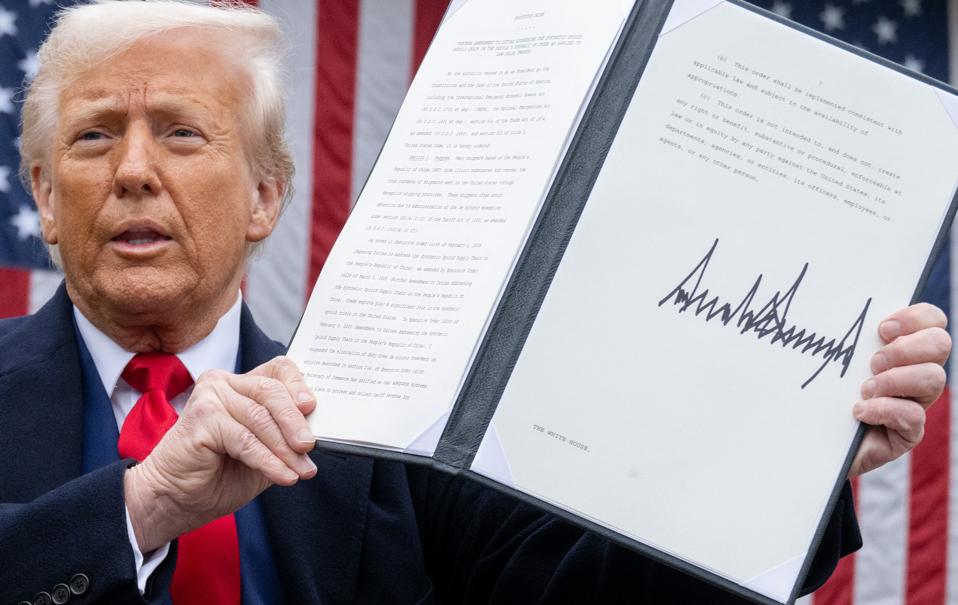
President Donald Trump’s announcement yesterday of global tariffs created a crisis for companies that import a wide variety of goods, ranging from automobiles to zucchini.
The ability of corporate executives to respond to the impact the tariffs will have on their companies could determine whether or how they survive this crisis that has impacted stock markets and will increase costs for consumers.
Few Companies Will Escape Impact
“Few companies will escape the impact, though it will vary dramatically. Internally, management teams should be connecting the dots between the tariffs, options for consumer prices, and jobs in the United States and overseas. In other words, localize the effects, map out scenarios, and plan a nuanced comms strategy around that. Staying completely silent won’t help, but quiet, thoughtful, and targeted communications could lay the groundwork for influence and allies,” Felicia Pullam, a senior director of geo-commerce at APCO, observed in an email interview.
Business leaders should not wait to communicate with their target audiences about the impact of the tariffs.
“From the crisis mitigation perspective, investors, suppliers, customers, and officials are unsettled in different ways. Careful communications that balance cross-border expectations will be essential—but easier said than done. Starting conversations now, if you haven’t already, could help maintain trust and come in handy as the situation evolves,” she recommended.
Getting A Head Start
Some businesses did not wait to warn customers about how a Trump tariff would affect them.
“We’ve been warning our customers since Trump’s victory what his fondness for protectionism was likely to do [to]
their pricing. We didn’t want any surprises, and our customers have seen this before for the most part,” Sebastian Sassi, vice president of sales at Atlantic Vision, explained via email. The company makes fiber optic patch cords and trunk cables for data center applications and provides last mile fiber solutions for broadband operators.
After Trump’s announcement of his global tariffs yesterday, Atlantic Vision was proactive in communicating with customers via email about its impact.
“The communications we’re sending to our clients are designed to assure them that our business is sound, that we’re not in any way profiting from the new tariffs and the cost they represent are simply a pass through that we’re explaining and itemizing for them, and a reminder that our products are still going to be the most competitively priced in our arena,” Sassi explained.
Customers Seem Reassured
“Our customers seem reassured to know this and we don’t anticipate any interruption to our normal business operations. The tariffs are going to be inflationary to consumers, and they can expect broadband network operators to pass these costs of construction for optical networks on to the consumer in short order,” he noted.
Scrambling To Communicate
“A lot of companies will be scrambling to do similar things this week: explaining the hard reality of what’s happened (ie. if costs go up, pricing goes up accordingly) while reminding customers of why they work with them in the first place. Pricing’s an important factor, but customer service and nimble customization of orders can be factors, too,” Jonathon Narvey, founder of Mind Meld PR, predicted via email.
Size Matters
“How companies respond to the new Trump tariffs will largely depend on their size. For small businesses, the added costs could be a major blow—potentially making it tough to even afford PR and marketing, let alone cover basic expenses like products and inventory,” Janie Mackenzie, vice president of public relations at Ascendent Grou, pointed out via email.
“Larger companies, on the other hand, need to take a strategic approach to managing their messaging with stakeholders, customers, and the media,” she noted.
Mackenzie recommended that businesses take the following steps:
Be Upfront
- “Be upfront about how the tariffs will impact pricing, supply chains, and operations. If cost adjustments are necessary, explain why—using real data to back it up.”
Control The Narrative
- “Don’t let the media or the government shape the story for you. Instead of focusing on challenges, highlight solutions. If your company is sourcing materials that are now subject to tariffs, frame it as a story of resilience and adaptability.”
- “Clearly communicate [with investors] how your company is mitigating risks and maintaining profitability.”
- “Keep your team informed about any potential changes—whether it’s restructuring, layoffs, or shifts in operations. A well-informed workforce is a motivated one.”
Speak Out
- “If tariffs hit your industry hard, addressing the issue publicly can build credibility and trust. That might mean advocating for policy changes through trade groups, sharing real-world impact with the media, or taking a more direct stance.”
“The bottom line? Companies should maintain transparency, proactiveness, and a solutions-oriented approach to their PR if they wish to maintain their bottom line,” Mackenzie concluded.
Multiple Messages May Be Needed
“Keep in mind, different audiences will need different messages. And companies can utilize multiple channels of communication when discussing the impact of tariffs. Internal stakeholders may do well with a townhall where they can hear directly from corporate leaders on the impact and address any questions directly,” Eric Hazard, a managing director at Vested, recommended via email.
“The corporate communications team sits in the middle of all of these audiences and it is important to partner with your C-suite and senior corporate leaders to discuss best practices and key message development,” he advised.
Transparency
“Tariffs are a nuclear bomb dropped on corporate predictability. The smart companies won’t just survive—they’ll turn this chaos into a competitive advantage. Transparency is now your most valuable asset. Stakeholders want brutal honesty, not corporate spin. Be open about exploring alternative sourcing options, or reassessing pricing strategies, and make sure you’re preparing comprehensive contingency plans in the background. My advice? Be bold, be fast, and be honest,” Kaitlyn Barclay, CEO of Scout Lab, a global communications agency, counseled in an email interview .
Trump’s tariffs have created the rare crisis that will impact nearly every company and consumer in some way. When and how business leaders respond to the tariffs will test their crisis management skills and expertise—which could in turn help determine the future of their companies.
The ability of business leaders to communicate their actions and decisions could be an important success factor.