

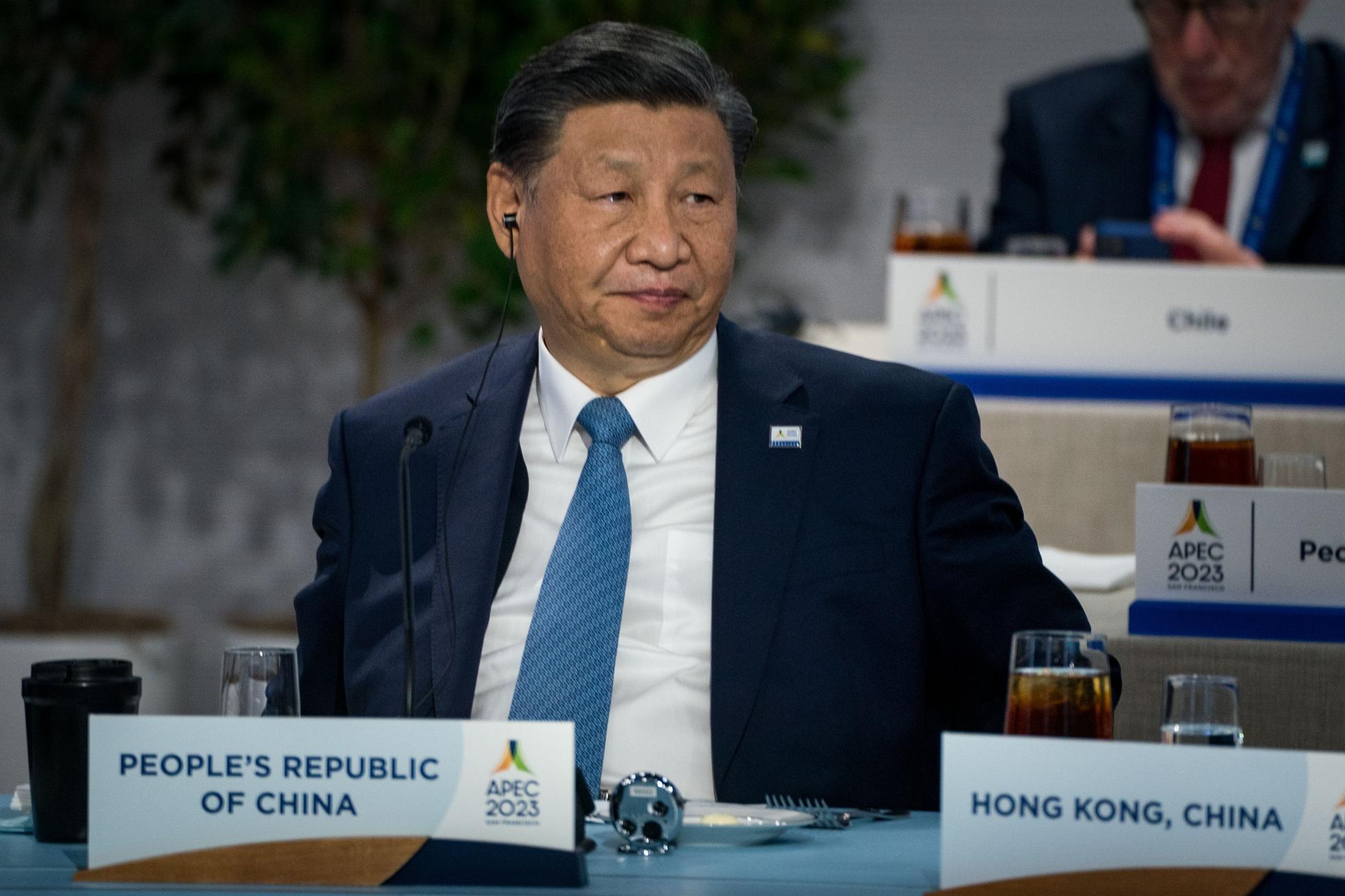
Bond vigilantes are under the mistaken impression that Jerome Powell will decide if their bold bet on U.S. interest rate cuts is a winner. In reality, it’s Xi Jinping in Beijing.
Sure, Federal Reserve Chairman Powell’s team in Washington will announce and execute any about-face on policy. But mostly, they will be responding to what Chinese leader Xi’s allies do 6,900 miles away. And odds are, even they don’t know.
China’s 2024 trajectory is as big a wildcard as there is. No doubt a broader conflict in the Middle East or changes in the Russia-Ukraine quagmire could boost commodity prices. But whether China dips deeper into deflation or surprises to the upside is the big economic question the Fed can’t answer.
Powell’s team is forced to consider different variables, game out scenarios and bet accordingly—just like giant bond funds.
As 2024 beckons, there are solid reasons to think wagers on lower U.S. rates are sane. After 11 Fed tightening moves in 18 months, elevated debt yields are taking a toll on the biggest economy.
China, meanwhile, is stumbling toward the new year in ways virtually no one expected. Confidence that China would boom post-Covid-19 has been replaced by worries it might be headed for a Japan-like deflationary funk.
The idea of the globe’s most important trading and manufacturing power exporting falling prices would make Powell’s inflation-is-transitory dreams come true. It also might make an increasingly crowded trade surrounding assertive Fed rate cuts pay off.
Or might China hold its ground in ways that surprise Wall Street? This might indeed be what Team Xi is planning for the 12 months ahead.
Markets are bummed that Beijing didn’t announce forceful stimulus to hasten growth this week at the annual Central Economic Work Conference. Xi’s team signaling that industrial reform is the bigger priority is a positive in the long run. But for markets figuring China would ramp up fiscal and monetary support today, it’s a setback.
This could be a policy mistake, given deflation pressures.
“Arguably the major issue afflicting economic policy in 2023 has been the government’s conviction that it could have its cake and eat it, too,” says Andrew Batson, economist at Gavekal Research.
Batson adds that “the hope was that a long-term drive to build high-tech industries and bolster the country against external threats could double as a short-term stabilization plan. But that strategy suffers from a time inconsistency problem. The favored growth sectors of the future, even big ones like electric vehicles, are simply too small today to offset the damage from the rapid decline in the property sector.”
Or it could mean Xi’s inner circle knows more than we do about the resilience of the economy. It could indeed explain Xi’s seemingly peculiar patience with moderating gross domestic product.
And clearly, investors who’ve bet against China this last decade haven’t made loads of money. This hardly means the house will win again in 2024. But the odds that Xi is holding his stimulus fire for wholly appropriate reasons aren’t negligible.
Still, the China factor looms large in central bank deliberations everywhere. Case in point: the Bank of Japan, which was almost universally seen as ending quantitative easing this year. China’s downshift is among the major reasons why that hasn’t happened.
Nor are the odds great that BOJ Governor Kazuo Ueda will shock world markets at the December 18-19 policy meeting. Japan, it turns out, may be in a recession, one that bears China’s fingerprints.
Chinese headwinds have officials at Bank of Korea headquarters in Seoul unsure how to prepare for 2024. The same goes for policymakers in Jakarta, Kuala Lumpur, Manila, Singapore and elsewhere in Asia.
Not that the Fed faces an easy path into 2024. “With inflation coming down faster than expected, it now appears likely that the Fed will refrain from additional rate hikes,” says Brian Rose, senior U.S. economist at UBS. “At the same time, inflation is still too high and the labor market is still too tight for the Fed to consider cutting rates soon.”
But many of the questions confronting Powell and his fellow policymakers in Washington will have more to do with what’s happening in Shanghai and Guangzhou than New York and San Francisco.